From a field notebook to a pocket-sized world
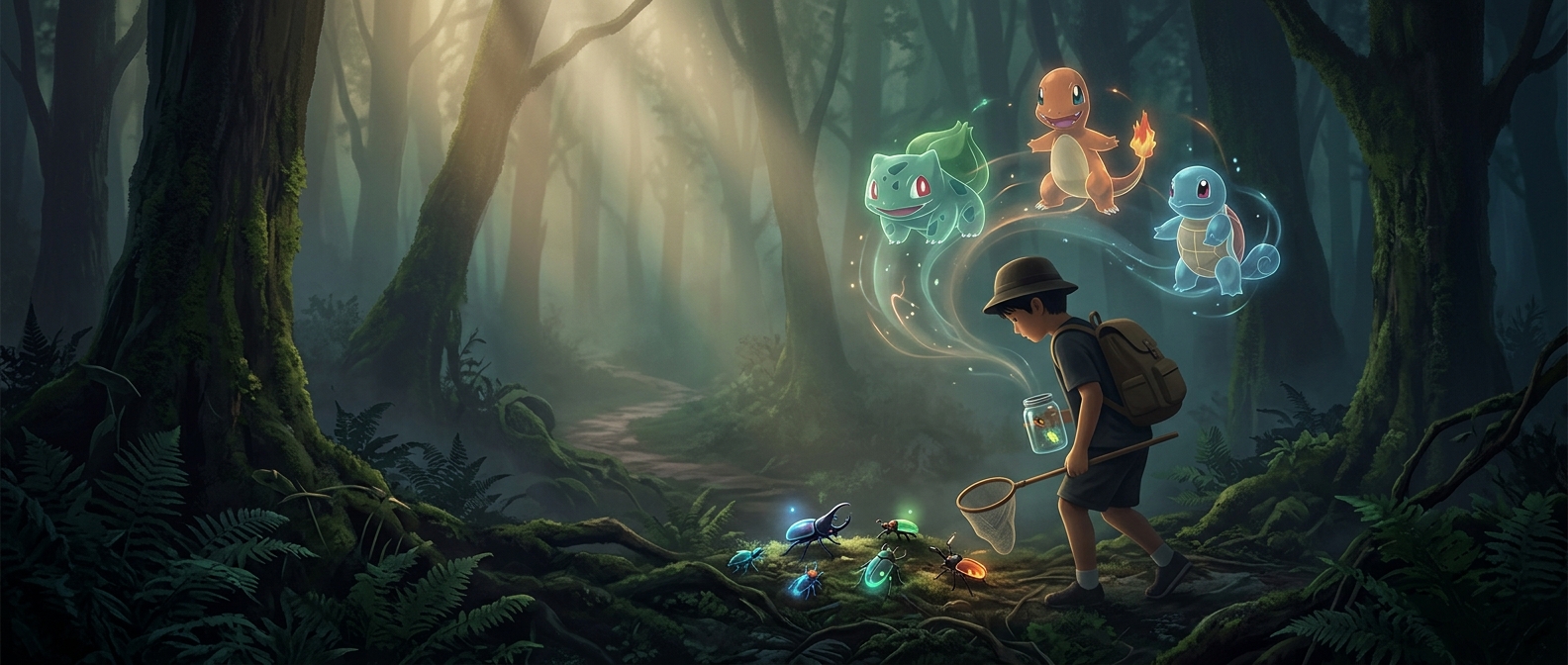
For Satoshi Tajiri, collecting insects meant more than spotting them: it involved finding habitats, catching creatures, and comparing discoveries. As development changed the places where he had explored as a child, he imagined a game that could give other children a version of that searching-and-collecting pleasure—even if their surroundings offered fewer places to hunt.
The key design choice was to make collecting an activity with its own rewards, not just a route to stronger fighters. Each creature had a name, appearance, and set of abilities, giving players reasons to look for different ones and build a varied collection. The fantasy turned a familiar childhood pastime into a goal that could unfold on a handheld screen.
A cable made collecting social
The Game Boy’s link cable helped carry that idea beyond a solitary search. Players could connect two systems and trade creatures, so one person’s duplicate could become another person’s missing discovery. Trading also made the collection feel larger than what any one player could easily assemble alone.
That exchange mattered because it gave players a reason to talk, compare, and cooperate outside the game. A creature was not only something to catch or use in a battle; it could also be something a friend needed. The game recreated the social rhythm of collecting—finding, comparing, and swapping—through a connection between two handheld devices.
The result was a digital habitat that could travel with its player. Instead of needing a patch of grass or a stream nearby, a child could search for creatures in the game world, then bring the collection to a friend’s Game Boy and trade.