Why Rhydon Came Before Pokémon’s Cute Mascot
Rhydon’s design points back to the kind of creatures the original game concept was built around. Before Pokémon took shape as a familiar roster of pocket-sized companions, its early concept, Capsule Monsters, drew on dinosaurs and giant kaiju—oversized monsters from Japanese popular culture. A horned, armored creature like Rhydon fit that premise naturally: it looked like something a player might send into a clash, not a mascot designed to represent a global brand.
A First Design That Left a Mark
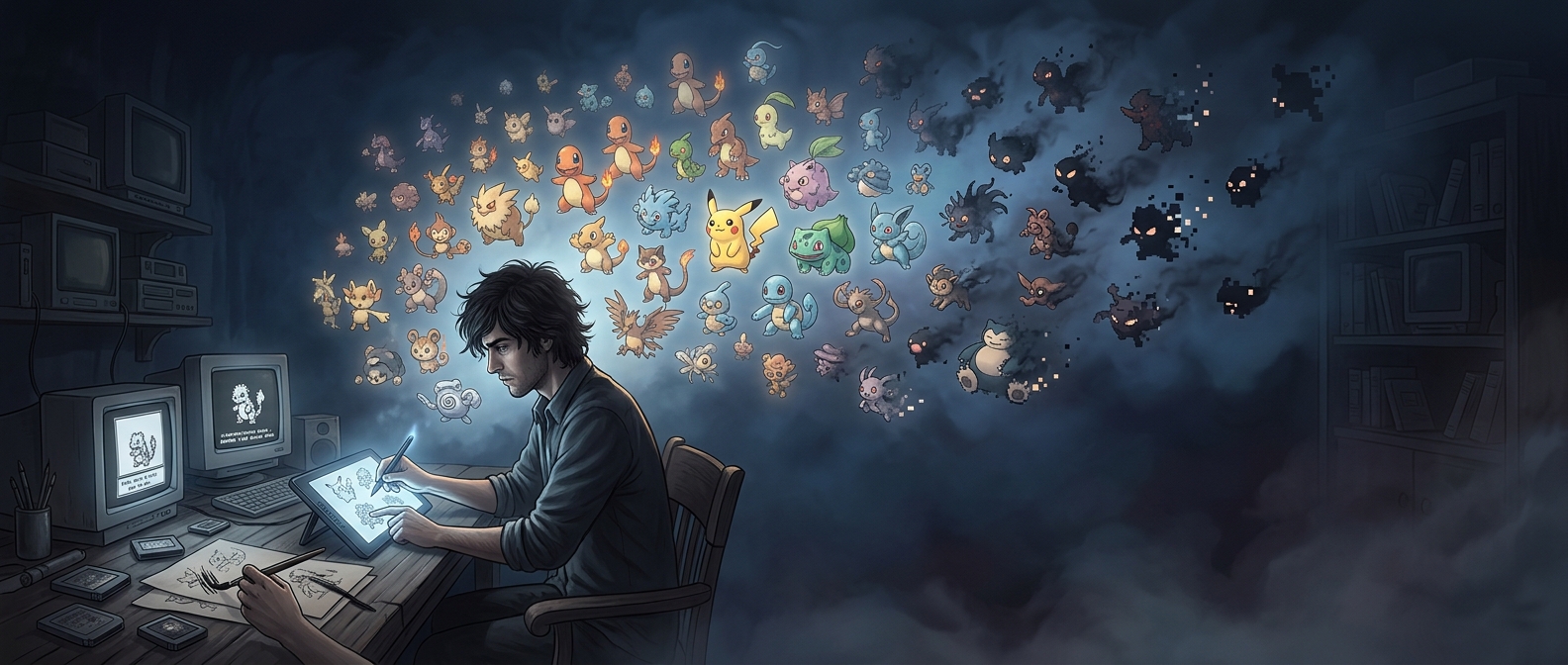
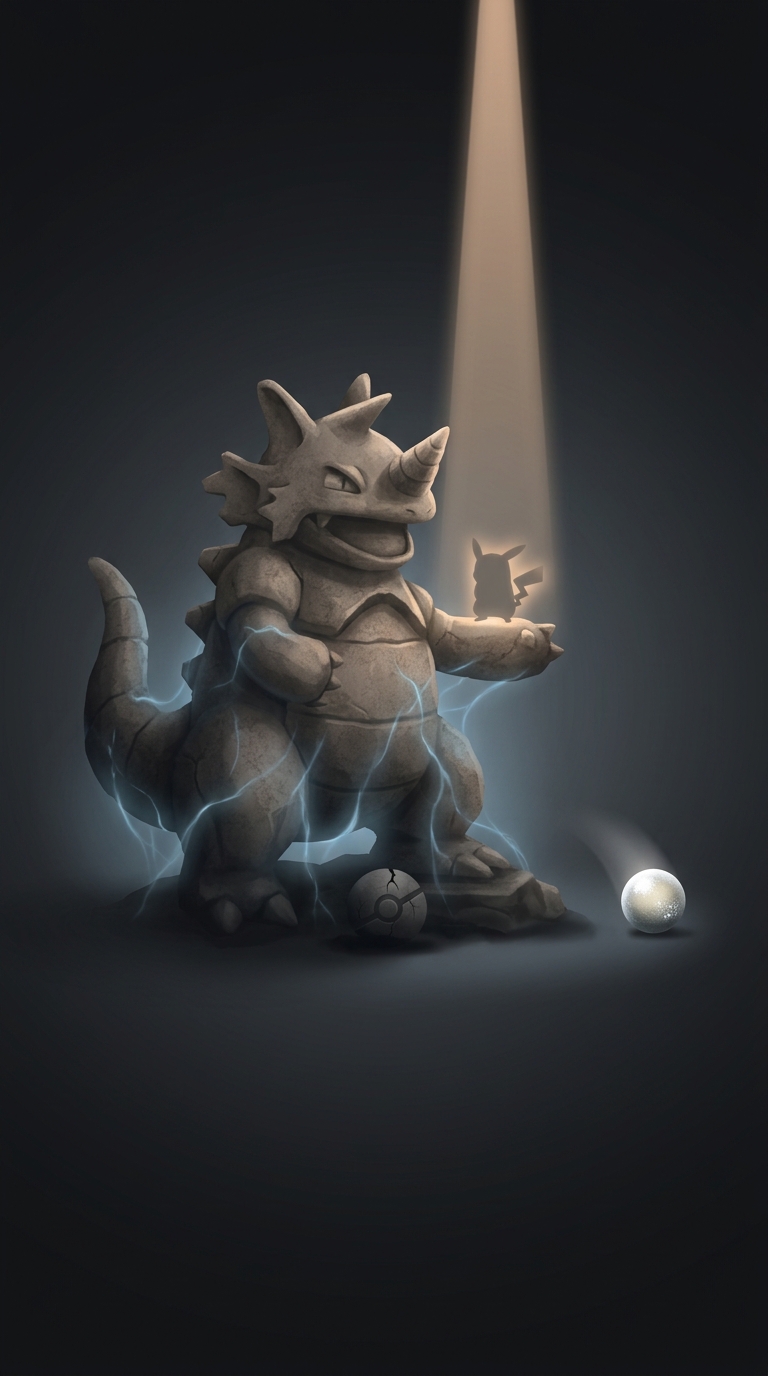
Ken Sugimori created Rhydon before Pikachu became the franchise’s most recognizable face. That order matters because Pokémon’s eventual identity can make its earliest designs seem as though they were always conceived as part of the same polished brand. Rhydon instead preserves a trace of the series’ original monster-battle emphasis: its appeal comes from its imposing shape and combat-ready presence.
The game’s world carries that history into its scenery. Rhydon statues appear outside many first-generation Gyms, the places where players challenge specialist trainers. The statues make the creature feel like an emblem of strength and established tradition within the game world. They also turn an early design choice into environmental storytelling: before a player even enters, the Gym’s entrance suggests that Pokémon battles belong to a world of formidable monsters.
From Monster Concept to Franchise Icon
Pikachu eventually became the yellow figure recognized around the world, but the franchise did not begin with that image. Rhydon’s place in the early design history shows how Pokémon’s identity developed from a creature-centered concept into something broad enough to support cute mascots, powerful fighters, and a whole cast of distinct personalities. The statues are a small reminder that the series’ first visual language was built around monsters meant to look imposing.