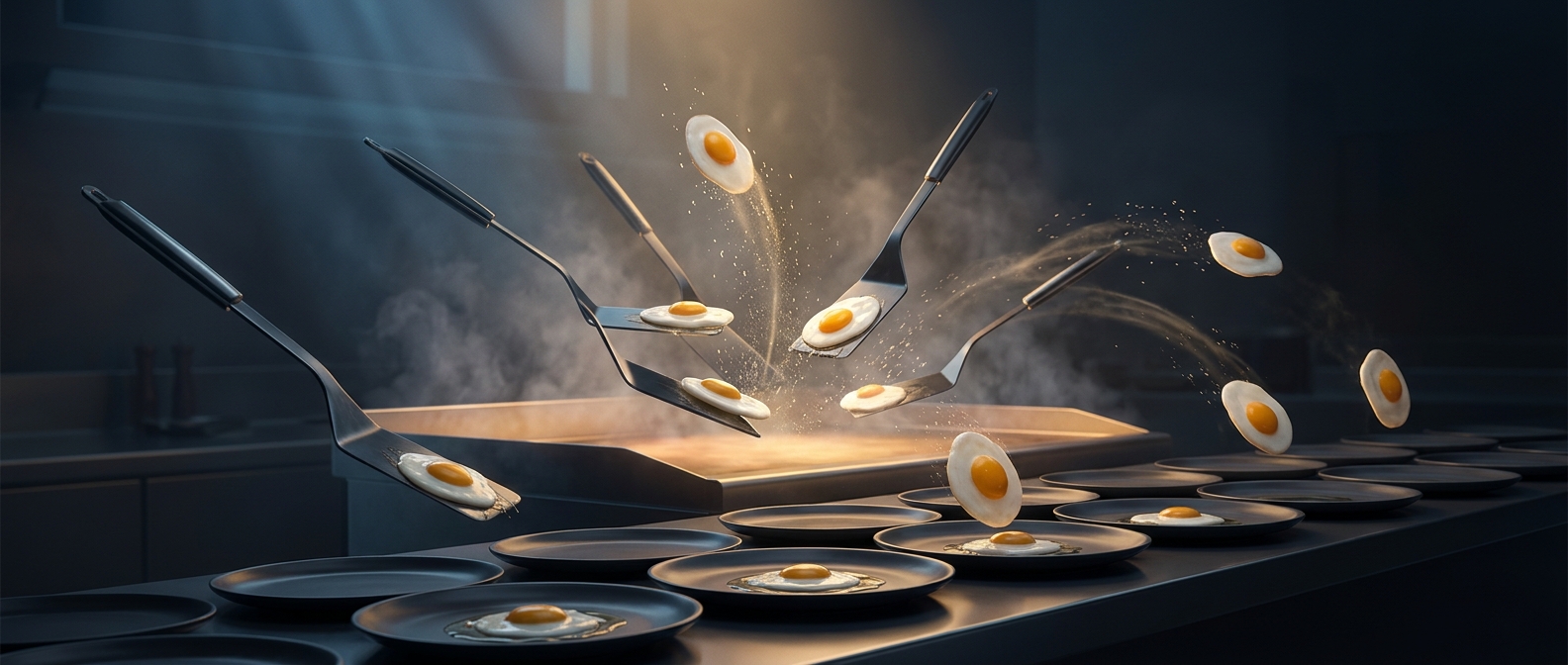
Why a thin blade can lift a delicate egg
A cooked egg is soft, but it is not simply a loose pile: heat makes its proteins link into a flexible, partly cohesive sheet. The spatula works by slipping its thin edge between that sheet and the pan, then supporting a broad area from below. Spreading the egg’s weight across the blade helps keep one small spot from bearing the whole load and tearing.
The blade’s thinness matters. A thick utensil would have to push the egg sideways before getting underneath it; a narrow edge can enter the gap with less disturbance. The cook can then raise the egg while keeping the blade nearly level, limiting the bend that might split it.
The flip is a controlled handoff
Turning the wrist gives the egg an upward and forward push. For a moment, it leaves the blade; the cook’s motion determines how far it travels and how much it rotates. The egg’s own flexibility makes the maneuver forgiving, but a sharp, excessive toss can still fold or break it.
At the end, the spatula is no longer carrying the load. The plate must meet the egg beneath it, and gravity brings the two together. That brief transfer—from pan, to blade, through open air, to plate—is why a flip can look like a single flourish while actually depending on careful support at both ends.