Why People Make Moon Water
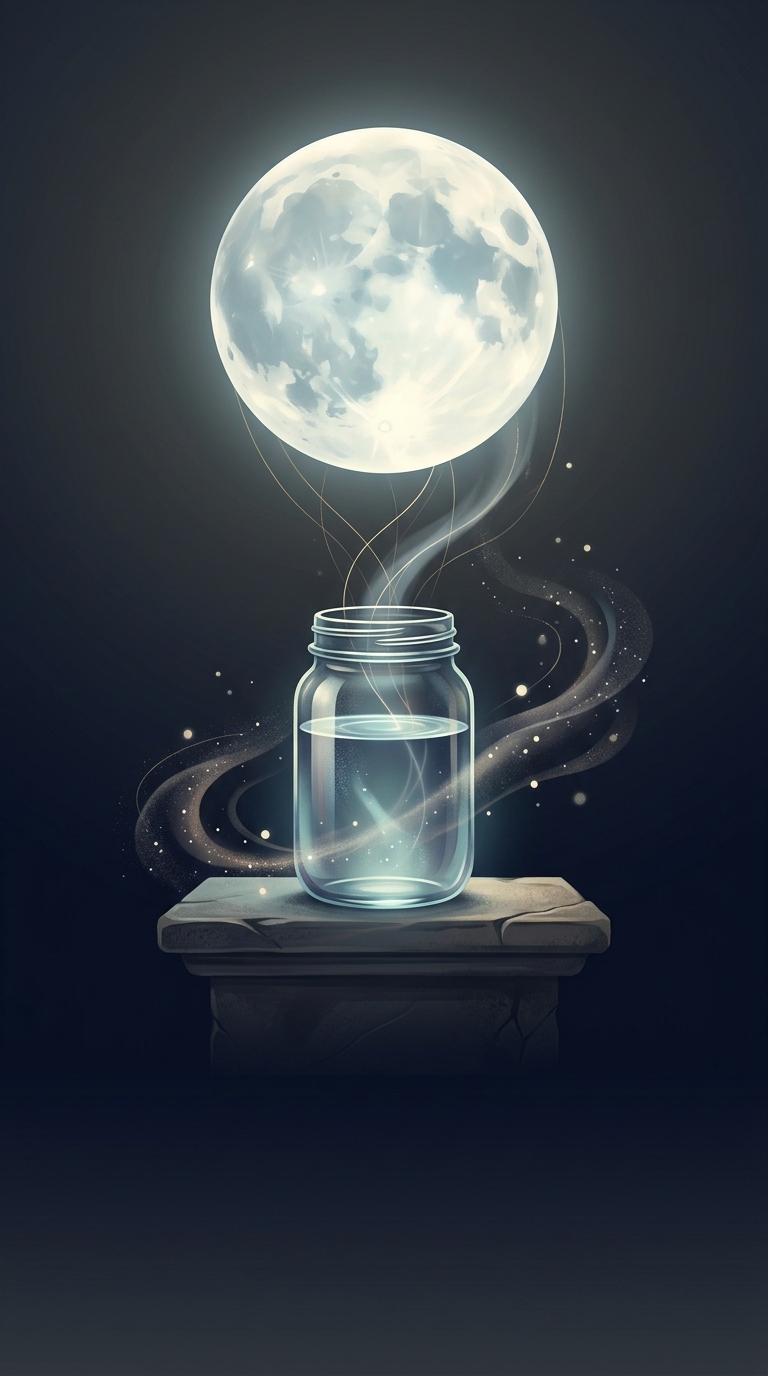
Moon water is less about changing water than giving an intention a physical form. In many modern spiritual practices, someone places a jar outdoors during a full moon and later uses the water in a ritual. The moon’s phase supplies a meaningful moment: the full moon is often associated with completion, heightened emotion, or release, though interpretations vary among practitioners.
That ritual can work as a personal cue without requiring the water to acquire a measurable force. Setting an intention while preparing the jar, then returning to it later, can make an abstract goal feel tangible—much like writing a resolution in a journal or lighting a candle to mark a moment.
What the Moonlight Actually Does
Moonlight is sunlight reflected off the lunar surface. By the time it reaches Earth, it is far too faint to meaningfully alter ordinary tap water. A jar left outside may warm or cool with the surroundings, collect dust, or be exposed to insects and other contaminants, but those effects come from the environment, not lunar energy.
The distinction matters when moon water is treated as more than a ritual object. It is not purified or made safer to drink by moonlight. Water intended for drinking should be kept in a clean, covered container and handled as carefully as any other water.
When Ritual Becomes a Product
Bottled versions turn a simple practice into something that can be packaged and sold. A seller may charge for presentation, branding, or the meaning attached to the ritual, but a higher price does not indicate that the water has gained a special physical property. For practitioners, the value may lie in the symbolism; the practical test is to keep that symbolic meaning separate from claims about what the water can do.
That is why moon water can be personally significant without being a lunar remedy: the full moon gives the ritual its occasion, while the intention belongs to the person performing it.