Why a Hot Rail Pushes Sideways
A long steel rail can grow noticeably as it warms. On modern tracks, rails are often welded into continuous lengths and fastened to ties—the crosspieces that hold the rails in position. Those fastenings and the surrounding track resist expansion, so rising temperature builds compression inside the rail instead of letting it lengthen freely.
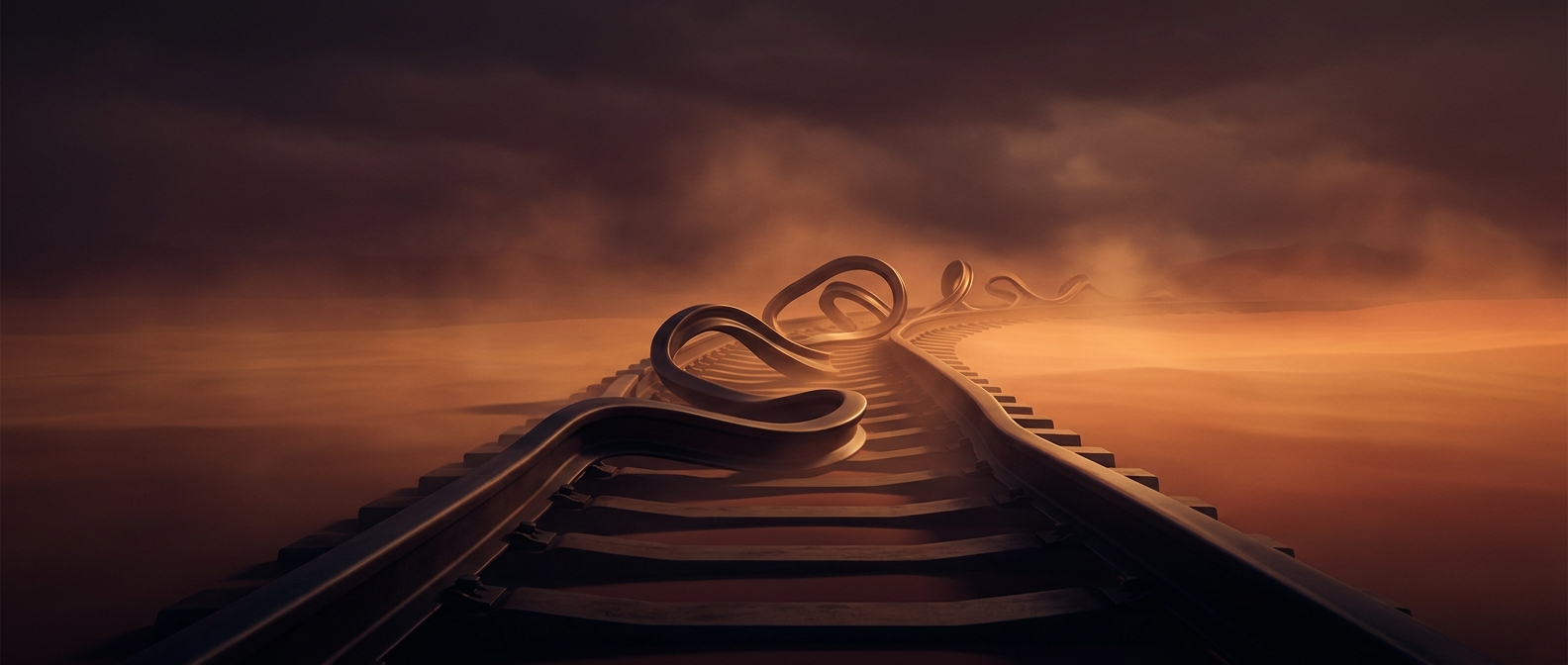
If that compressive force exceeds the track’s ability to hold its alignment, a small sideways imperfection can become a sharp bend. Engineers call this a track buckle. The rail does not need to melt or soften: it is the accumulated force, acting on a track that can shift laterally, that causes the trouble.
The Track Is Part of the Restraint
Ties spread the load, while packed stone ballast—the bed beneath and around them—helps keep the track from moving sideways. A firmly supported track can resist more force. Disturbed ballast, loose fastenings, or a bend already present can make it easier for heat-driven compression to push the rails out of line.
The relevant temperature is the rail’s, not just the air’s. Sunlit steel can become hotter than the surrounding air, which is why crews monitor rail conditions during hot weather rather than relying only on a weather forecast.
Managing the Heat in the Steel
When track is built or repaired, crews account for the temperature at which the rail is intended to sit without significant thermal stress. If a rail’s stress state needs adjustment, crews can release and reset it—a process often called destressing—so it is better suited to the temperature range it will face.
During extreme heat, railroads may inspect vulnerable sections, strengthen support, or restrict train speeds. Slower trains give crews more opportunity to spot a developing problem and reduce the consequences if alignment has shifted. The risk is a reminder that a rail’s stability depends not just on steel, but on the ties, fastenings, and stone holding it in place.