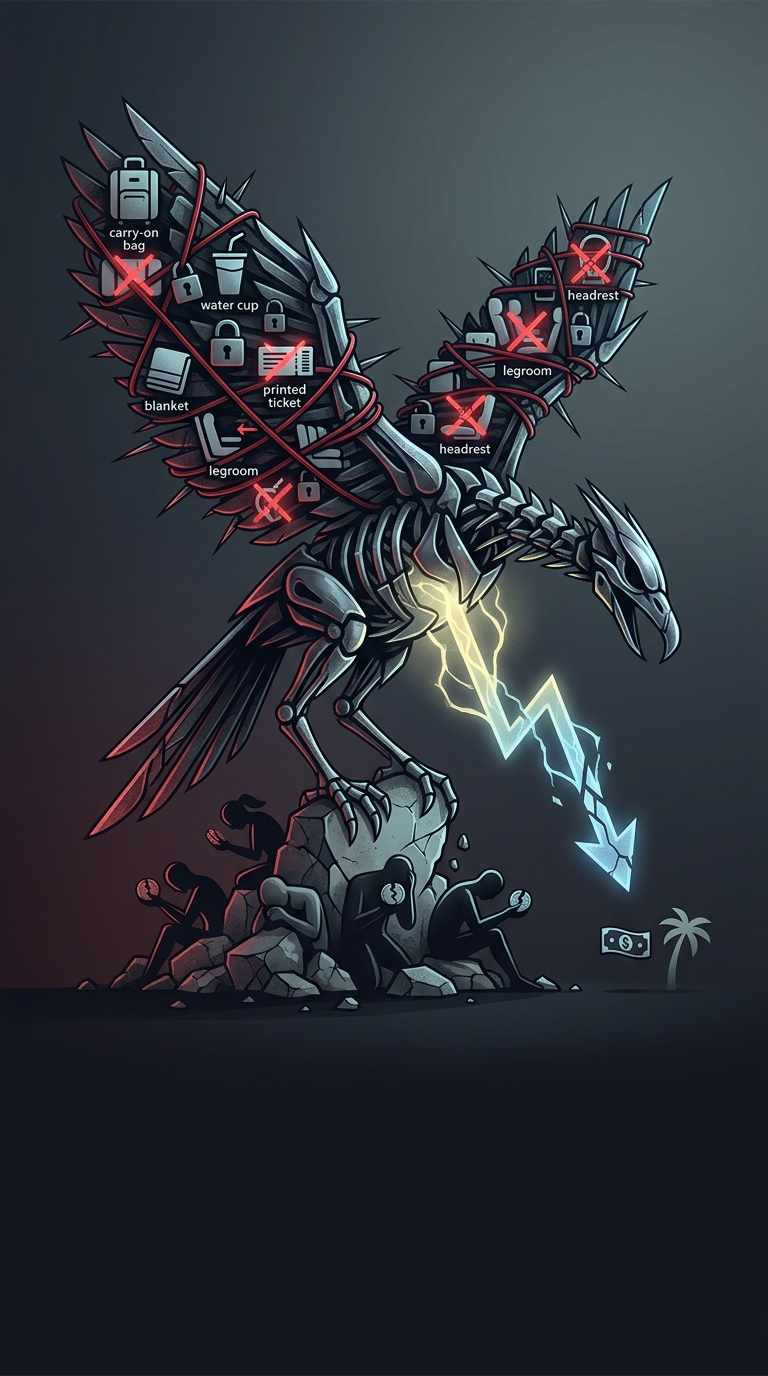
The low fare is only the starting price
Spirit’s model shifts some costs out of the base fare and into optional purchases. Instead of charging every passenger for a bundle that includes a carry-on bag, seat selection, and other extras, the airline advertises a lower fare and charges for certain services separately. Travelers who pack light and accept the seat they’re assigned can pay less; travelers who want more flexibility may pay more.
That structure is called unbundling: separating services that many airlines traditionally sold together. A small personal item that fits under the seat is generally included, while a larger carry-on and checked bags can cost extra. Seat selection and some airport services may also carry fees. Details and prices depend on the trip and when a traveler makes the purchase.
Why sell the flight this way?
The incentive is two-sided. A low advertised fare can attract people comparing tickets, while optional fees let the airline collect more from passengers who need additional services. The approach also gives customers more control over what they pay for: someone traveling for a weekend with a backpack need not subsidize baggage allowances used by other passengers.
But the base fare is not always the useful comparison. Add the costs of the bag, seat, or other service you actually need, and compare that total with other airlines’ prices. A fee paid at the airport can also be more expensive than arranging the same service earlier, so checking the rules before leaving home matters.
The tradeoff happens before boarding
Unbundling can make flying cheaper for some travelers, but it moves more decisions—and the risk of surprise charges—to the customer. The practical unit to compare is not the headline fare alone; it is the price of the trip with the essentials you’ll actually use. For a light packer, that can still be a bargain. For someone with a bag to bring aboard, the cheapest-looking ticket may no longer be the cheapest way to fly.