Why empty floor can be the better target
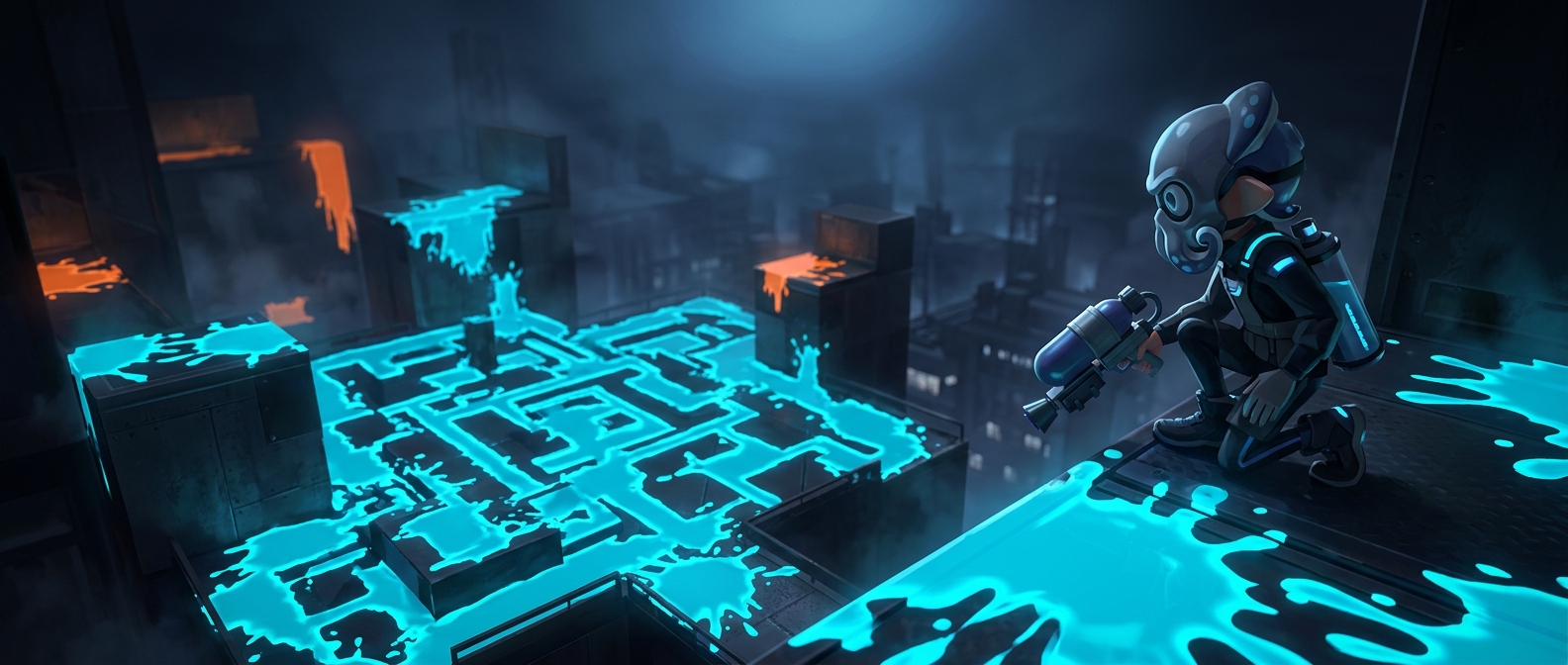
In Splatoon’s Turf War, the winning team is the one with more of the arena’s paintable ground covered in its color when time runs out. That makes each patch of untouched floor a direct scoring opportunity. Chasing an opponent, by contrast, does not add territory by itself—and a player who stops to fight may leave useful ground unpainted.
The practical calculation is simple: if an enemy is nearby but not blocking a route, painting a broad, empty stretch can be more valuable than trying to land a hit. A quick sweep through unclaimed space turns time and ink into score immediately.
Painting also shapes how players move
Ink is more than a mark on the map. Players can swim quickly through their team’s ink and refill their supply there, but enemy ink slows movement and makes swimming unsafe. So a painted route can help teammates cross the arena, while coloring over an opponent’s territory both adds coverage and disrupts their path.
This creates a useful distinction between winning a fight and gaining ground. A splat can remove a rival from the immediate contest and open a lane, but it matters most when the team uses that opening to paint or hold territory. Conversely, a player who avoids a skirmish can still make a decisive contribution by covering neglected ground.
The map is the real objective
Combat is not irrelevant: opponents can interrupt a painting run, contest an area, or push a team away from valuable space. But Turf War rewards players for judging when a fight is worth that interruption. The result is a mode where a quiet pass over an empty corner may help the team more than a dramatic duel—because at the end, the color left on the floor is what counts.