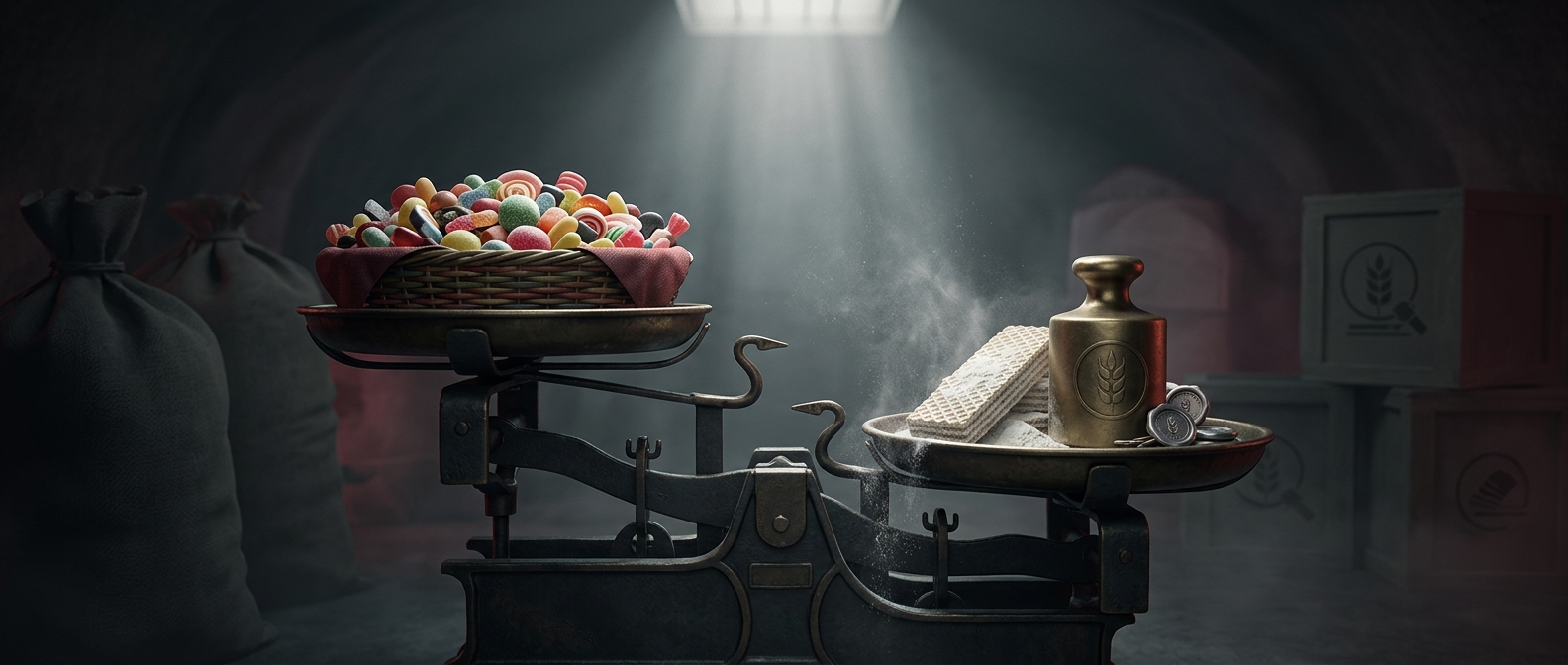
Why a refrigerator can change a candy’s tax status
Iowa generally exempts qualifying grocery food from sales tax but taxes candy. The line between those categories is defined in law, not by a shopper’s idea of what counts as a sweet. Under Iowa’s definition, a preparation that requires refrigeration is excluded from the category of candy.
That creates an unusual result: a sweet that must be kept cold may be treated as food rather than taxable candy. The refrigerator is not a general tax-free switch; it matters because the product’s storage requirement changes how the state classifies it.
A small definition, a real checkout difference
Sales-tax rules often rely on categories that retailers can apply to products, even when the categories do not match everyday language. A candy bar on a shelf and a similar-looking refrigerated confection can therefore receive different treatment at checkout—not because one is less sweet, but because one requires cold storage.
The practical consequence is a tax distinction built into the product’s handling. For shoppers, the cold case can signal that the item falls on the food side of Iowa’s rule. For sellers, the key question is how the product is classified under the state’s definitions, not simply whether customers call it candy.