Why the Twelfth House Became Astrology’s Hidden Room
In a birth chart, the twelfth house is one of twelve sections astrologers use to organize themes of life. Its associations with confinement and isolation fit an older astrological habit of treating difficult houses as places where a person’s efforts could be obstructed or kept out of view. “Hidden enemies” was one way to describe opposition that was hard to identify—not necessarily a claim that unseen people were literally plotting against someone.
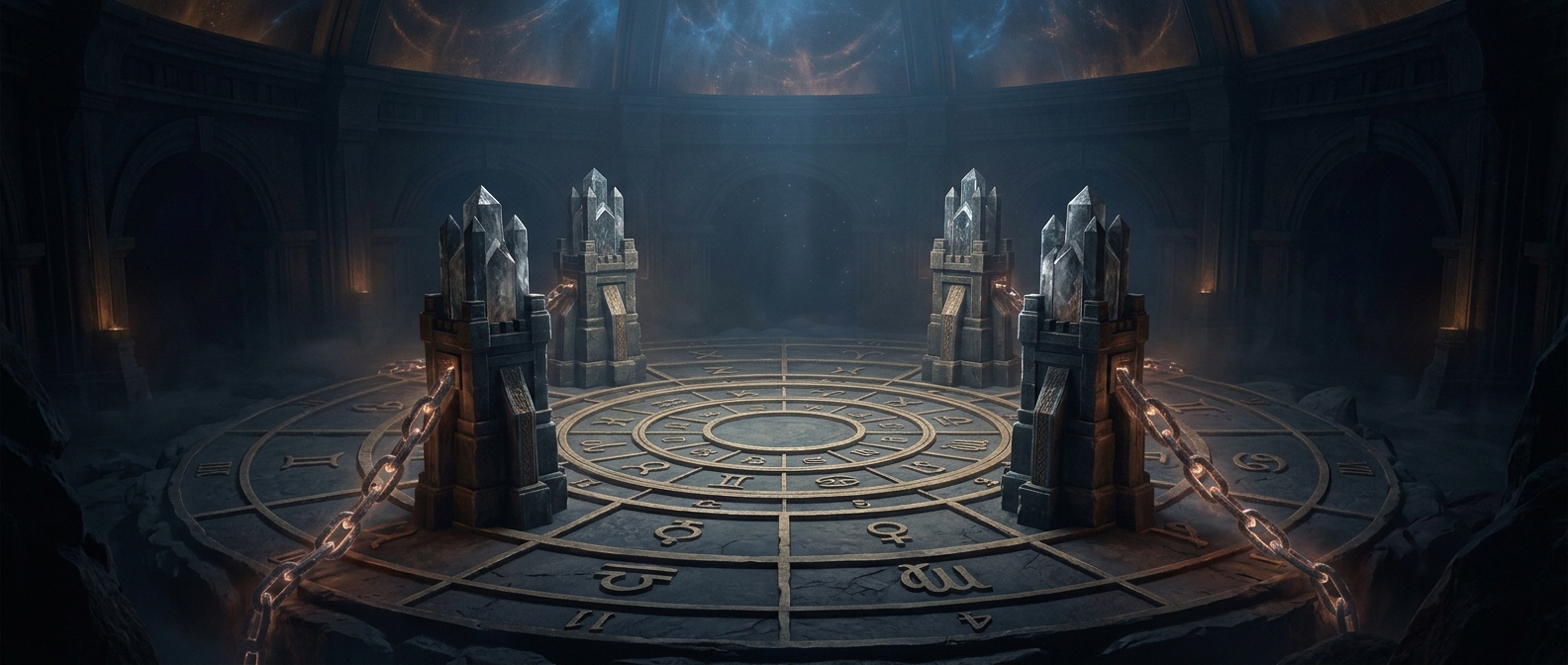
The house’s traditional label, “Bad Spirit,” gives the symbolism its stark tone. Prisons and other forms of seclusion belong to the same image: being cut off, constrained, or unable to act freely. These are meanings within an astrological system, not conclusions established by psychology or evidence about a person’s fate.
From confinement to inner life
Many contemporary astrologers emphasize what is private or difficult to notice within the self: dreams, retreat, spiritual practice, and patterns a person avoids confronting. The shift does not erase the older symbolism. Instead, it moves the idea of an unseen obstacle inward. What once suggested an external force working against someone can now be read as a habit, fear, or conflict operating outside conscious attention.
That interpretation can make the house a prompt for reflection: What keeps recurring when no one else is watching? What does a person avoid naming? But a chart placement alone cannot establish that someone has hidden enemies, a mental illness, or a particular psychological problem. The twelfth house’s lasting theme is what feels hidden or hard to face; astrologers differ on whether they locate that difficulty in the world, the mind, or both.