What a House Cusp Marks in Astrology
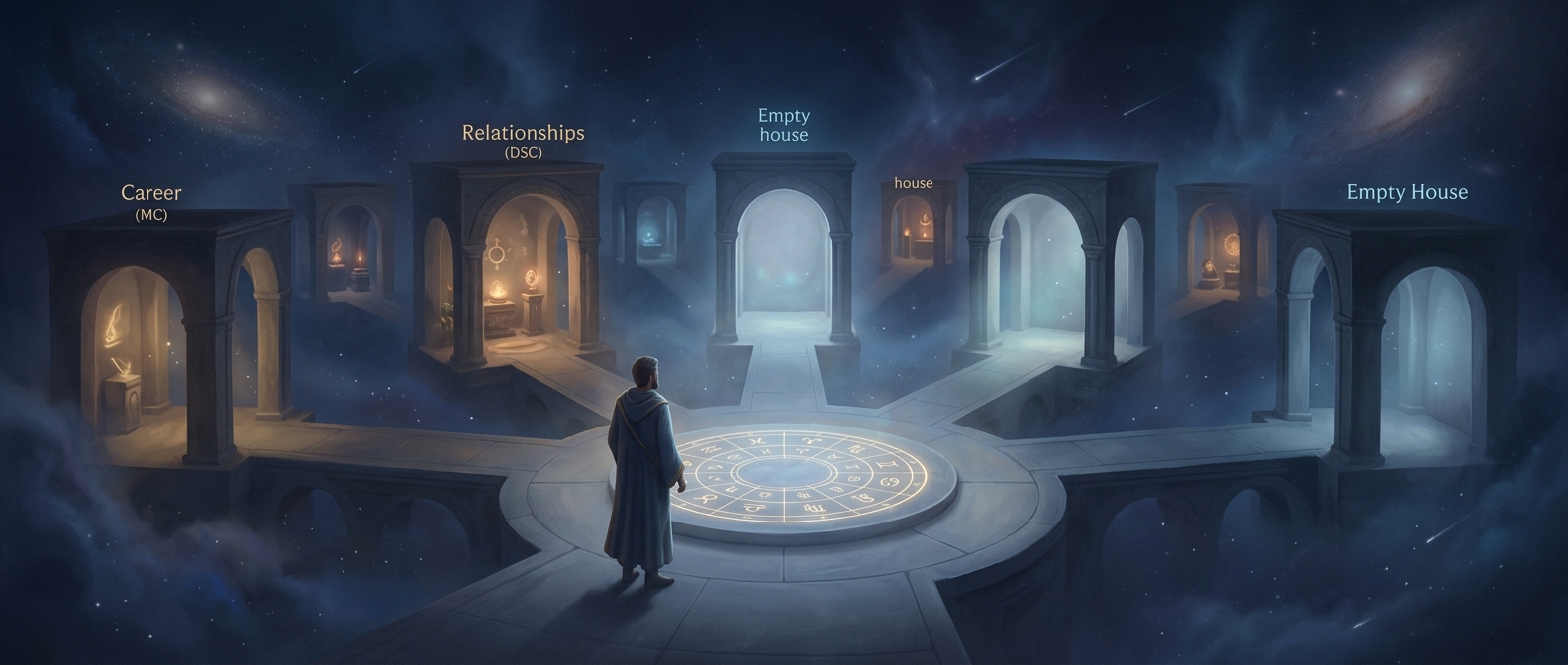
An astrological chart divides the sky into 12 houses, each associated with a sphere of life, such as relationships, work, or home. A house cusp is the line that begins one house and ends the previous one. When a planet lies on one side of that line rather than the other, astrologers generally read it through a different life-area lens.
The shift is categorical in the chart’s structure, but not a physical event: the planet does not move across a boundary in the sky at that moment. The cusp is a point calculated for the chart, and its position depends partly on the house system used. Different systems can place house boundaries differently, so a planet near a cusp may be assigned to different houses under different approaches.
Why the Boundary Can Matter
Astrologers use houses to interpret where a planet’s symbolism is expressed. For example, a planet associated with communication might be read in relation to siblings and everyday learning in one house, but to partnership in the next. Crossing the cusp therefore changes the context of an interpretation, not the planet itself.
That is why birth time can matter: the houses depend on the chart’s orientation, which changes over the course of a day. A small difference in recorded time may affect a planet’s house placement when it sits close to a cusp. In practice, astrologers may consider both its exact position and the neighboring house themes rather than treating the line as a literal wall.