When a Breakdown Was a Driver’s Problem
A toolkit in an older Soviet car reflected a practical bargain: the driver might have to keep the vehicle going between visits to a repair shop. Many faults involved accessible mechanical parts—fasteners, hoses, or ignition components—that a person with basic tools and some know-how could inspect or replace. Carrying tools did not make breakdowns harmless; it made roadside repair more possible when service and replacement parts were not always close at hand.
That arrangement also made the owner part of the maintenance system. A loose connection or worn component could become a hands-on problem, and the car’s relative mechanical simplicity left more room for improvised fixes.
A Headlight Becomes a System
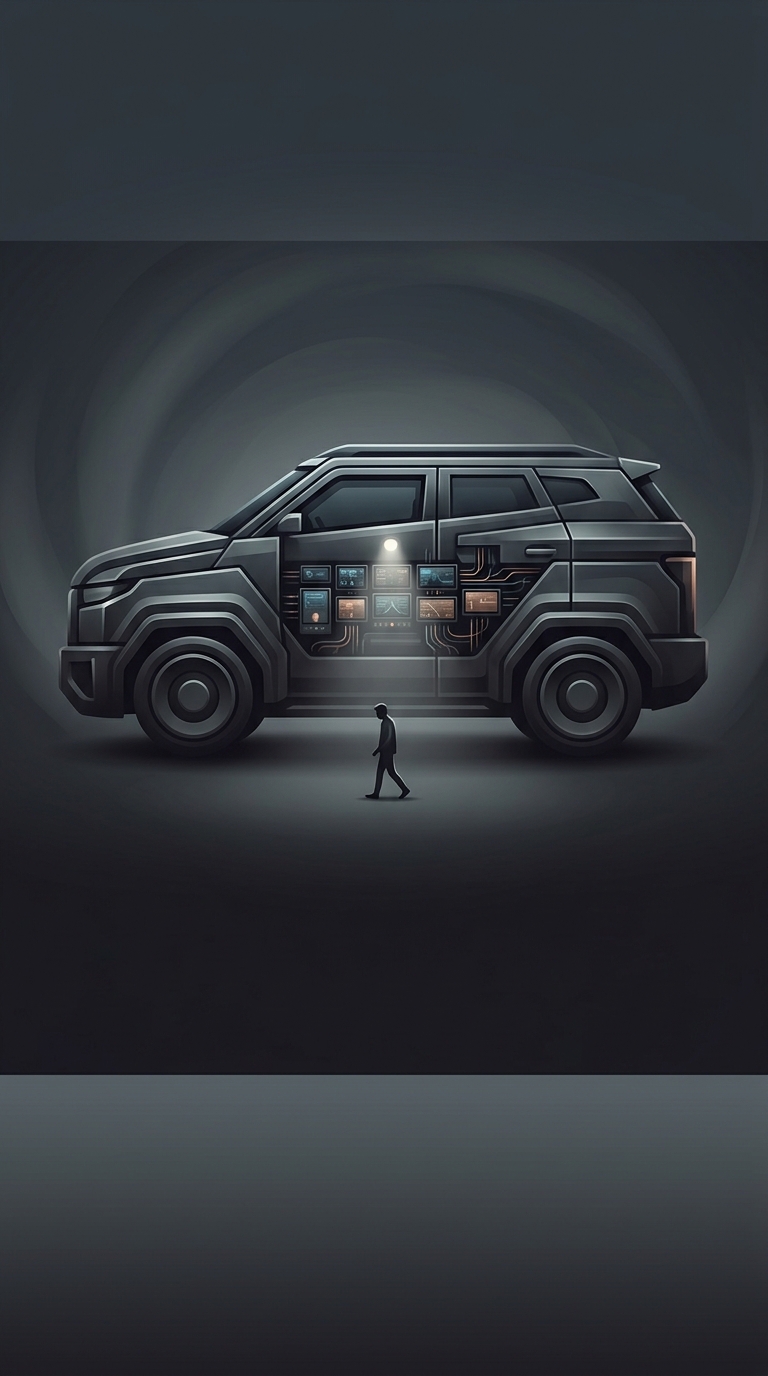
Modern luxury cars can reverse that relationship. A headlight may be a tightly packaged assembly containing LEDs, control electronics, and sensors that help aim or adapt the beam. It may also sit behind body panels that must be removed to reach it. Replacing a bulb, where there is one to replace, may no longer be a simple under-the-hood task; the repair can require specialized tools, diagnostic equipment, or calibration to make sure the light and related systems work correctly.
This is not simply a matter of manufacturers making cars harder to fix. Integrated lighting can support features and packaging that separate parts cannot provide. But integration creates dependencies: when one element fails, the repair may involve a larger assembly and trained service rather than a spare part from the glovebox.
The New Tradeoff
The contrast is less a straight line from crude to advanced than a change in what drivers are expected to do. Older designs often exposed mechanical work to the owner; newer ones can automate more functions while concealing the systems that make them possible. The car may ask less of the driver during a normal trip, yet more of a specialist when something breaks.