Why the Refrigerator Can Flatten a Tomato’s Flavor
A tomato’s taste is not just sweetness and acidity. Much of what makes it smell recognizably like a tomato comes from volatile compounds—small molecules that evaporate easily and reach your nose. As a tomato ripens, its cells produce and release these aroma molecules. Refrigerator temperatures slow that chemistry, so a chilled tomato can taste less fragrant even after it warms back up.
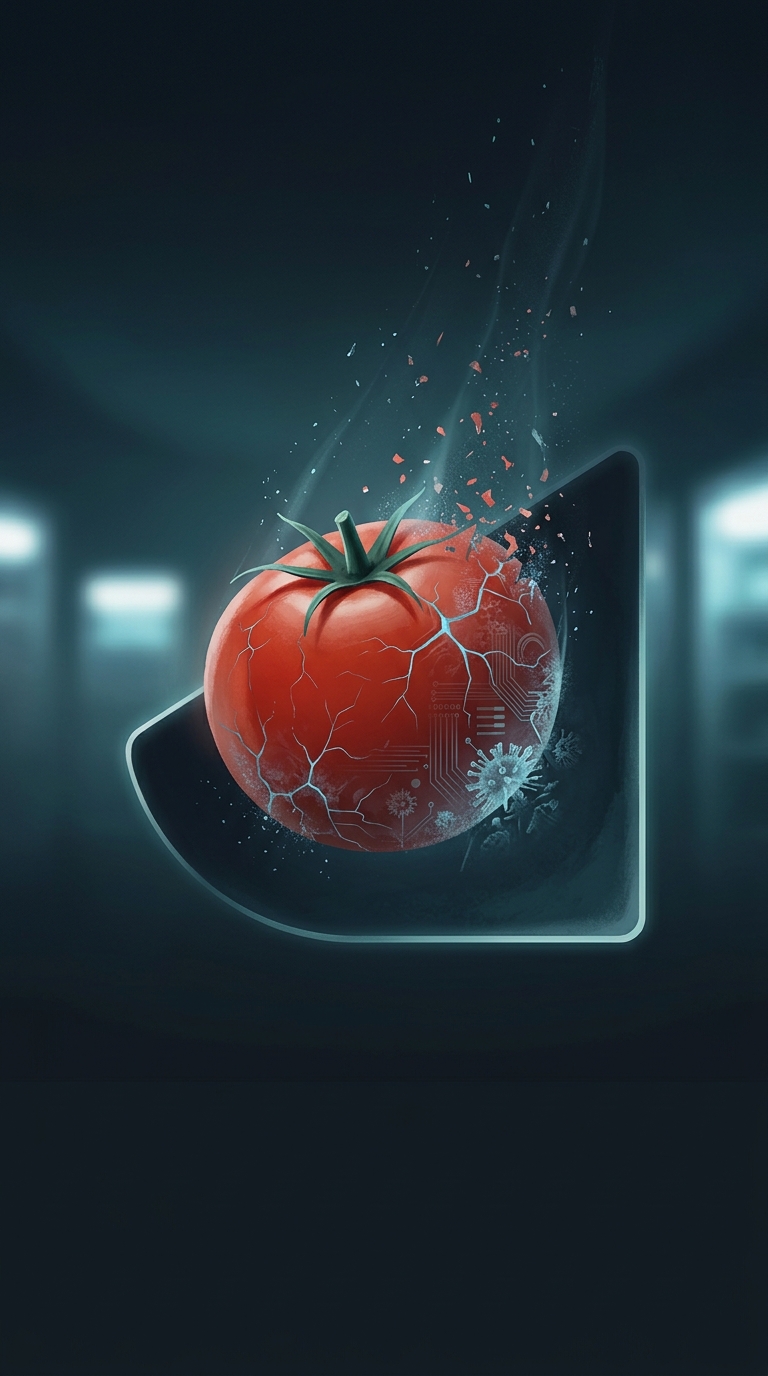
Cold can also damage the fruit’s texture. Tomatoes are sensitive to chilling: after prolonged exposure to temperatures well below room temperature, their cell membranes and ripening processes can be disrupted. The result may be a dull, mealy texture rather than juicy flesh. This effect is more likely with extended refrigeration than with a brief chill.
The Practical Tradeoff
A standard refrigerator is cold enough to slow ripening and spoilage, which can buy time when a tomato is already ripe. But it may cost the fruit some aroma and texture. Keeping tomatoes at room temperature until they are ripe—and using them soon after—usually gives the best eating quality. If you need to refrigerate one to prevent it from spoiling, letting it warm before serving can help its aroma come through, though it cannot fully reverse cold-related changes.
So the useful rule is not that a refrigerator makes tomatoes unsafe or instantly ruins them. It is that cold storage trades some flavor and texture for extra keeping time—a choice that matters most when the tomato is meant to be the star of the meal.