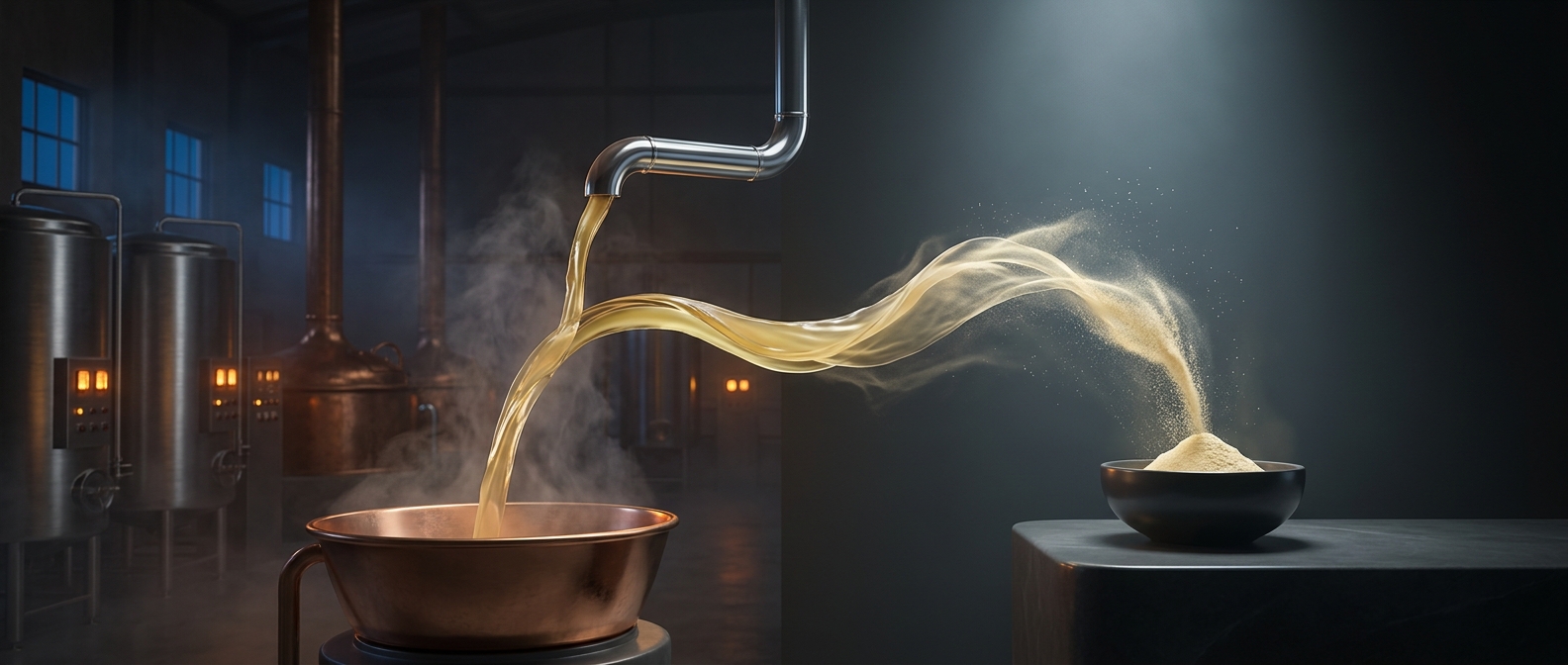
The liquid left after cheese
When milk is turned into cheese, enzymes or acid make its solid proteins clump together. Those curds become cheese; the watery liquid that drains away is whey. It still contains protein, along with lactose, minerals, and water. For cheesemakers, the challenge was that this large-volume byproduct could be costly to handle, and discharging it untreated could pollute waterways.
Whey was not useless: it could be fed to animals or used in foods. But turning a dilute liquid into a dependable, higher-value ingredient required more processing than simply finding a use for it.
Processing made the protein pay
Manufacturers learned to separate and concentrate whey’s proteins. Filters with tiny openings can retain much of the protein while allowing water, lactose, and some minerals to pass through. The concentrated material is then dried into powder. Different degrees of filtration produce ingredients with different protein levels and compositions.
That processing takes equipment, energy, and quality control, so the powder is not free just because its starting material was once cheap. The business works when the finished ingredient can sell for more than the costs of turning, drying, and distributing it—and when buyers want a convenient source of protein.
A byproduct finds a market
Sports nutrition helped create that demand. A scoop of powder was easy to mix into a drink, and flavoring made it more appealing than an unflavored dairy ingredient. Branding and retail packaging also let companies sell directly to people seeking a portable protein supplement, rather than only to food manufacturers buying ingredients in bulk.
The shift changed the economics of cheesemaking: whey could become a saleable product instead of a disposal problem. It also illustrates a practical limit of “waste becomes valuable” stories. The value did not emerge from the liquid alone; it depended on processing technology and a market willing to pay for the result.