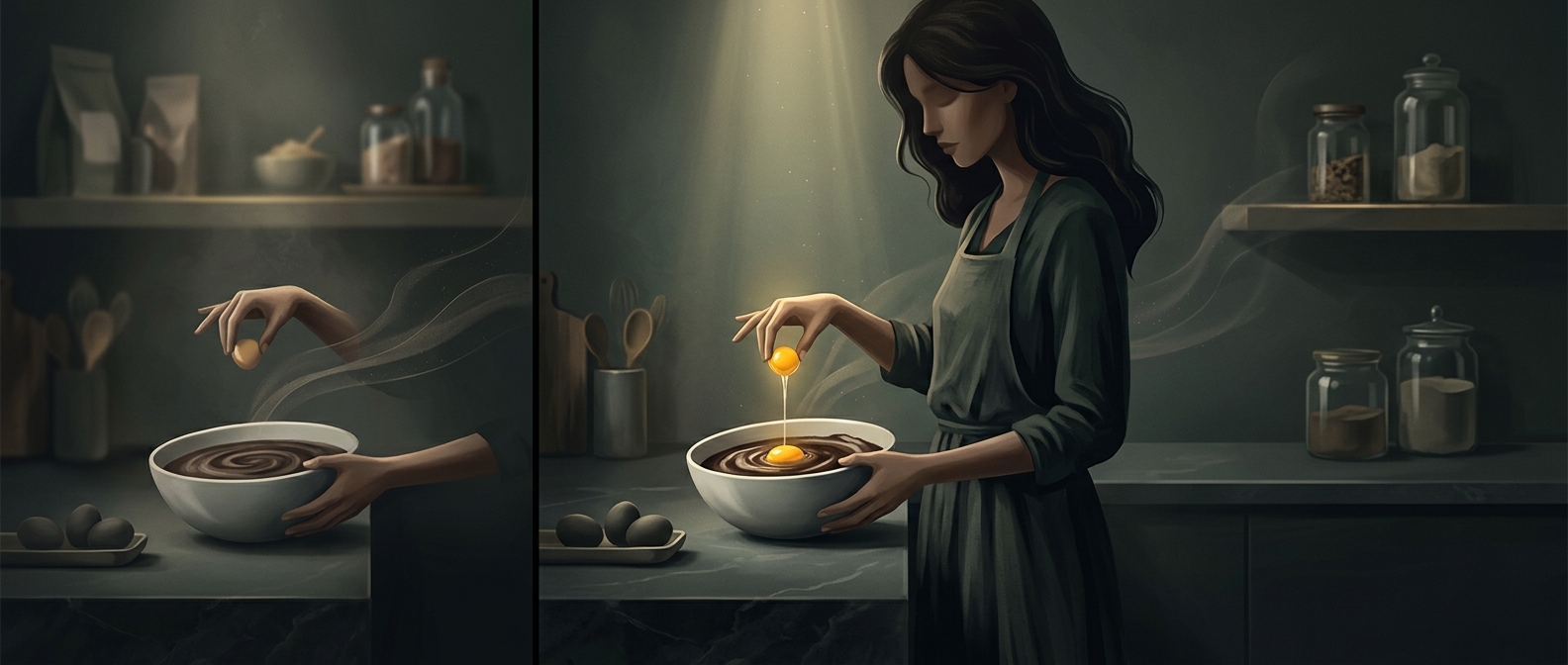
The egg gave the baker a job to do
Early cake mixes were designed to make baking nearly automatic: add water, stir, and put the batter in the oven. Some already contained dried egg, so the mix supplied almost everything a cake needed. That efficiency created an unexpected problem. To some home bakers, the result felt less like something they had made and more like something they had merely assembled.
Removing the dried egg changed the experience. Now the baker had to crack a fresh one into the bowl—a small, visible act that made the recipe feel more personal and involved.
A little effort could make the product feel more worthwhile
The fresh egg did more than add a task. It offered a familiar cue that the baker was contributing an important ingredient, even though the mix still handled much of the work. That distinction matters in selling convenience: people may want to save time without feeling that the product has taken all the skill or credit away from them.
The change also shifted part of the recipe’s burden back to the household. The baker had to supply an egg and remember to add it, while the manufacturer could still promise an easy cake. The product stayed convenient, but it no longer felt quite so effortless.
The smallest step changed the meaning of the mix
Cracking an egg takes only seconds, yet it turns a prepared product into something that seems more like home baking. The cake mix’s success depended not only on what it could do for the customer, but on leaving the customer with a meaningful role in doing it.