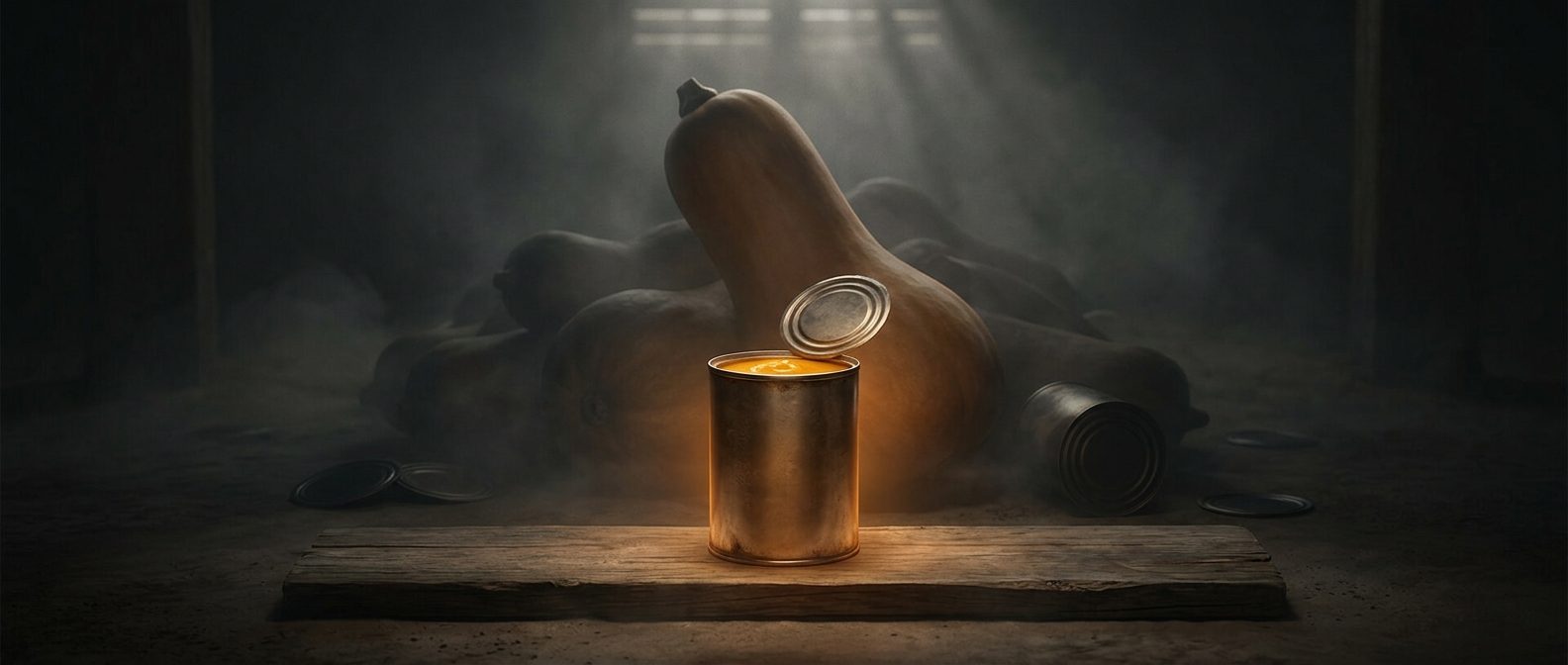
Why a Pie Pumpkin Doesn’t Need to Look Like One
A jack-o’-lantern is selected for its silhouette: a broad, hollowable body and a rind that can be cut. A squash destined for a can has a different job. Its value lies inside—in flesh that cooks down into a thick, smooth puree.
Libby’s uses a Dickinson variety of squash chosen for dense flesh rather than the familiar round shape of a carving pumpkin. That choice reflects a basic processing tradeoff: when the crop is going to be cooked and mashed, an attractive exterior matters less than the texture and consistency of the finished ingredient.
“Pumpkin” Is a Food Name, Too
The word pumpkin does not identify just one botanical species. In cooking, it can refer to several kinds of winter squash, including varieties that don’t resemble the pumpkins sold for Halloween. The label describes their role in the kitchen as much as their precise plant identity.
That distinction helps explain why a can of pumpkin may not contain the type you’d carve. Carving varieties are bred for appearance and structure; pie varieties are selected for useful flesh. A squash that makes a sturdy lantern can be awkward in a recipe, while one with dense, smooth flesh can be excellent in a pie without ever looking like a classic pumpkin.