A simple move can force a chain of choices
In American checkers, pieces move diagonally across a board of alternating dark and light squares. A regular piece advances one dark square at a time; to capture, it jumps diagonally over an opposing piece into an empty square beyond it. The jumped piece comes off the board.
That capture rule gives the game much of its bite. Under standard American rules, a player who can jump must do so. A piece may sometimes make several jumps in one turn, but each landing changes the board—and can expose another piece to capture. The moves are easy to learn; predicting what a forced jump will lead to is the real challenge.
The board shrinks as the stakes rise
Captures reduce the number of pieces and possible moves, so the game often moves quickly from a crowded opening to a contest over a few remaining pieces. Players must weigh immediate gains against position: taking an opponent’s piece can leave the capturing piece vulnerable to a reply.
A piece that reaches the far edge of the board becomes a king, gaining the ability to move and jump backward as well as forward. That small promotion can transform a piece that had been advancing in one direction into a more flexible threat.
Less setup, plenty of calculation
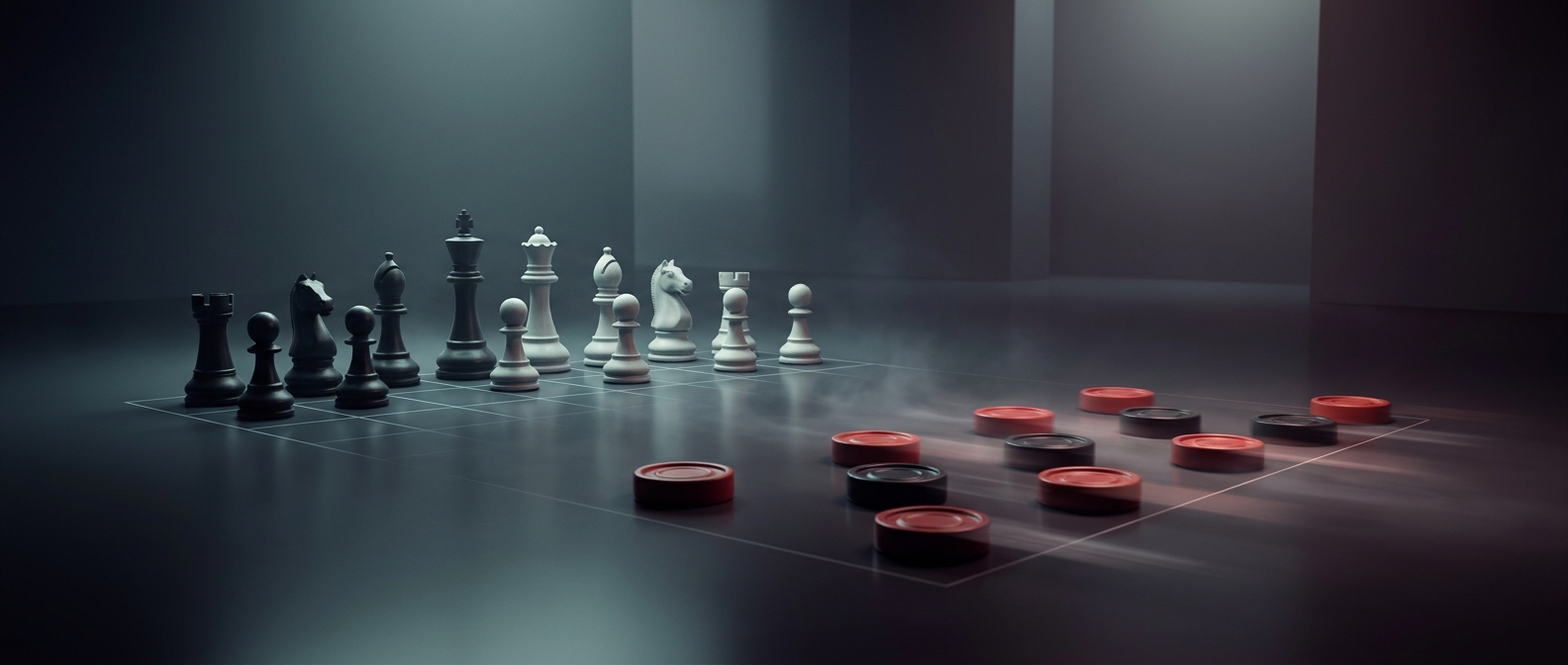
Checkers asks players to track fewer kinds of movement than chess does, and a game needs only a board and matching pieces. But its forced captures make casual-looking turns consequential: one available jump can dictate the move, and a careless landing can set up several losses. The result is a compact game in which the rules fit in a moment, while the consequences of a single move can unfold across the rest of the board.