Why Catan Leaves an Empty Junction Between Settlements
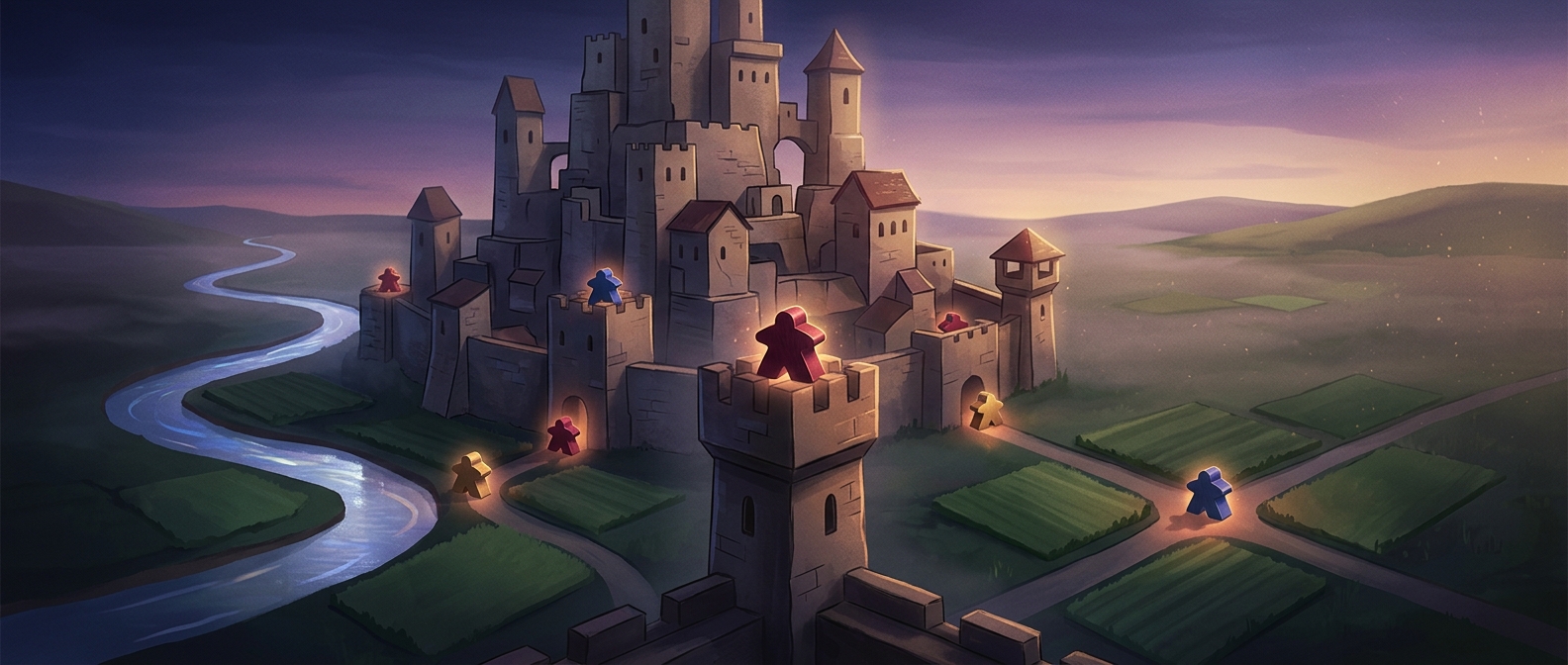
On a Catan board, roads meet at junctions where settlements can be built. The distance rule prevents a player from placing a settlement at a junction immediately beside any existing settlement—even their own. At least one junction must remain empty between them.
That empty space changes the value of every building site. A settlement needs access to three surrounding terrain hexes, so players are choosing not just a spot for a house but a combination of resource-producing land. The spacing rule limits how tightly one player can cluster those choices and makes promising junctions scarce.
A Building Site Can Be a Border
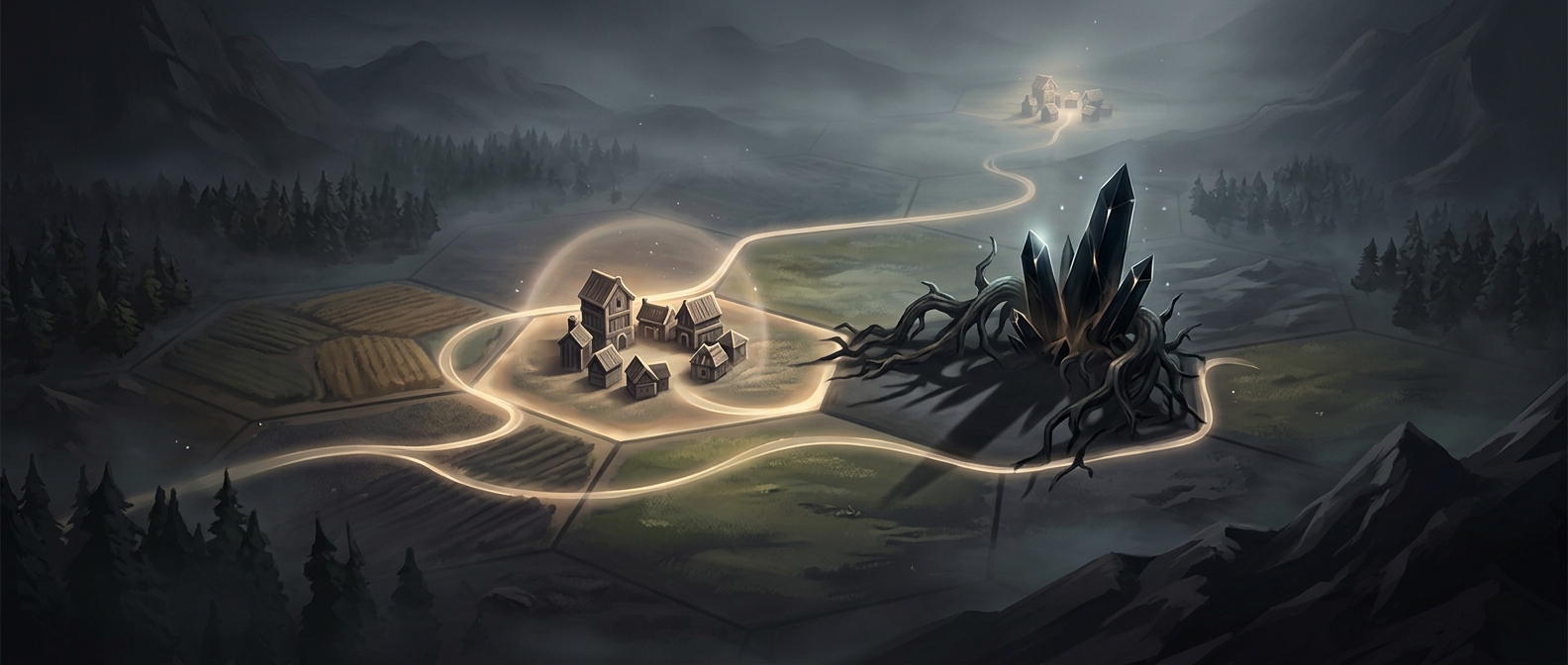
Settlements also shape how players expand. Roads connect through a player’s own settlements, but an opponent’s settlement interrupts that route: a road cannot continue through the occupied junction. Claiming a well-placed spot can therefore do more than add a source of resources. It may cut off a rival’s easiest path toward open building sites or a long road.
The rule makes expansion a contest over both land and access. Players must plan routes toward available junctions, while watching for opponents who could occupy a key crossing first. A seemingly small gap between settlements can determine who has room to grow—and which roads still lead somewhere.