A Meeple Is a Bet on a Feature’s Future
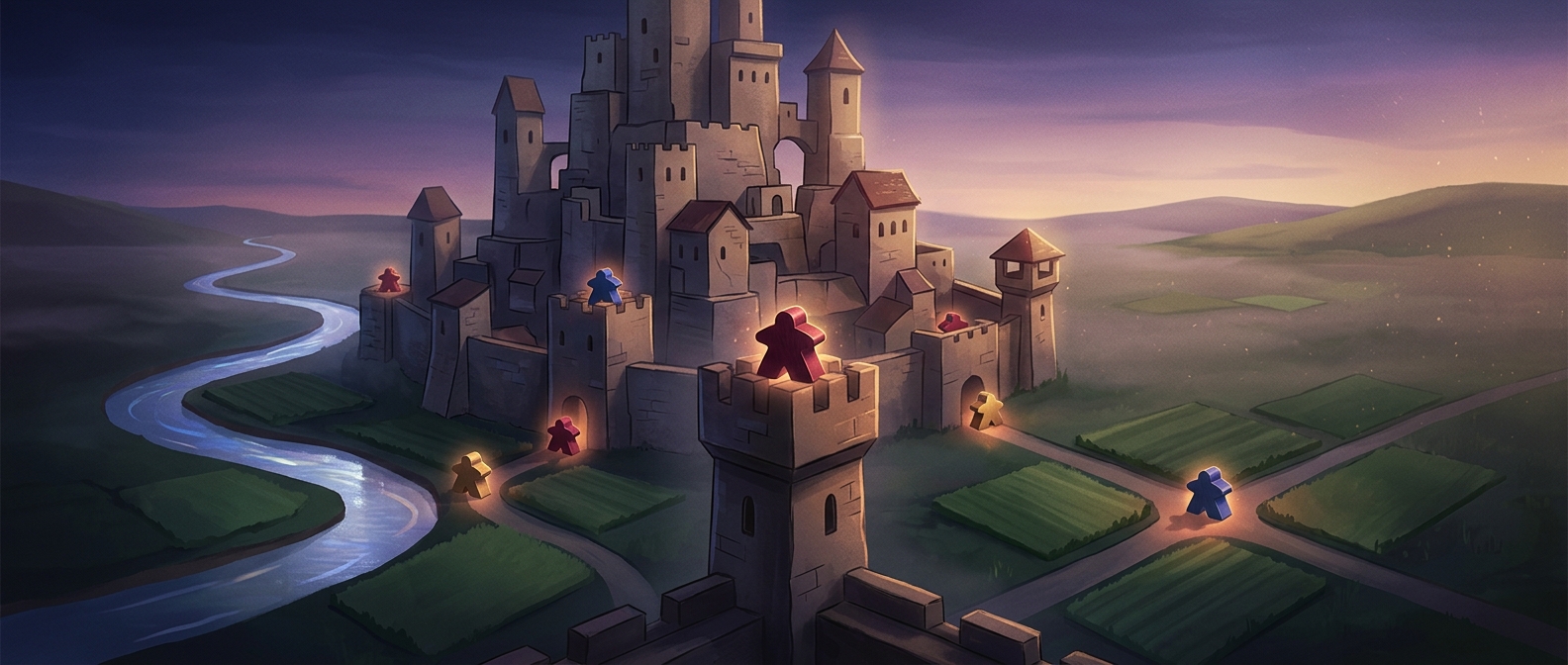
In Carcassonne, a player usually places a meeple on a feature of the tile they just added: a city, a road, or another scoring feature. The piece marks a claim, but it does not score immediately. The feature must first grow into a completed shape—such as a city enclosed by walls or a road joined at both ends.
That delay turns each placement into a prediction. A small city may be easy to finish soon, freeing its meeple for another claim. A sprawling city could be worth more, but it may need many tiles—and the right connections—to close.
The Cost of Leaving a Meeple There
A player has only a limited number of meeples. While one is marking an unfinished feature, it cannot be used to claim another, so a tempting placement can leave fewer options for later turns. When a feature is completed and scored, its meeples return to their owners, ready to be placed again.
Claims also depend on how tiles connect. A player cannot simply add a meeple to a feature that already has one on it. But separate city or road sections can later join together, bringing different players’ meeples onto the same finished feature. In that case, the player with the most meeples there earns the points; a tie means the tied players each receive the full score.
Waiting Can Pay—or Leave Points Behind
Not every feature gets completed before the game ends. Unfinished features can still score, but generally less than completed ones. So a meeple placed early may earn a strong return, remain tied up for much of the game, or end up marking a feature that never quite closes.
The wooden figure is therefore more than a marker: it is a piece of a player’s working supply temporarily committed to a project. Each placement asks whether the likely score is worth giving up the chance to make another claim now.