Why Risk’s map has 42 territories
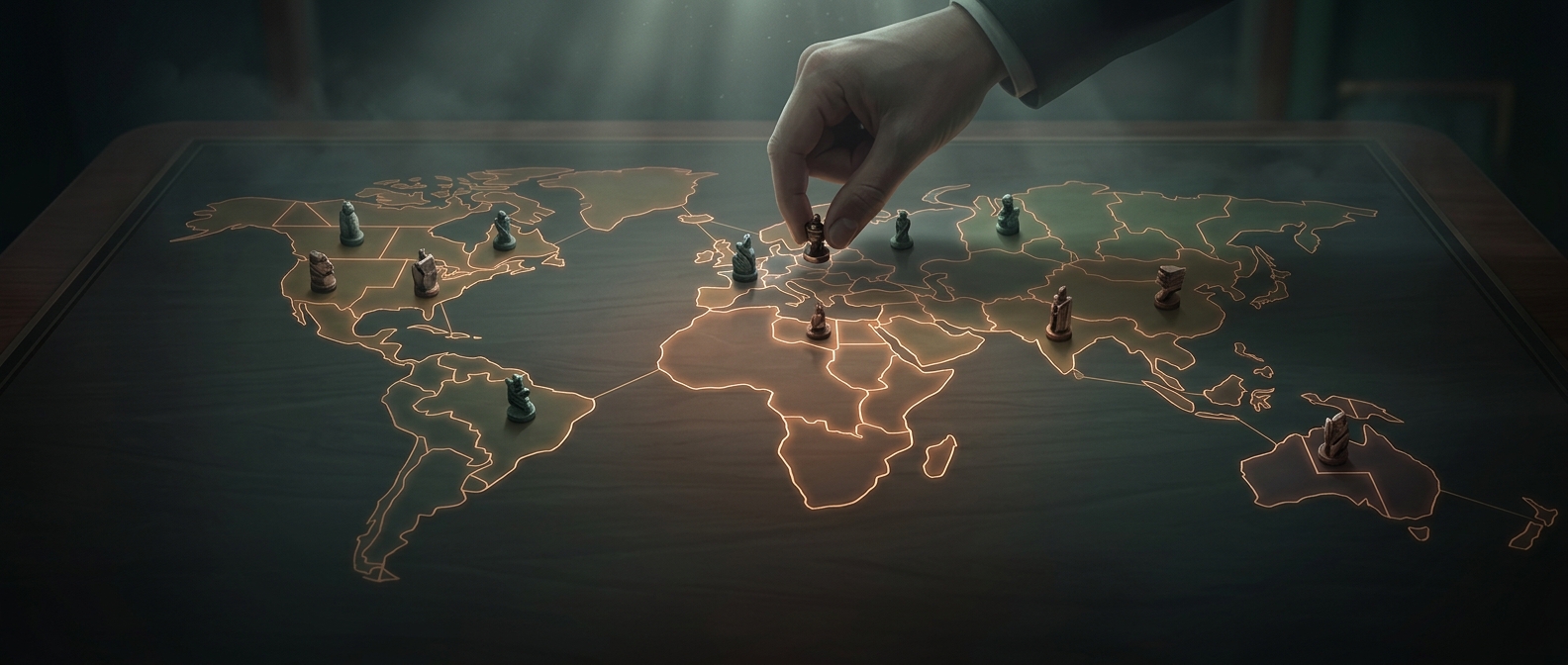
The board is not simply a map divided into countries. It is a network of spaces connected by border lines: an army can attack only across a connection, so the shape of that network determines which parts of the world are easy to reach and which can be defended as bottlenecks.
The territories are also grouped into six continents. Holding an entire continent earns bonus armies at the start of a turn, making concentrated control valuable—but often difficult to keep. A player who gathers forces behind a narrow entrance may collect the bonus with fewer borders to defend; a player who spreads across the map may gain more routes for attack but leave more openings for rivals.
A small map creates recurring choices
The fixed set of territories gives every game the same strategic geography, while changing armies and alliances make control unpredictable. Players must weigh expansion against exposure: taking one more territory can help secure a continent or earn a card, but it also creates another frontier that needs protection.
That tension is why the number matters. Forty-two spaces are enough to make the board feel global, yet few enough that a single border can reshape a player’s position. A narrow passage is not just a line on the map; it can decide whether a continent’s bonus is worth fighting to hold.