A runway pattern underfoot
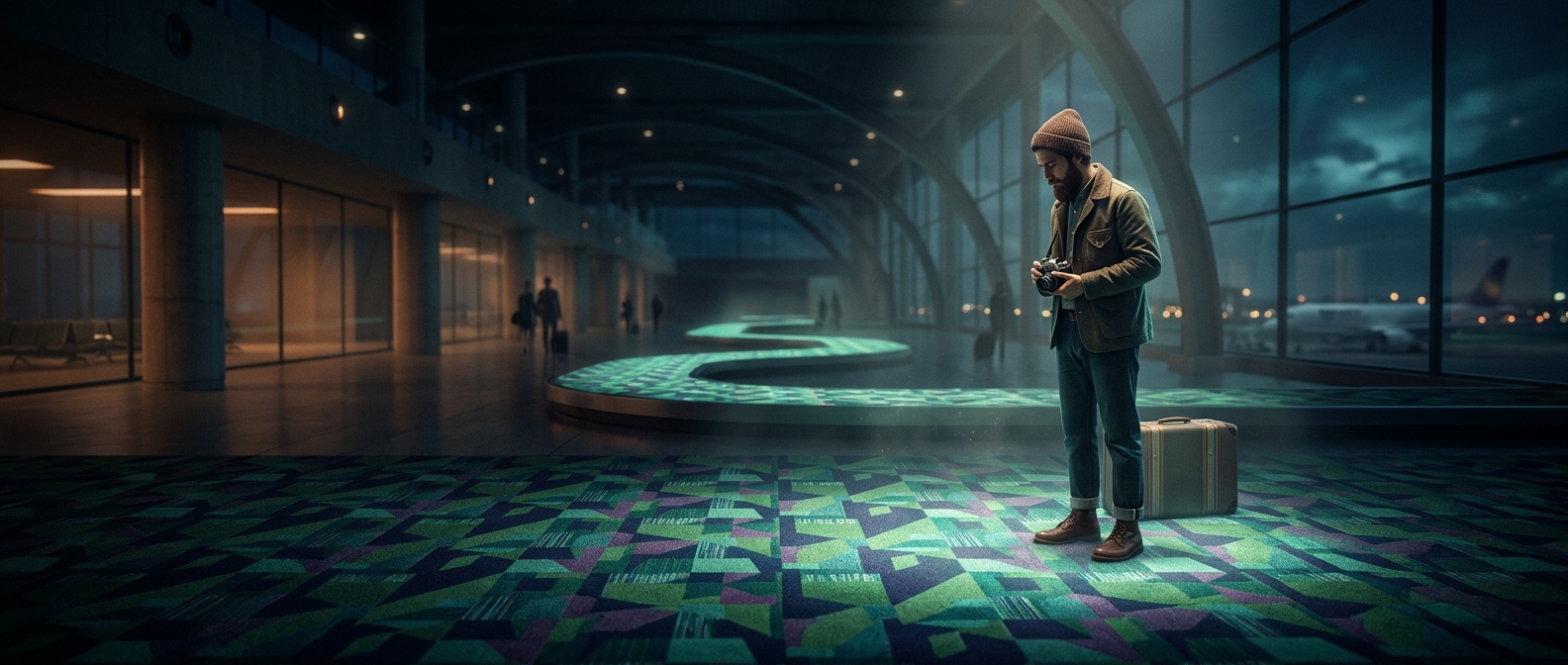
The carpet’s appeal began with an unlikely change of scale: a view associated with aircraft and control towers became something travelers could stand on. Its teal ground and dark geometric lines suggested airport movement from above, turning an ordinary terminal floor into a recognizable map-like design.
That visual logic also made the carpet easy to photograph. A traveler could frame a pair of shoes against the pattern and instantly signal a specific place: Portland International Airport. The image worked as a tiny travel souvenir, even for someone who had only a few minutes between flights.
From floor covering to local shorthand
Once people began sharing those shoe photos, the carpet became a repeatable social-media ritual. Its distinctive pattern made each picture recognizable, while the shoes personalized it. Travelers were not just documenting a terminal; they were joining a tradition other visitors already understood.
That familiarity carried beyond the airport. The design appeared on merchandise and inspired local products, including craft beer. In effect, the carpet gave Portland an unusually portable emblem—one that could be spotted in a photo, worn on a shirt, or carried home.
Why replacement felt personal
Airport carpets are working surfaces, not museum pieces. Years of foot traffic wear them down, and a replacement is a practical maintenance decision. But by the time Portland’s carpet was replaced in 2015, the old flooring had acquired meanings its designers could not have planned: arrival, departure, routine, and a shared joke among travelers.
So its removal registered as more than a renovation. People mourned it publicly because the carpet had turned an anonymous in-between space into a place with its own identity. A patch of flooring had become a travel memory people could recognize before they even saw the airport sign.