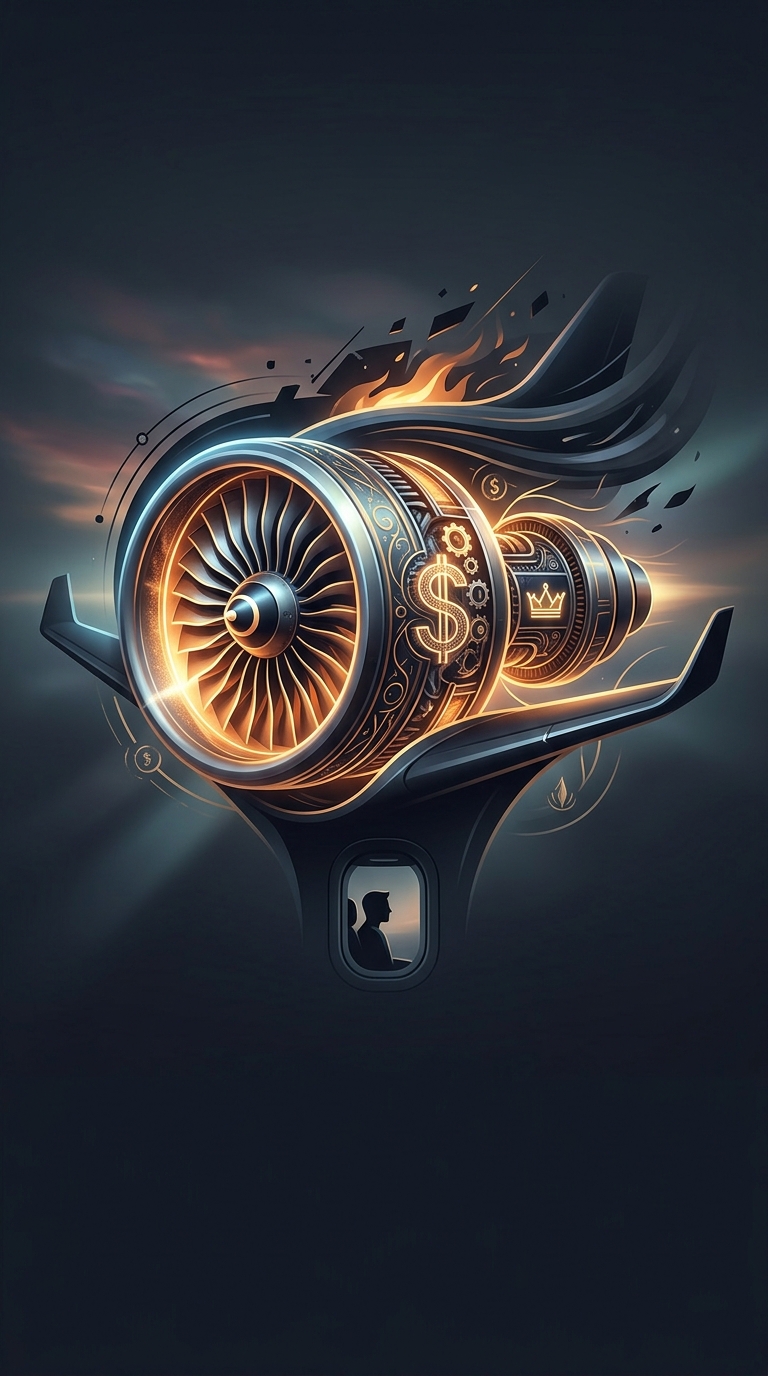
The fan does most of the visible work
A modern airliner’s engine is a turbofan: a smaller jet engine surrounded by a large fan. The fan draws in air and sends much of it around the engine’s hot central core. That bypass air produces a substantial share of the thrust, so the broad front of the engine is not just a cover for a tiny, high-speed jet—it is a carefully shaped airflow machine.
Inside, the core compresses air, mixes it with fuel, and burns the mixture. The resulting hot gas spins a turbine, which turns the front fan through a shaft. The challenge is making these parts work together across extreme heat, pressure, vibration, and changes in speed while keeping the engine efficient and dependable.
Why upkeep is so exacting
The fan blades and other rotating components must be balanced and inspected closely. Even small damage can matter: a nick or crack may affect how a part handles repeated stress, while a foreign object can damage blades or other internals. Maintenance therefore involves more than checking whether the engine starts. Technicians inspect, measure, repair, and replace components according to detailed limits, sometimes taking the engine apart to reach them.
The engine’s price reflects that tightly integrated hardware and the demanding work needed to keep it airworthy—not just the metal visible from a passenger window. Its size makes the engineering easy to see; the precision is hidden inside. Each flight depends on components that must keep turning at high speed without letting tiny defects become large failures.