How a Timer Turns Air Into Waves
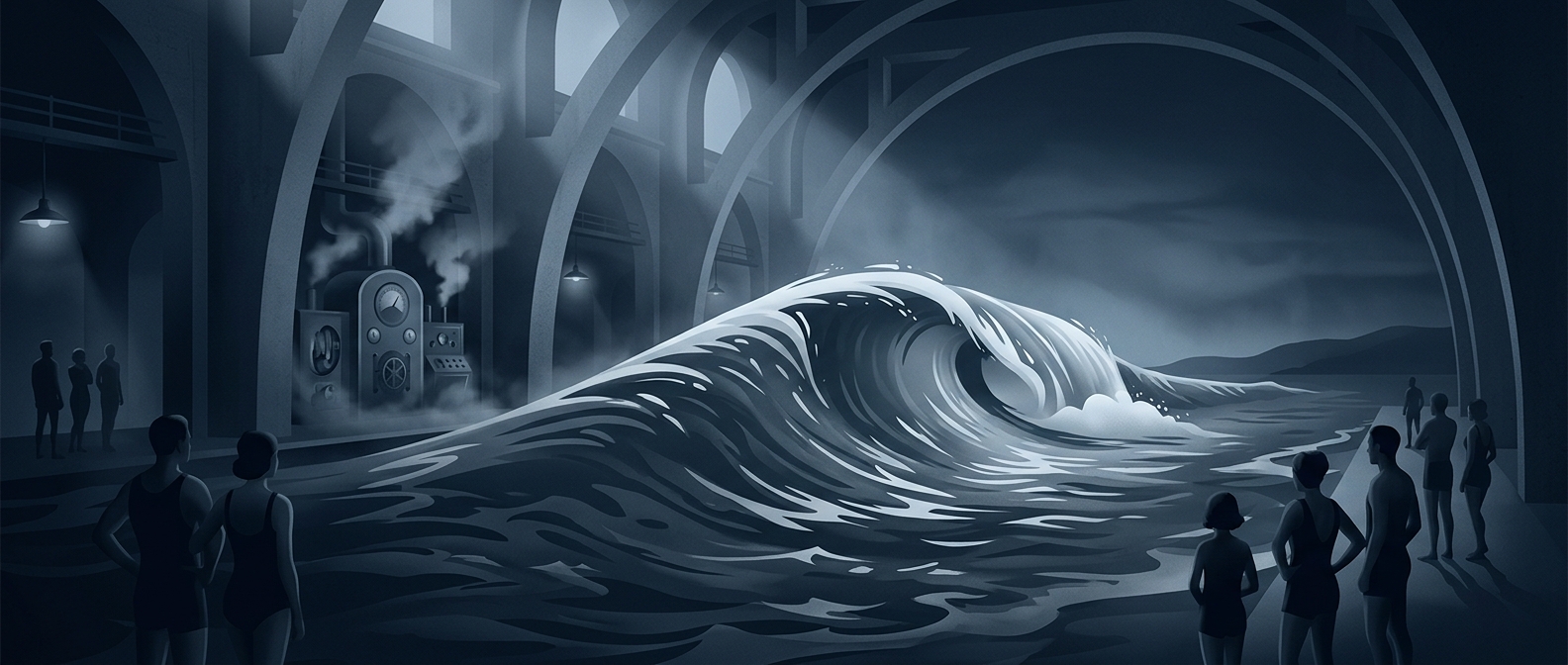
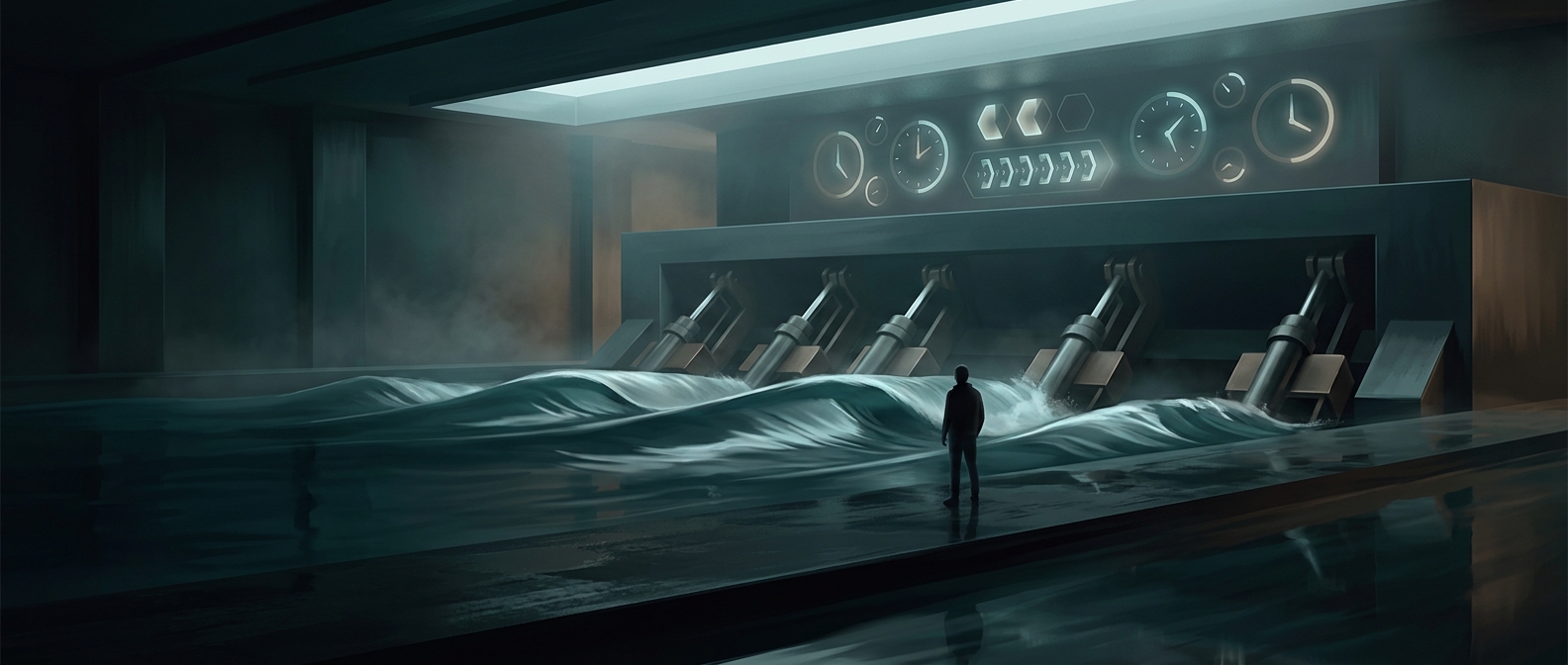
In a pneumatic wave pool, the wave-making equipment works by changing air pressure inside chambers connected to the pool. When a chamber is pressurized, it pushes water out through an opening; changing the pressure lets the water move back. Repeating that push-and-release cycle sends waves across the pool.
A timer coordinates those pressure changes, controlling when a wave sequence begins and when it stops. The pool can therefore deliver waves in planned sessions rather than producing an uninterrupted swell. The schedule is part of the attraction’s operating design: it makes the experience repeatable and creates clear intervals between active wave periods.
The Pause Is Part of the Design
A break in wave production gives swimmers a calmer moment to get out of the water. It also gives staff and visitors a predictable transition between sessions, including time for people to head to nearby refreshments before the next cycle starts.
That rhythm is one of the basic differences between a wave pool and the ocean. The pool’s waves are generated by machinery on a schedule, so the same system that creates the surf also determines when the water gets a rest.