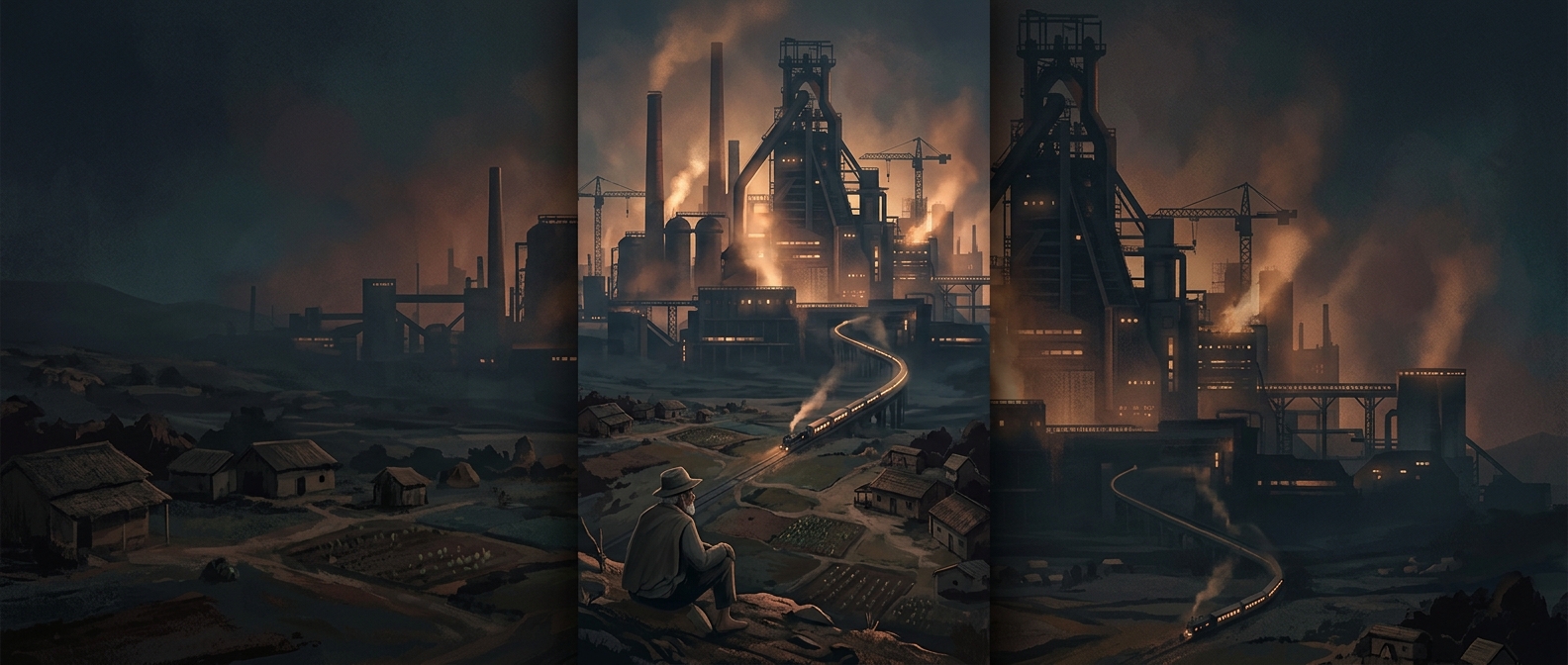
Why industrial growth can widen the gap
When an economy shifts from farming toward factories and cities, the first gains often go to people positioned to take advantage of the new work. Factory owners earn returns on capital—the buildings, machines, and money used to produce goods. Workers with scarce technical skills may also command higher pay, while people leaving low-productivity rural work can initially find only low-wage jobs.
That uneven transition is the mechanism behind the rising side of the Kuznets curve, an economic hypothesis associated with economist Simon Kuznets. It describes a possible pattern between economic development and income inequality, not a rule that every society must follow.
How the pattern might turn downward
Over time, industrial economies can create a larger middle class. More workers gain access to education and skills needed for better-paid jobs; businesses compete for labor; and a broader share of the population earns wages from the expanding economy. Governments may also use taxes, public services, or social protections to spread some of the gains. These forces can narrow the income gap even as the economy continues to grow.
The change is not automatic. Whether gains reach workers depends on who can obtain training and jobs, how wages develop, and what institutions do with rising wealth. A country can grow without promptly producing the broad-based prosperity implied by the curve.
A trajectory, not a promise
The hypothesis is useful because it draws attention to timing: growth can raise inequality during a transition before its benefits become more widely shared. But the curve does not say how long that transition lasts, or guarantee that inequality will eventually fall. The key question is not only whether an economy grows, but who is able to participate in—and benefit from—that growth.