The look came at a physical cost
For Rocky III, Sylvester Stallone reportedly pushed his body fat into the single digits to look especially lean on camera. Reaching that level generally means stripping away much of the body’s stored fat, often through a severe gap between the energy a person takes in and the energy they use. It can change appearance quickly, but it also leaves less fuel available for training and daily demands.
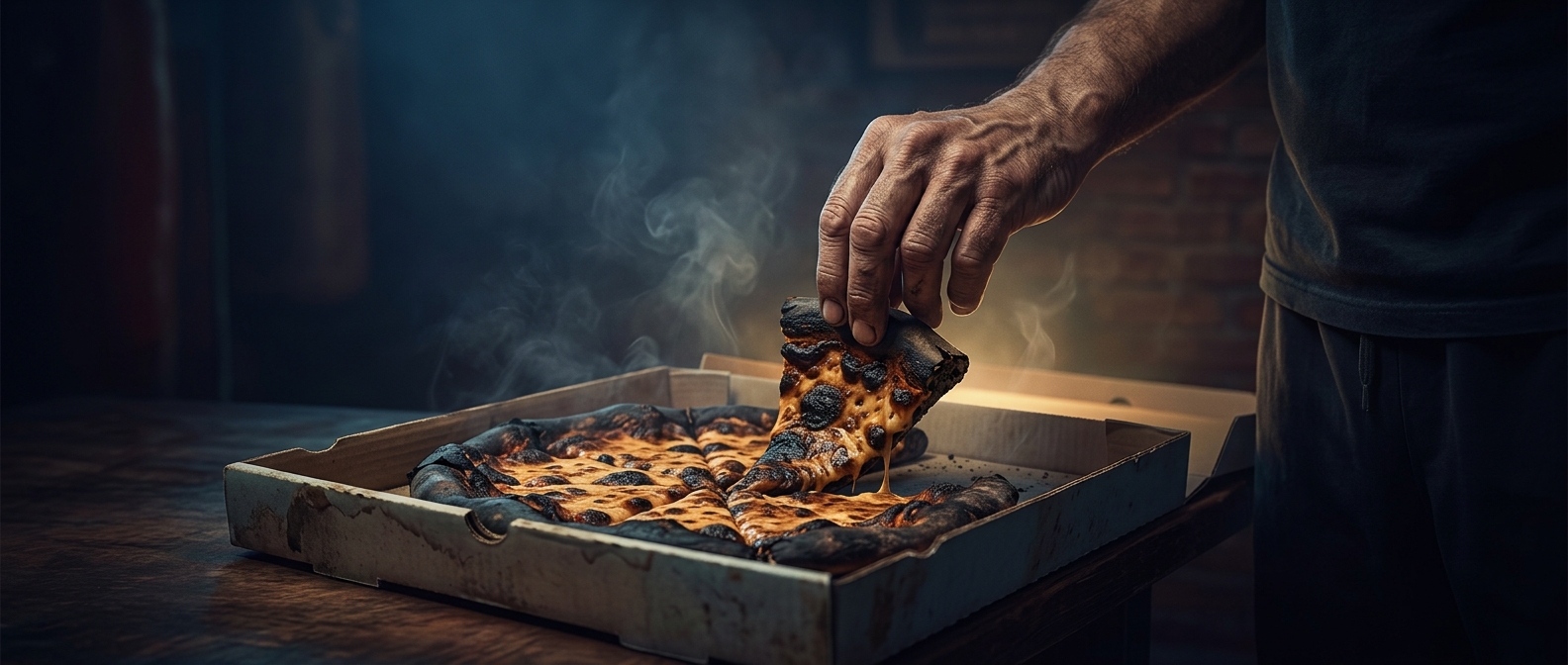
The reported menu—black coffee and burnt pizza crusts—was an extreme way to restrict food, not a balanced plan for sustaining hard workouts. Coffee can make someone feel more alert for a while; it does not replace the calories and nutrients that food supplies. A demanding training schedule on very little food can therefore leave someone drained even when caffeine keeps them moving.
Why exhaustion can reach the set
The account also describes Stallone struggling with memory while filming. Severe fatigue and inadequate nourishment can make concentration harder, though the anecdote alone cannot establish exactly what caused his memory trouble. On a film set, that cost is especially visible: an actor has to remember lines and hit physical marks while repeating scenes, sometimes after strenuous work.
The striking tradeoff is that a look designed to read as formidable on screen reportedly came with a body that was struggling off camera. A camera can capture definition; it cannot show how depleted the person feels between takes.