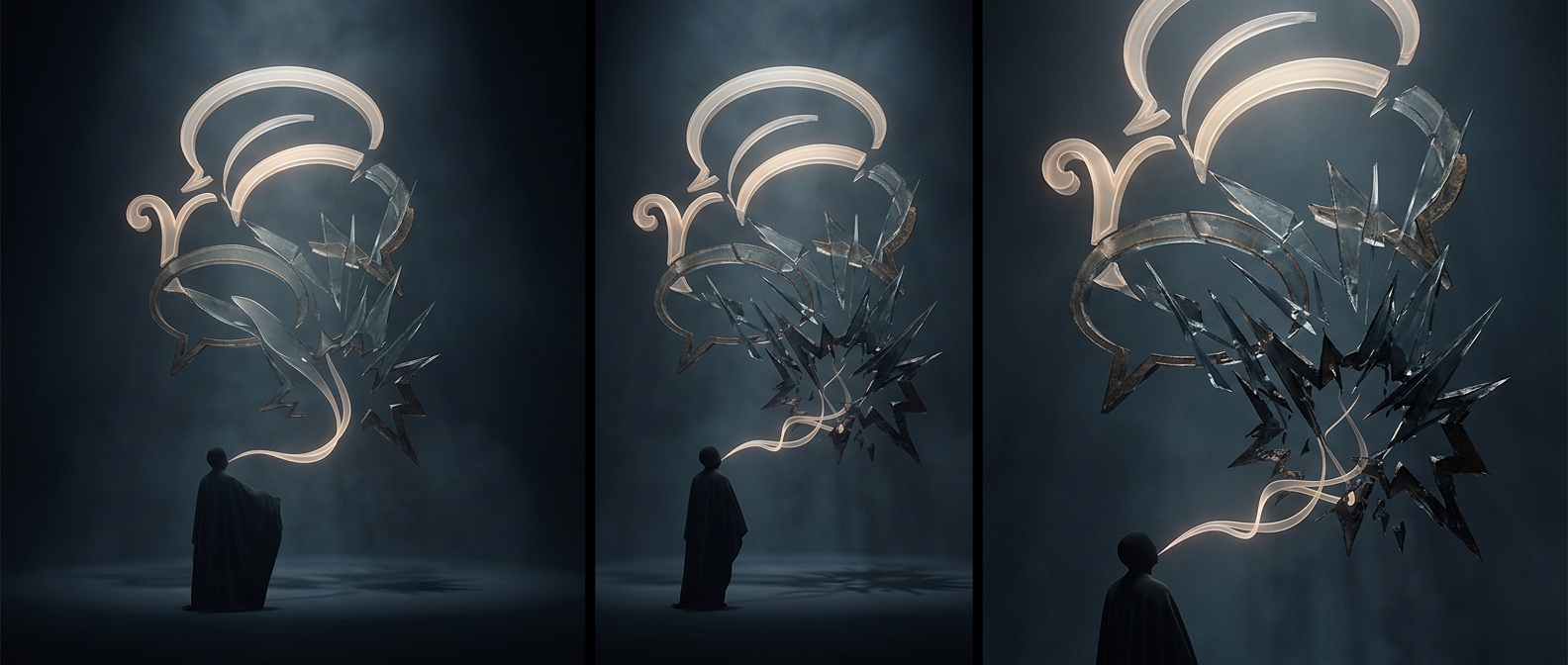
How “Um” Keeps a Conversation in Motion
A pause can be hard to read. Are you finished, searching for a word, or inviting someone else to speak? A filler such as “um” gives listeners a clue: the speaker has not handed over the floor yet. It can hold a conversational turn while the speaker works out what to say next.
That small signal matters because conversation is coordinated in real time. Listeners often begin preparing a reply before the other person has finished. If a speaker goes silent, the listener may take the gap as an opening. Saying “um” can make a pause sound like part of an unfinished thought rather than a completed turn.
A Pause That Communicates
Fillers also help listeners anticipate what is coming. A hesitation can signal that the next phrase may take a moment, giving the listener reason to wait instead of jumping in. The sound is not just empty space: it conveys information about the speaker’s progress, even when it adds no new facts to the sentence.
The effect is subtle, and listeners interpret fillers alongside timing, tone, and context. But in a quick exchange, a brief “uh” can preserve the speaker’s place long enough to retrieve a name or shape an answer. What sounds like a verbal stumble can therefore do useful social work: it helps two people avoid mistaking a search for words for the end of a turn.