The chase turns movement into a decision
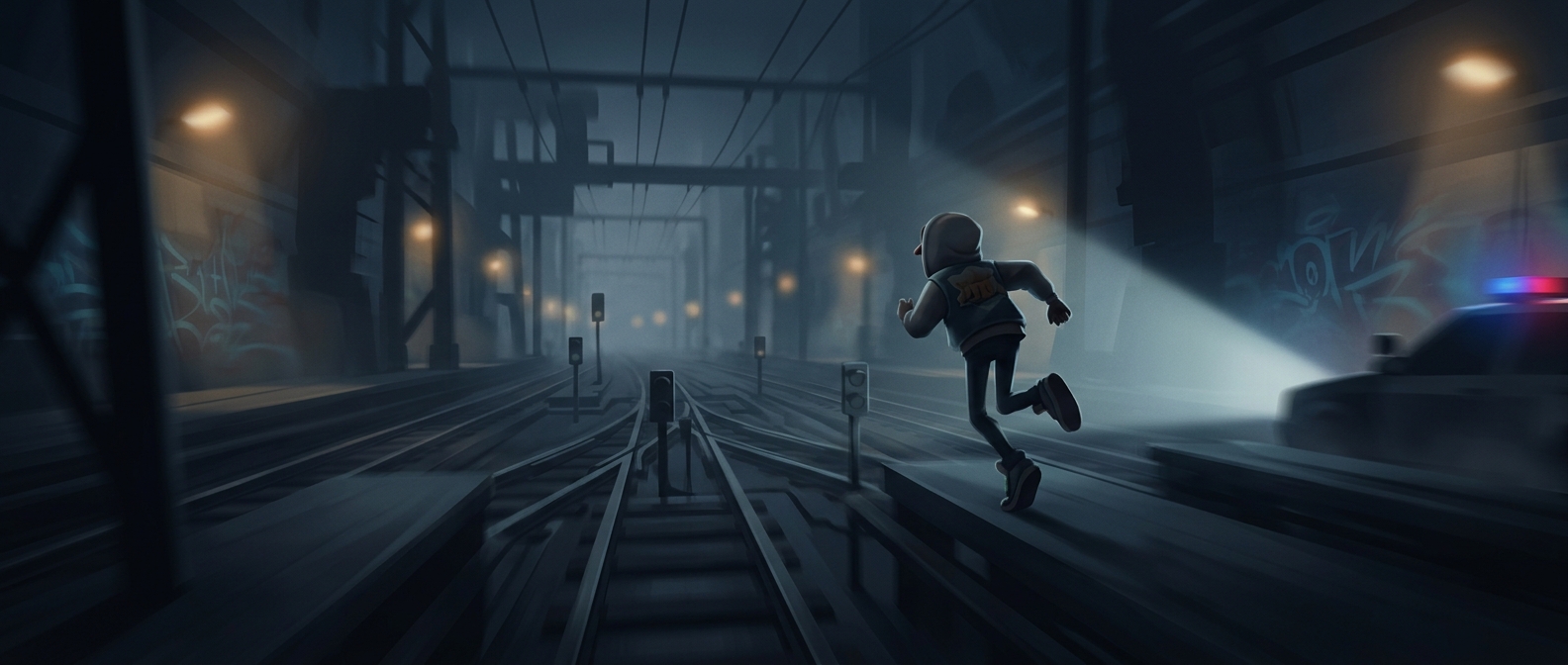
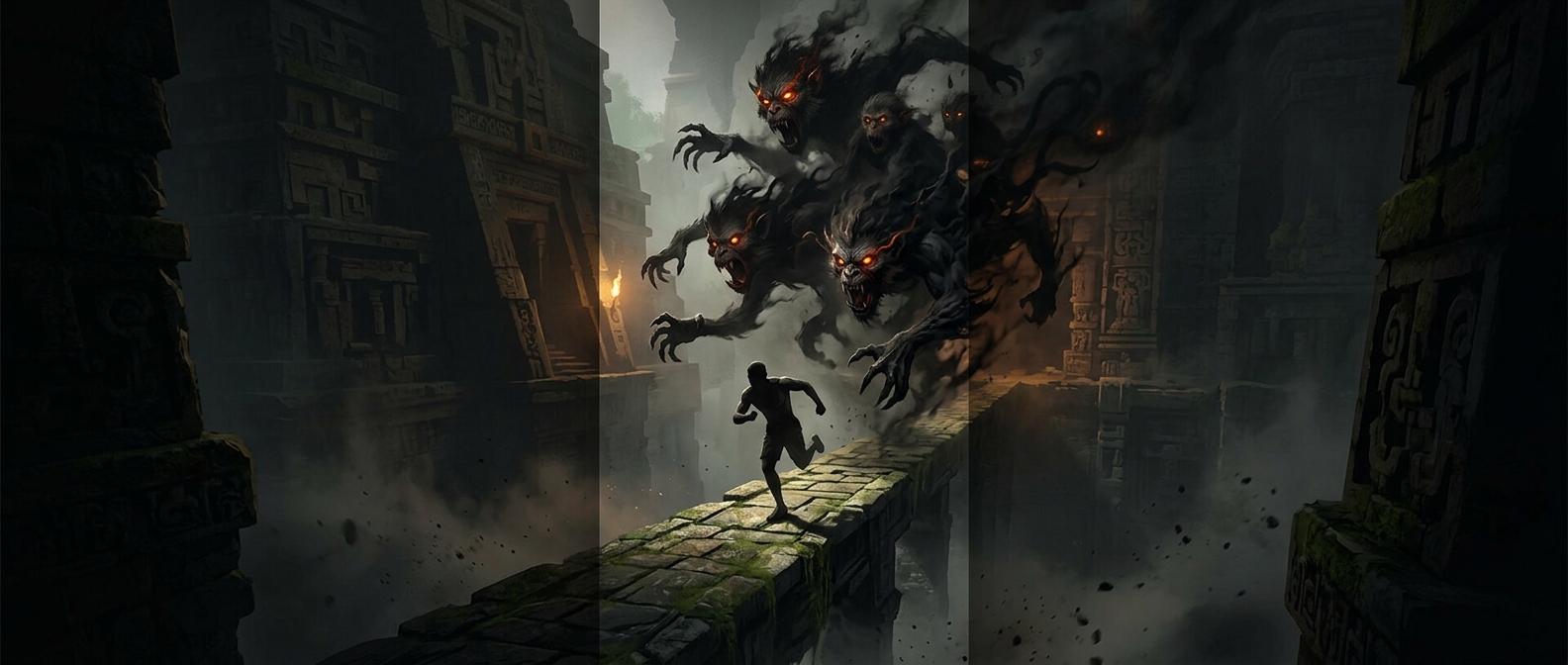
The ape-like pursuers do more than supply a frightening backstory: they make hesitation feel costly. With the stolen artifact behind the escape, the player is pushed forward along a narrow route through ruined structures. There is no safe place to stop and inspect the scenery; attention has to stay on the path ahead.
That pressure gives the simple controls their bite. The player must react to hazards by turning, jumping, or sliding at the right moment. A turn missed or an obstacle hit can end the run, so each stretch of path becomes a quick test of recognition and timing rather than a fight against the creatures.
Why a stumble matters
The monsters make failure legible: if the runner falters, the chase catches up. That threat links the game’s premise to its central challenge, even when the immediate danger is a broken walkway or an obstacle in the route. The player is not trying to defeat the pursuers; survival means keeping the run going.
The result is a compact feedback loop: spot the next hazard, choose a move, and keep moving. The terrifying chase gives that repeated sequence a clear consequence—one mistake can turn a daring escape into a capture.