A chase turns a track into a quick decision game
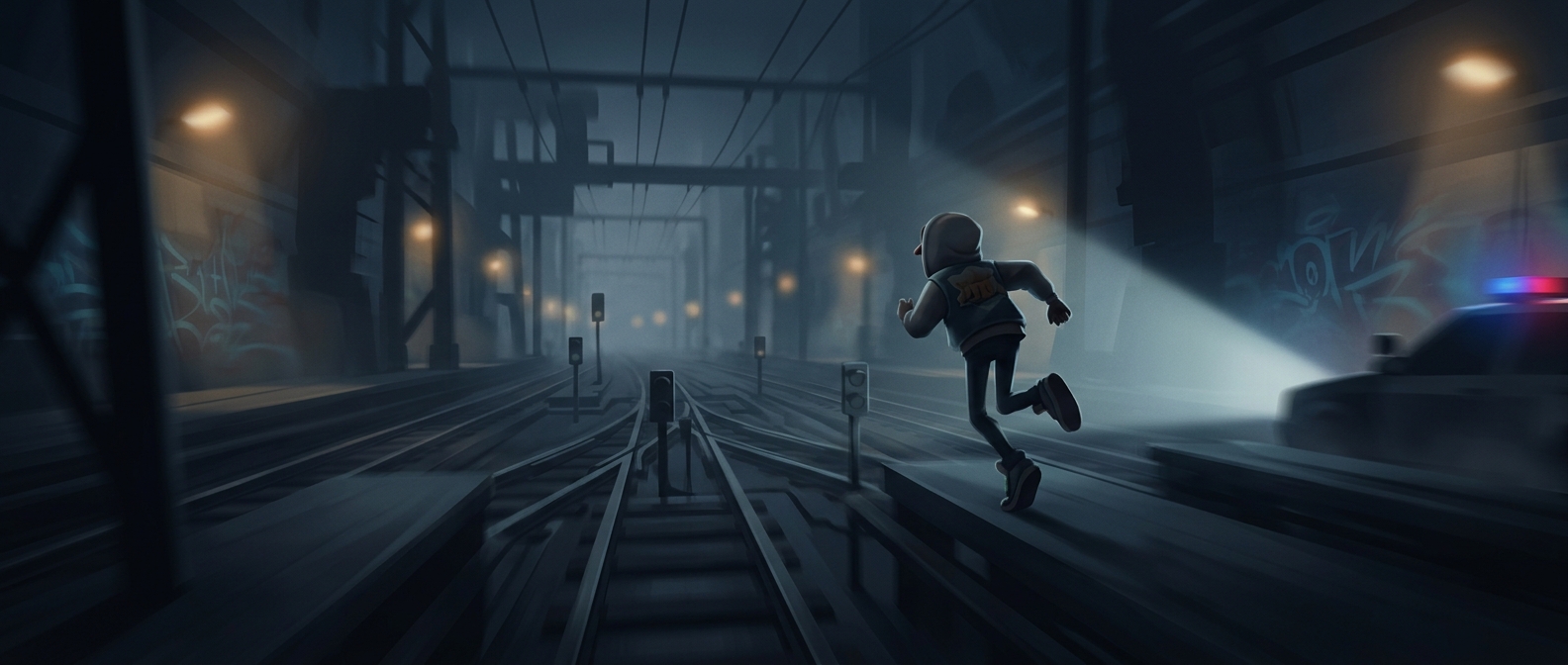
The guard and dog give the run a reason to keep moving, but the real challenge is reading the railway ahead. Trains, barriers, and gaps arrive in a steady stream, and the player has only a moment to choose whether to switch lanes, jump, or slide. A mistake ends the run, so each obstacle is both a reflex test and a small risk calculation: take the safer path, or aim for a reward that may be harder to reach.
Why the run can keep going
Subway Surfers uses the endless-runner format: instead of reaching a final level, the player tries to survive longer and improve a score. The track continually presents new obstacle patterns, while the basic controls stay consistent. That combination makes the game easy to enter but difficult to master; the challenge comes from reacting faster and planning farther ahead, not learning a growing set of moves.
Coins and temporary power-ups give players extra goals beyond staying alive. They can make a risky route tempting, while missions encourage attention to particular actions during a run. The chase supplies urgency; the changing hazards and optional rewards supply reasons to try again. Even when the character crashes, the attempt has a clear result—a distance, score, or completed objective—to beat next time.