Why a Wordless Tune Could Carry Devotion
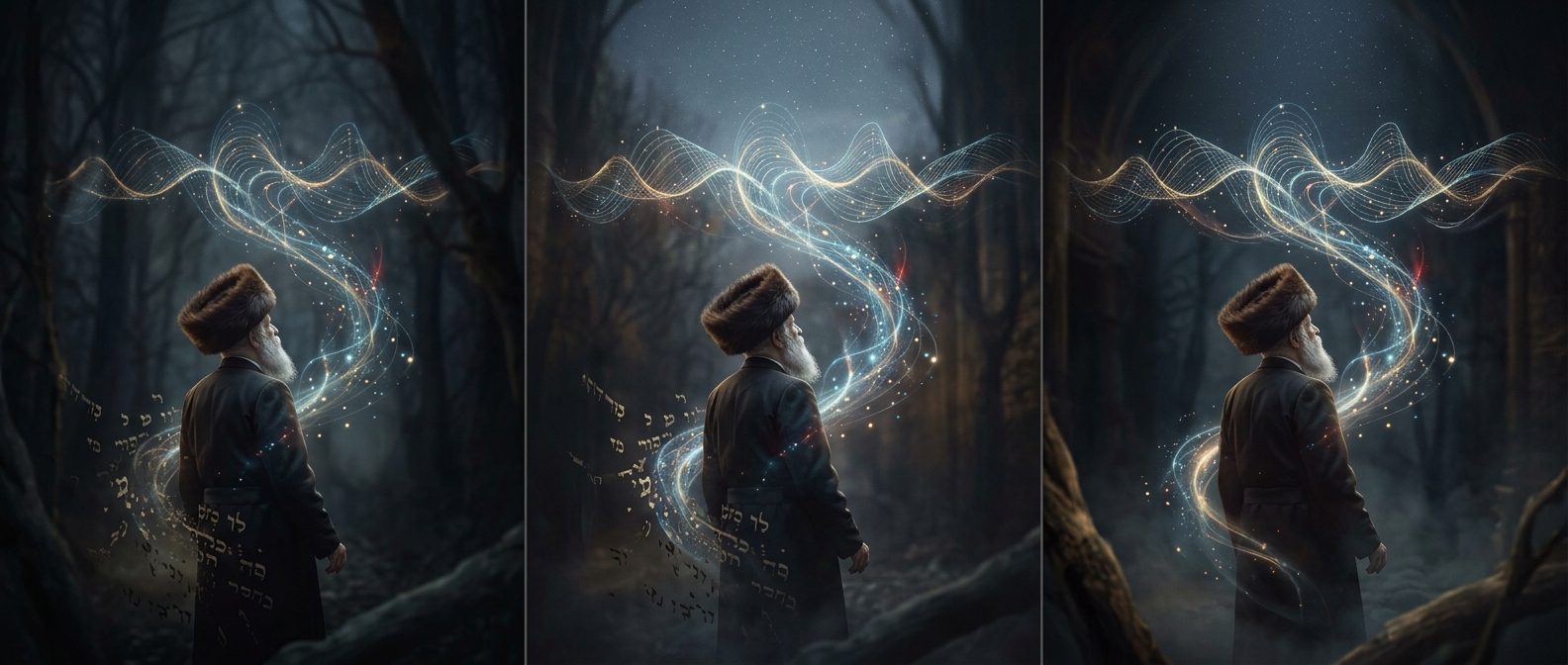
In the Hasidic tradition associated with the Baal Shem Tov, a niggun is a melody sung without fixed words. Its lack of lyrics is not a lack of meaning. Instead of stating an idea about God, a singer can use melody to express longing, joy, or reverence without pinning that feeling to a sentence.
That mattered because words can explain a belief, but they can also keep attention on the explanation. A melody offers another route: the singer follows its rise, fall, and return, giving feeling a form without spelling it out.
Repetition Turns Listening Into Participation
A niggun often relies on a short phrase repeated over and over. As people join in, they do not need to learn a text or match a soloist’s virtuosity. They can enter the same musical pattern together. Each repetition keeps the group’s attention on the act of singing, rather than on advancing through a story or argument.
In Hasidic language, devekut means cleaving to God—a state of intense spiritual attachment. The melody was understood as a way to nurture that focus. Its effect was not simply that a tune sounded uplifting: singing together made devotion a shared, bodily practice, carried by breath, rhythm, and attentive repetition.
A Different Kind of Religious Expression
A wordless melody does not replace prayer or teaching. It does something those forms may not: it lets a community voice devotion without requiring every singer to put the experience into the same words. The tune can be remembered and passed on through singing, while its emotional meaning remains open to each person.
That is the force of the Baal Shem Tov’s association with niggunim: a community could repeat one simple melody and make the repetition itself an act of spiritual attention.