A wardrobe built around borrowing
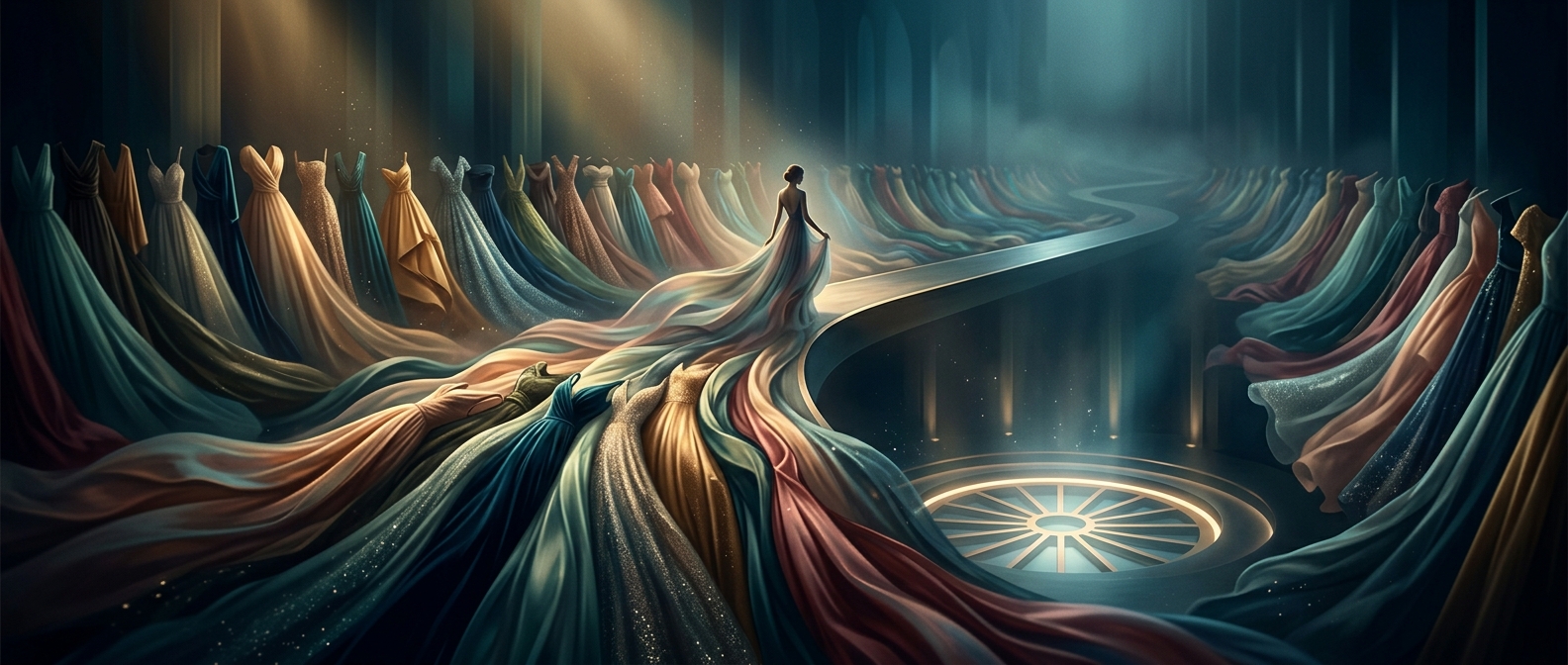
A gown on a television set can look like a permanent part of the show’s visual identity. In Vanna White’s case, many of the dresses viewers saw were temporary loans: designers supplied them for an appearance, and the garments went back afterward. That turns wardrobe into a circulation system, not simply a closet that grows with every taping.
Borrowing gives a production access to a changing range of designs without requiring the host to own each one. It also means each look has a brief working life on the show. Once worn and returned, a dress is no longer available as an easy repeat; the next appearance calls for another choice from the designers’ offerings.
The challenge is variety over time
A single outfit is easy to remember. The harder task is keeping a familiar host’s on-screen appearance fresh across years of episodes, while making each dress work for movement, lighting, and the camera. A gown must look striking from a distance but still allow its wearer to turn, gesture, and move comfortably through a long recording day.
The no-repeat wardrobe is therefore more than a pile of glamorous clothes. It reflects a continuing collaboration between a performer, a television production, and designers lending pieces for the screen. The striking detail is the turnover: a dress can become part of a show’s visual memory for millions of viewers, then leave the set and return to its designer.