Why the sleeper train is returning
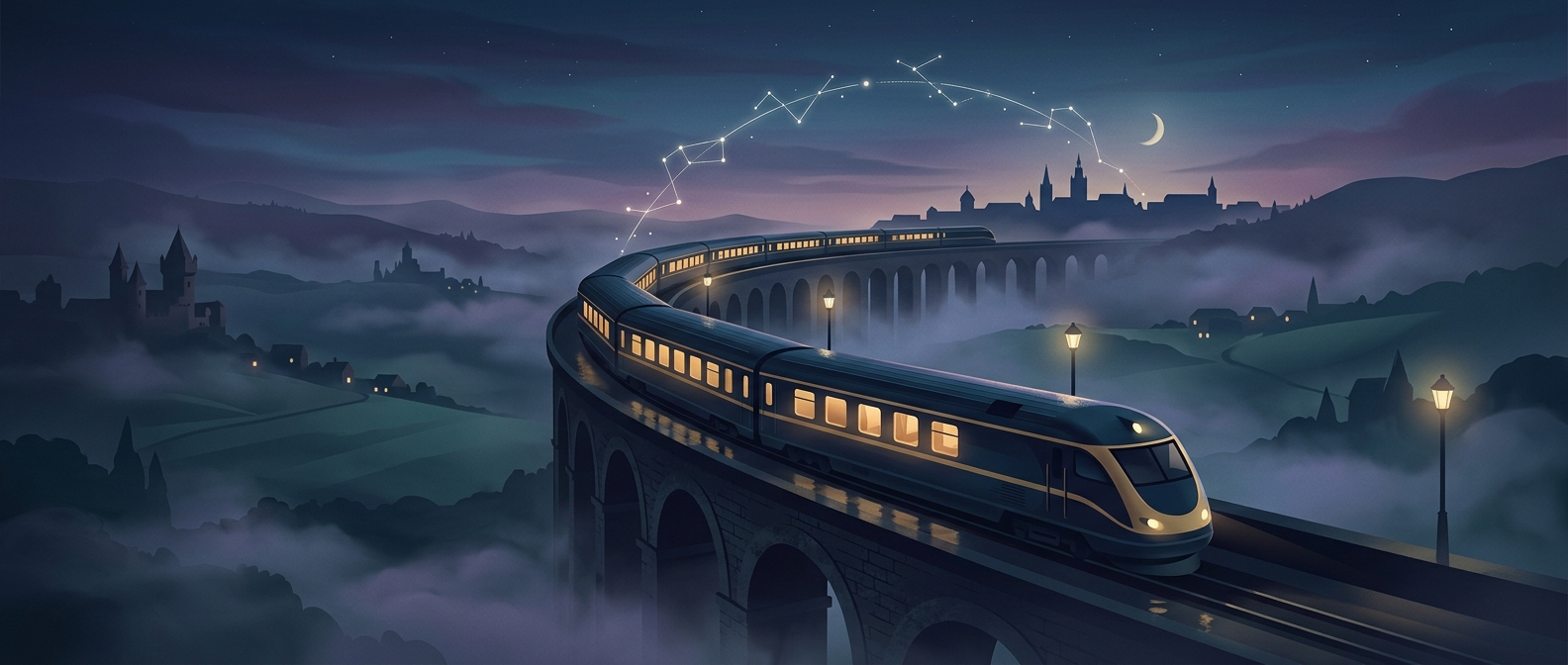
An overnight train turns travel time into sleep time. Instead of making a long journey during the day and paying for a separate night’s accommodation, passengers board in the evening and arrive in the morning. That works best on routes long enough to justify a night aboard, but short enough that the train can reach its destination before the day is well underway.
The appeal is not only the bed. Many stations sit close to city centers, so the journey can avoid the extra trip to a distant airport. And while the train is moving, passengers can settle in rather than queue for boarding and security. The trade is that a sleeper costs more to provide than a row of seats: cabins take up space, and preparing them and serving passengers requires staff.
A train is only as useful as its connections
Crossing borders adds another layer. Trains must fit different rail networks, operating arrangements, and timetables; they also need a usable overnight path through busy tracks. That makes a new route more than a matter of buying modern carriages. Operators must coordinate the whole journey and make the schedule work at both ends.
For travelers, the practical choice is therefore about the whole trip: whether the departure and arrival times suit, whether a private or shared cabin fits the budget, and how much sleep the journey is likely to allow. When the route and timetable line up, the train’s most memorable trick is simple: the distance disappears while you are asleep, and the morning begins at your destination.