Spain’s clock runs ahead of the sun
Spain’s late evenings are partly built into the clock. Most of the country uses Central European Time, the same standard time as places farther east, even though much of Spain lies at a longitude closer to Britain and Portugal. As a result, the sun reaches its daily high point later by the clock than many visitors expect. Daylight-saving time shifts the clocks another hour forward in summer, when evenings can stay bright well past 9 p.m. in many areas.
That mismatch does not dictate when anyone eats or goes out, but it makes later hours feel practical: people can finish work and still have daylight for errands, a meal, or time outdoors.
A schedule that carries the day later
Meals and social plans often follow that extended afternoon. Dinner commonly starts later than it does in countries where the sun sets earlier by the clock, and a meal may lead into a long conversation rather than signal that the night is over. Cafés, bars, and public spaces can therefore remain lively late, especially in warmer months.
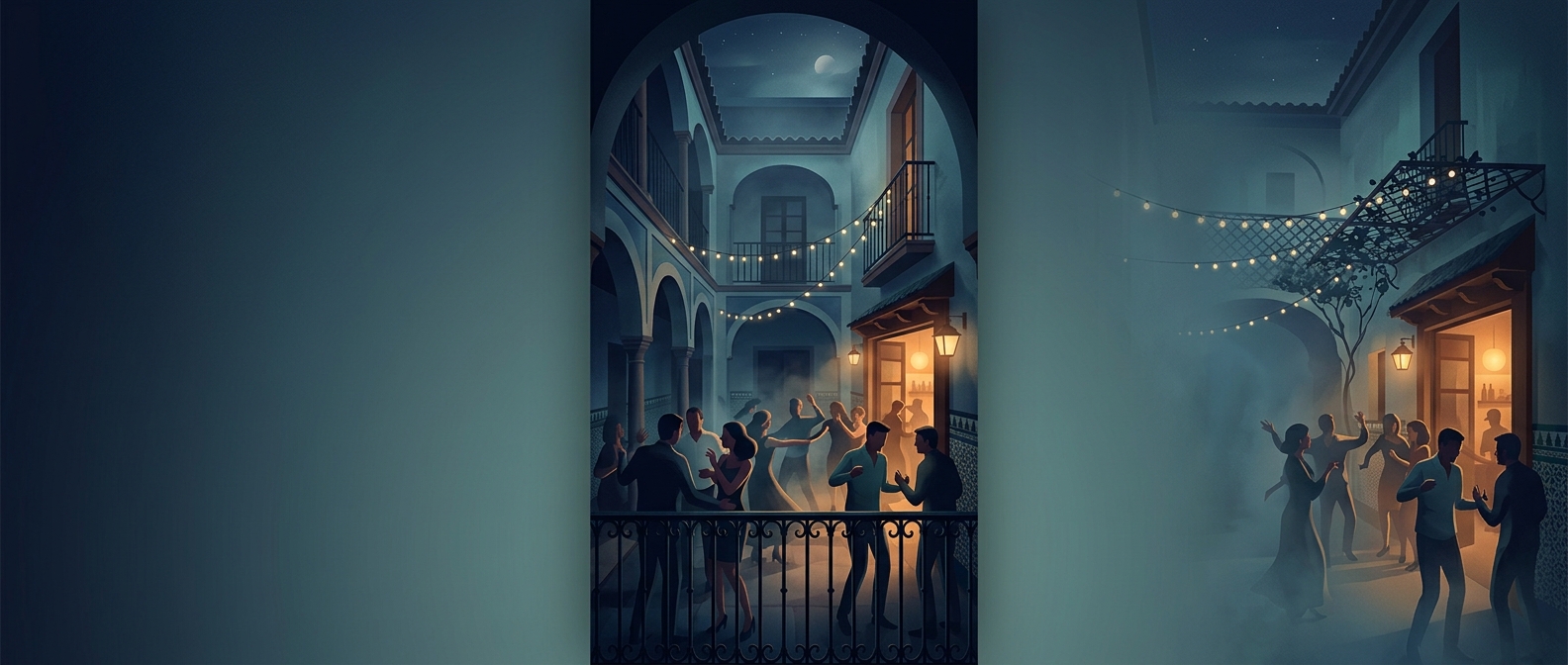
The pattern varies by region, season, and household; midnight is not a universal starting time for an evening out. But for a visitor, the combination of a sun that sets late and a social calendar organized around later meals can make an ordinary Spanish night feel as though it has only just begun.