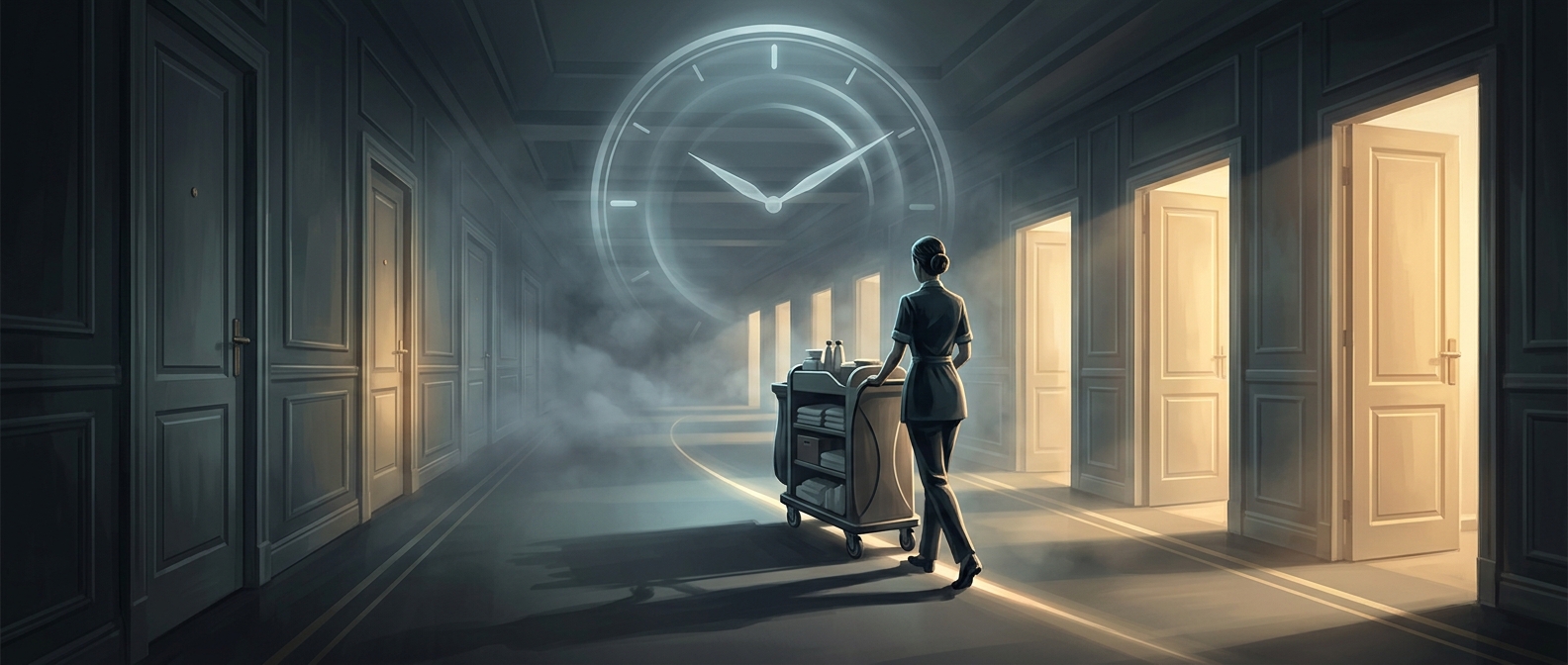
Why Hotels Set a Gap Between Check-Out and Check-In
A hotel room is not ready for its next guest the moment the previous guest leaves. Housekeeping has to strip used linens, clean the bathroom and sleeping area, replace towels and supplies, and make the room presentable again. In a large property, many rooms need that work during the same midday stretch.
The Turnover Is a Scheduling Puzzle
The gap gives supervisors time to match departing rooms with available staff and organize the work across floors or sections. A room may also need attention beyond routine cleaning, so staff must check its condition and report anything that needs fixing. Until that work is done and the room is marked ready, the front desk cannot reliably assign it to an arriving guest.
This is why a hotel can have rooms that look empty on its system but still cannot hand over keys: vacant and ready are different statuses. If guests arrive before enough rooms have cleared housekeeping, the front desk may have to store luggage or ask them to wait.
Why an Earlier Arrival Is Not Always Possible
An early check-in depends on a particular room being cleaned and released ahead of the usual schedule. It is easier when departures happen early or staffing leaves room to move tasks around; it is harder when many guests leave late at once. The posted check-in time therefore helps the hotel coordinate a predictable wave of departures, cleaning, inspections, and arrivals—rather than simply marking the hour a guest is allowed through the door.