How a seat can tell you to move on
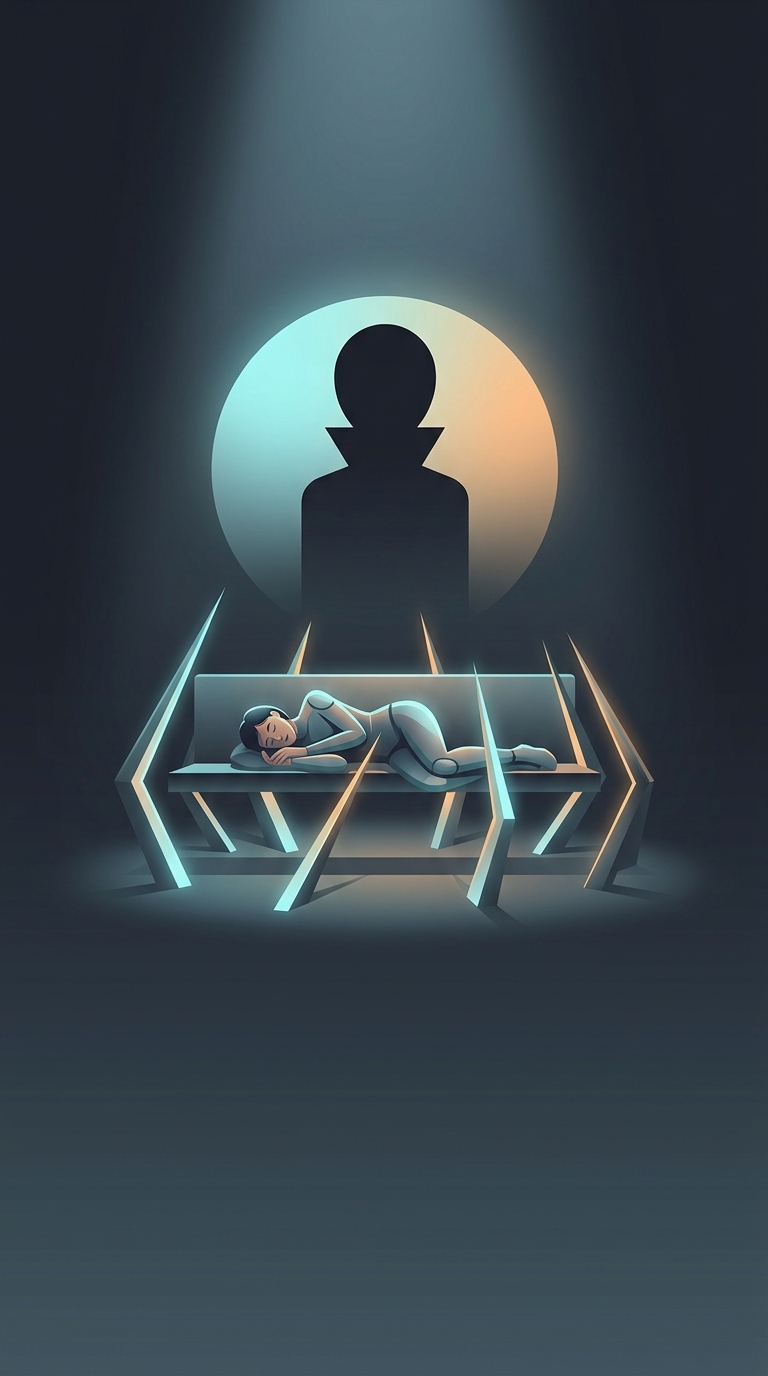
A bench is built for sitting, but a person lying across it can use the same surface as a place to sleep. Sloped seats, raised dividers, and metal studs change the shape of that surface: they leave room to perch briefly while making it difficult to stretch out or settle in for long. Design choices like these are often called hostile architecture—features intended to discourage certain uses of public space without posting a sign or enforcing a rule directly.
The mechanism is simple. A flat, uninterrupted bench supports a reclining body; a steep angle makes sitting uncomfortable, while a bar or divider breaks the space into narrow sections. Metal studs can make a broad, flat ledge unusable as a resting place. The design does not need to confront anyone. It quietly removes an option.
What the design solves—and what it shifts
For a property owner or transit agency, these features can reduce overnight sleeping, lingering, or other uses they want to limit. They can also make a stop or entrance feel less welcoming to people who need a place to rest, including older adults, disabled people, and anyone waiting a long time. When sleeping in public is a response to having nowhere else to go, making a bench unusable does not resolve that need; it moves it elsewhere.
That is the tradeoff built into the hardware: a small change in shape can control who gets to use a shared space, and for how long. The next time a seat seems oddly uncomfortable, its inconvenience may be doing exactly what its design intended.