A Ship Could Carry the Dead Beyond the Shore
For a powerful Norse leader, a ship was more than transport: it represented wealth, authority, and the reach of a life spent at sea. Sending a dead person off with a vessel and valued possessions made that status visible even in death. Weapons and precious objects could mark the person’s rank; animals, where included, added another costly offering to the ceremony.
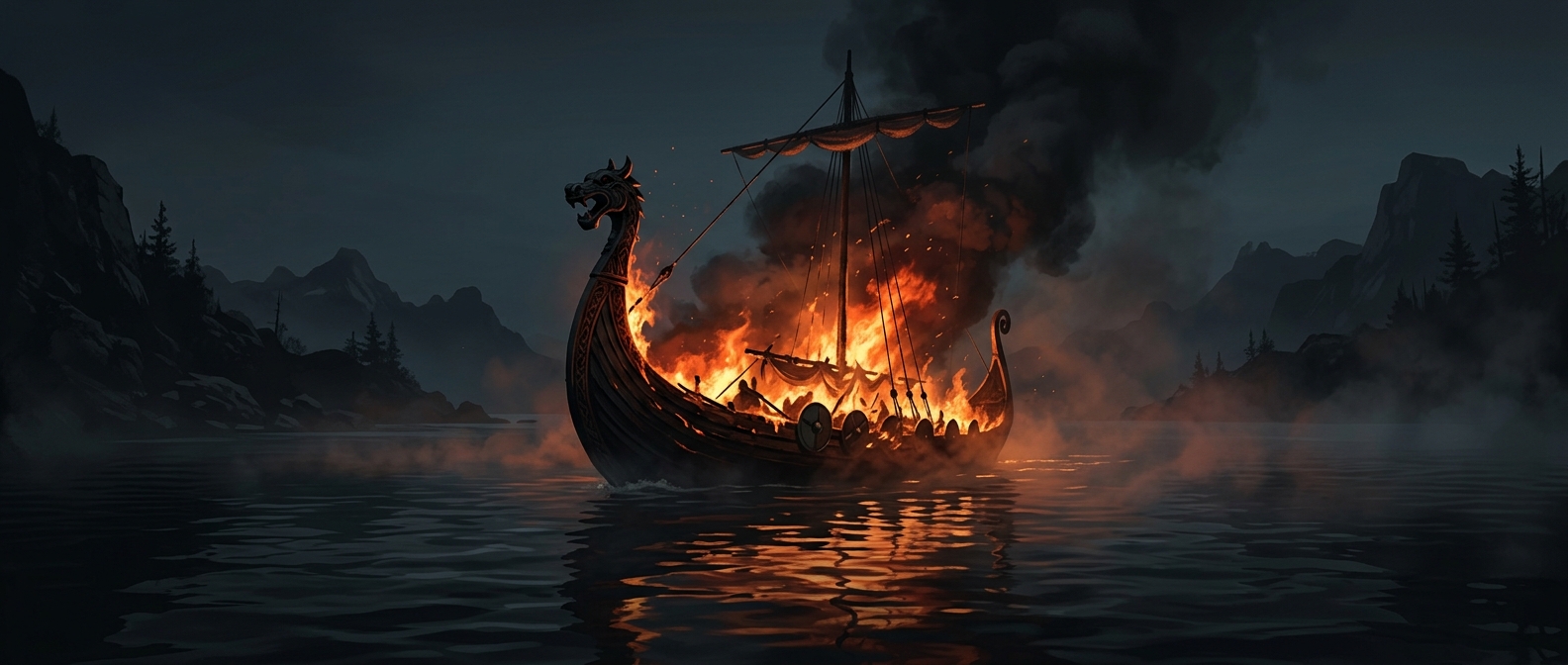
Fire transformed the ship from a usable object into part of the funeral. A burning vessel would consume its cargo as well as its timbers, while smoke rose into the sky. That image fits a broader funerary idea of the dead departing on a journey, though it does not establish one uniform Norse belief about what happened after death.
A Dramatic Rite, Not a Routine One
Ship burials and cremation were both part of the varied funeral practices of the Viking Age. But the evidence does not show that every chieftain was burned aboard a full-sized warship. Some prominent dead were buried in ships; other accounts describe cremation rites. A vivid written description by the tenth-century traveler Ibn Fadlan, for example, concerns a ship funeral among the Rus, a people with Scandinavian connections, rather than documenting a universal Norse custom.
A full-sized vessel was an enormous sacrifice: once burned, it could no longer carry anyone to war, trade, or home. That waste was part of the message. The funeral displayed how much wealth a leader could command—and how completely the living were willing to give it up for the dead.