An oracle reached by descent
The oracle of Trophonius stood at Lebadea in Boeotia, in central Greece. Consulting it was not a matter of asking a question at a public shrine: visitors followed a prescribed ritual and entered an underground chamber associated with the hero Trophonius. The journey itself made the consultation a formidable ordeal.
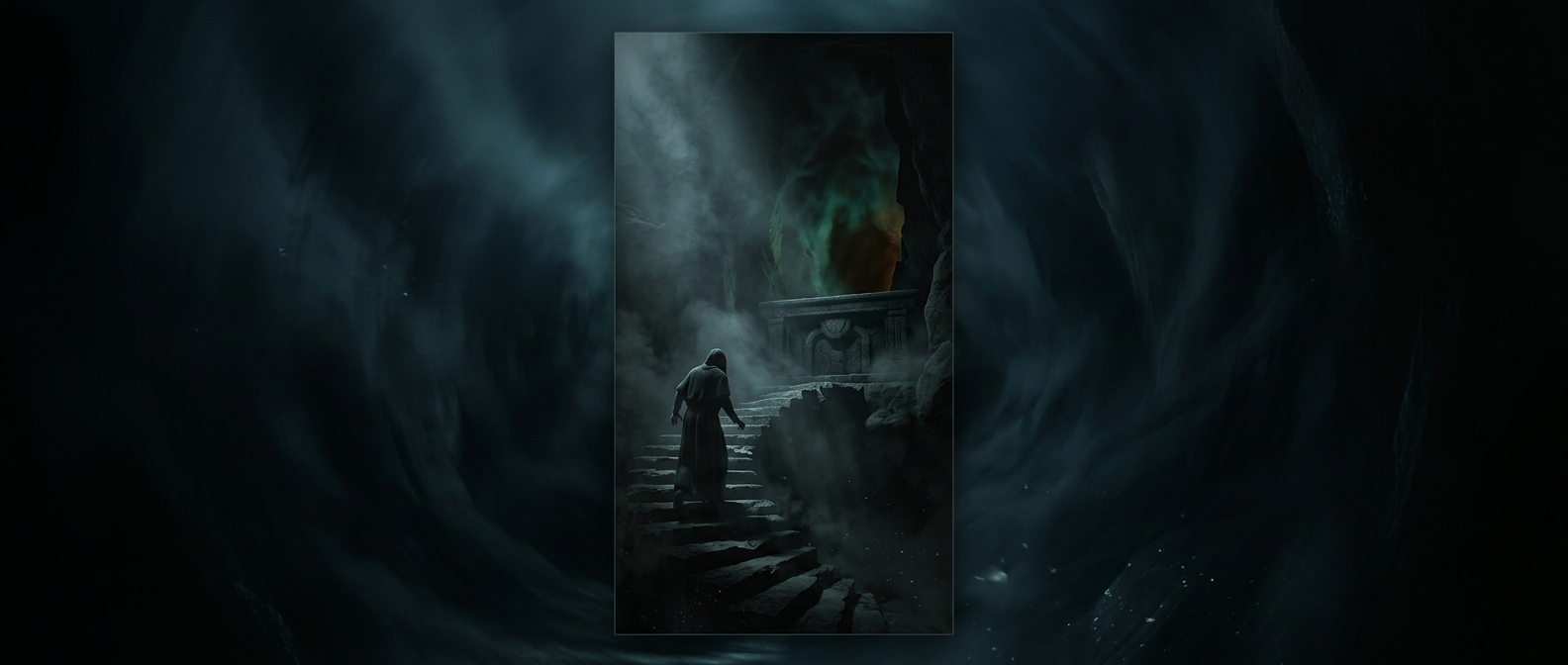
The Greek travel writer Pausanias describes preparations that included drinking from two springs, one linked with forgetting and the other with memory. Then the visitor squeezed through a narrow opening into the cave. In the darkness and confined space, the person might experience visions or other frightening sensations; afterward, attendants helped the visitor out and questioned them about what they had seen.
Why the fear became part of the story
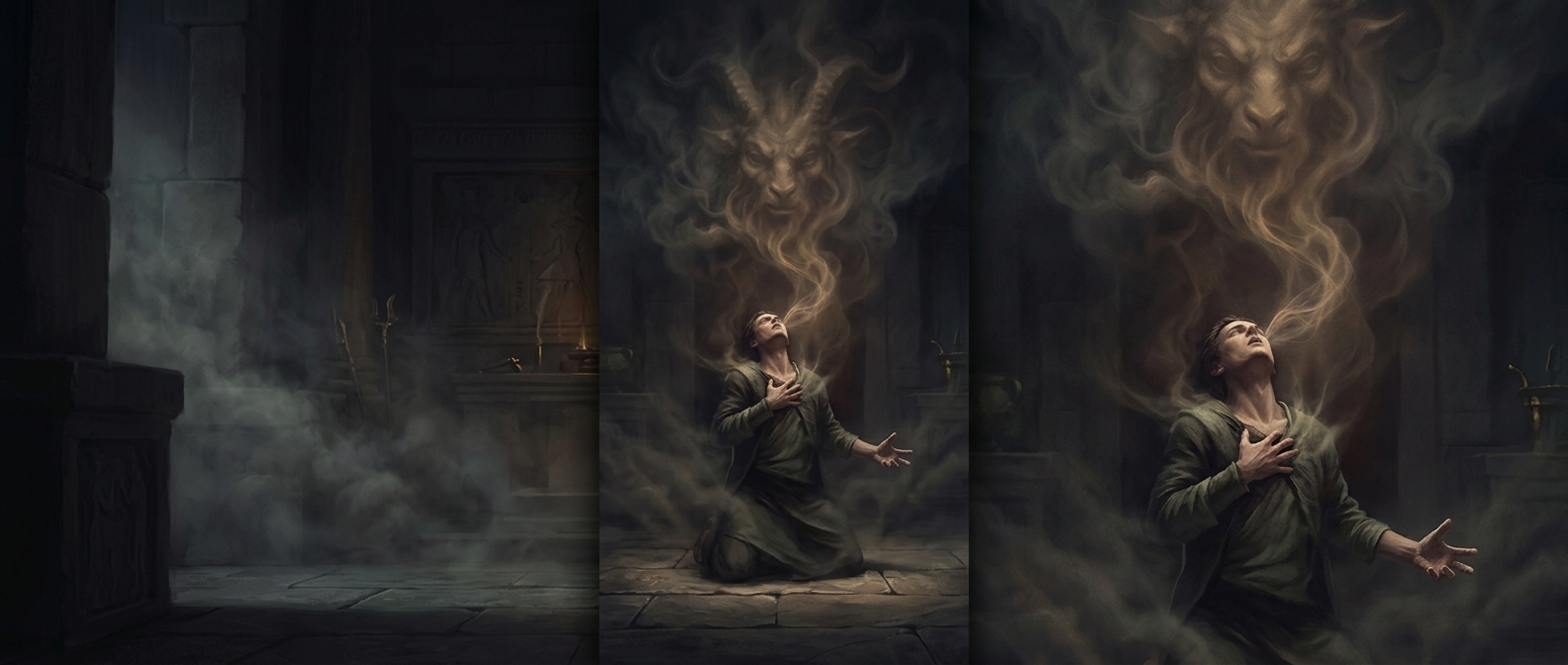
The ritual joined physical vulnerability to the expectation of a supernatural encounter. A person was isolated from ordinary surroundings, moving through a cramped passage with little control over what came next. Darkness alone can make distances and movement hard to judge; in a sacred setting, every sound or sensation could also seem like a message. The experience was designed and understood as contact with a power beyond everyday life, not as a casual visit to a cave.
Ancient accounts made the ordeal memorable enough that “having visited Trophonius” became a byword for looking grave or unable to smile. The lasting joke depended on a real contrast: an oracle was supposed to provide knowledge, but reaching it could leave the questioner shaken before any answer was heard.