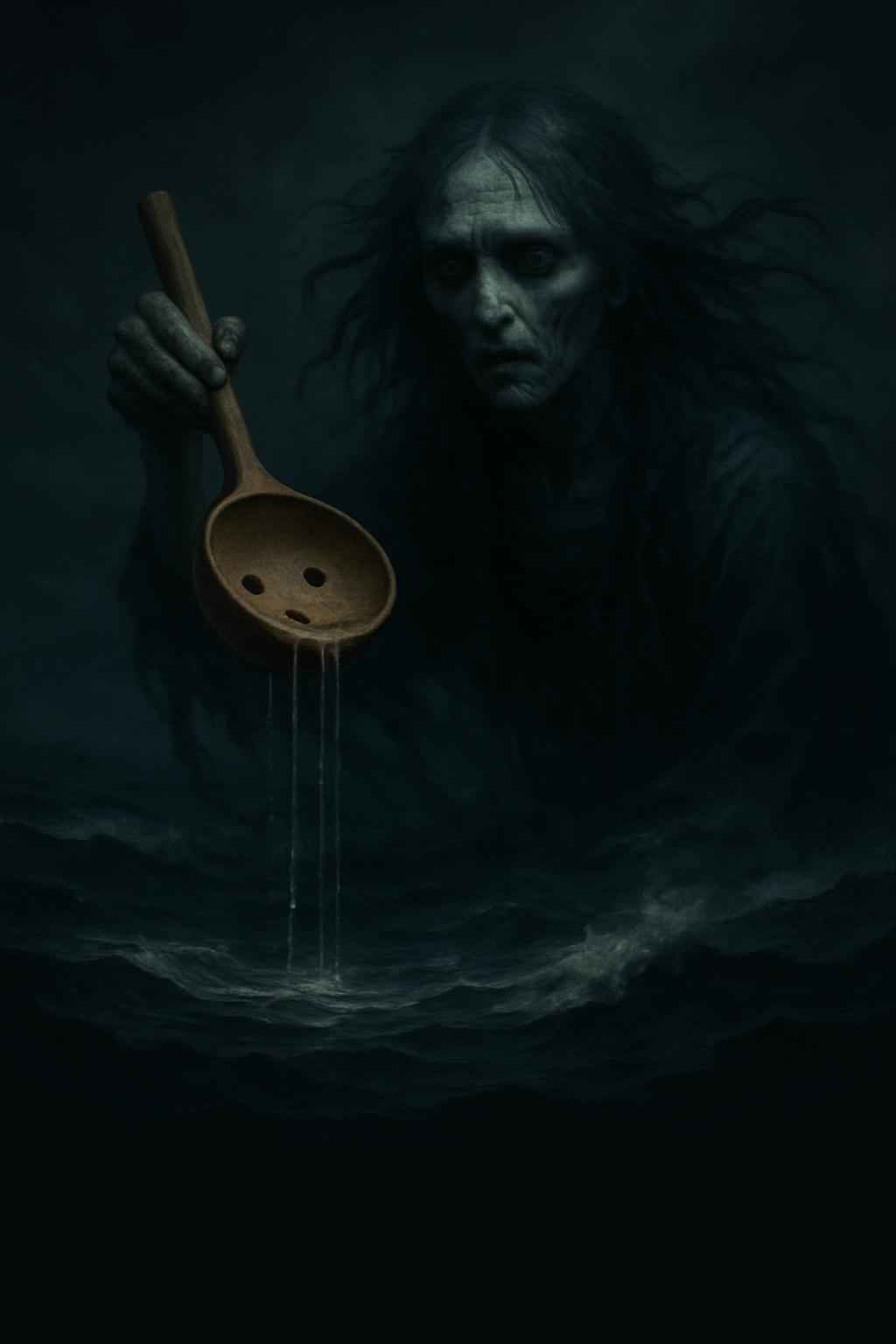
A ladle with a hole in it
In Japanese maritime folklore, Funayūrei are the spirits of people drowned at sea. They may appear to a passing boat and ask for a ladle—often called a hishaku—to scoop water. The danger in the tale is that the request is not a harmless plea: the spirits can use the ladle to pour seawater into the boat and sink it.
The traditional countermeasure was a ladle with a hole in its bowl. It could be handed over as an offering, but it could not carry water. The spirits received the gesture they demanded without gaining the tool that made the encounter dangerous.
Kindness with a boundary
The detail gives the story its practical tension. A sailor facing a ghostly request had to navigate two risks at once: refuse the spirits, or comply in a way that might endanger the boat. The perforated ladle offered a third choice—show compassion while preventing the offering from becoming a weapon.
That makes the object more than a bit of folklore’s eerie business. It turns a difficult decision into something tangible: a small tool prepared for a perilous moment, where generosity and self-preservation need not be opposites. In the story, the hole is what lets a sailor offer help without handing over the means to drown.