A marriage meant to repair an unfinished life
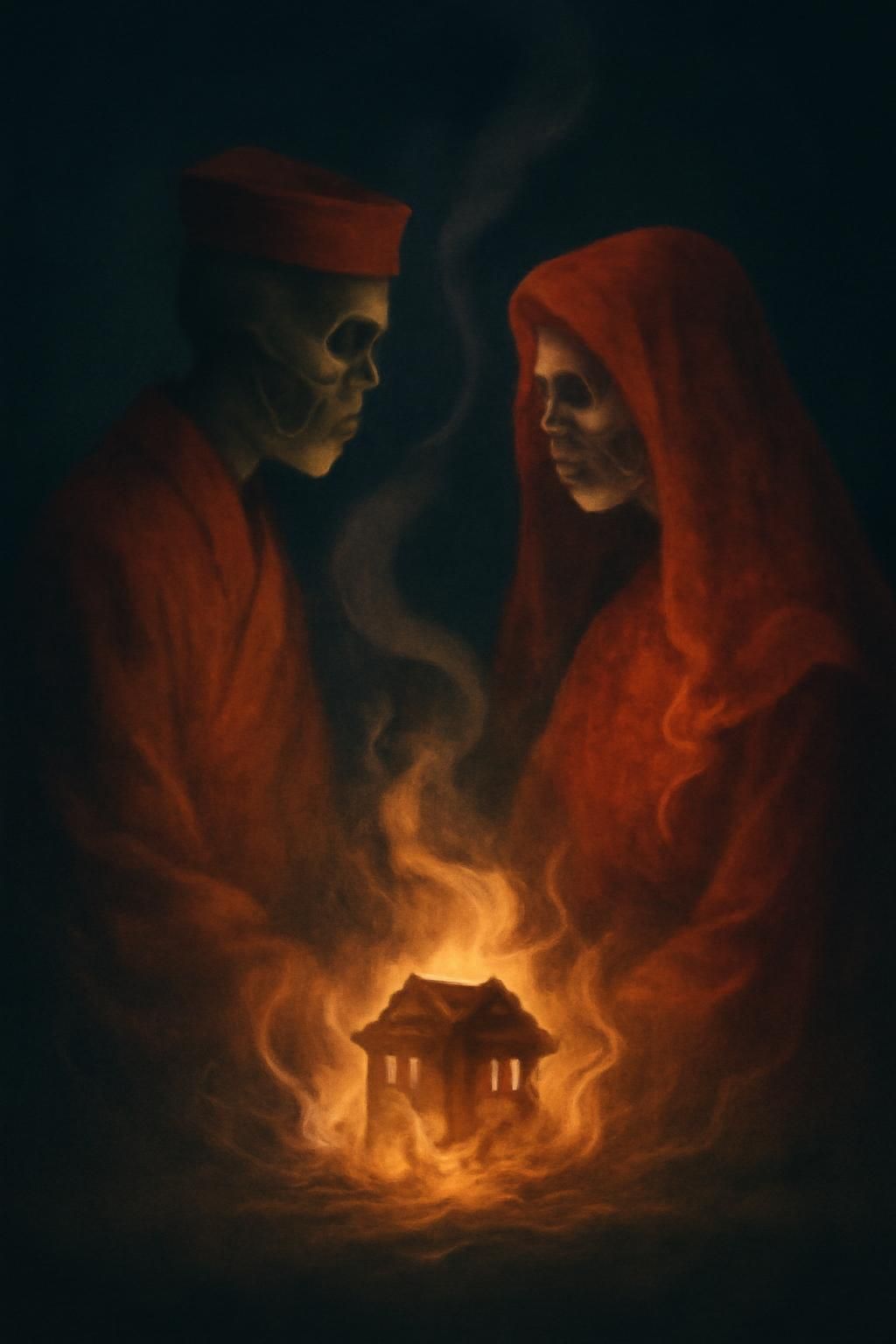
Often called ghost marriage, the practice is known in some Chinese communities as minghun, or “spirit marriage.” It is not one uniform custom: arrangements and meanings vary by place and family, and may involve two deceased people or a living person paired with someone who has died.
A common concern is that someone who died unmarried has been left without a recognized place in family life. In traditions where the dead are understood to remain connected to their relatives, marriage can give that person a spouse and a household in the afterlife. The ritual addresses a social and spiritual relationship, not simply a funeral detail.
Why families make a home from paper
Paper houses, furnishings, and other offerings are made as symbolic provisions for the dead. Burning them is understood by participants as sending their counterparts to the spirit world; the objects are not treated as ordinary goods that will physically travel there. The offerings give a visible form to the family’s duty to care for the deceased.
The idea of calming a restless spirit belongs to this religious understanding: an unmarried dead person may be thought to remain unsettled, while marriage helps restore balance. That belief is meaningful within the ritual, but it is not a claim that can be established as a physical effect. The ceremony makes a private loss legible as a family obligation, turning remembrance into an act of provision and belonging.