Why the goblins come at Christmas
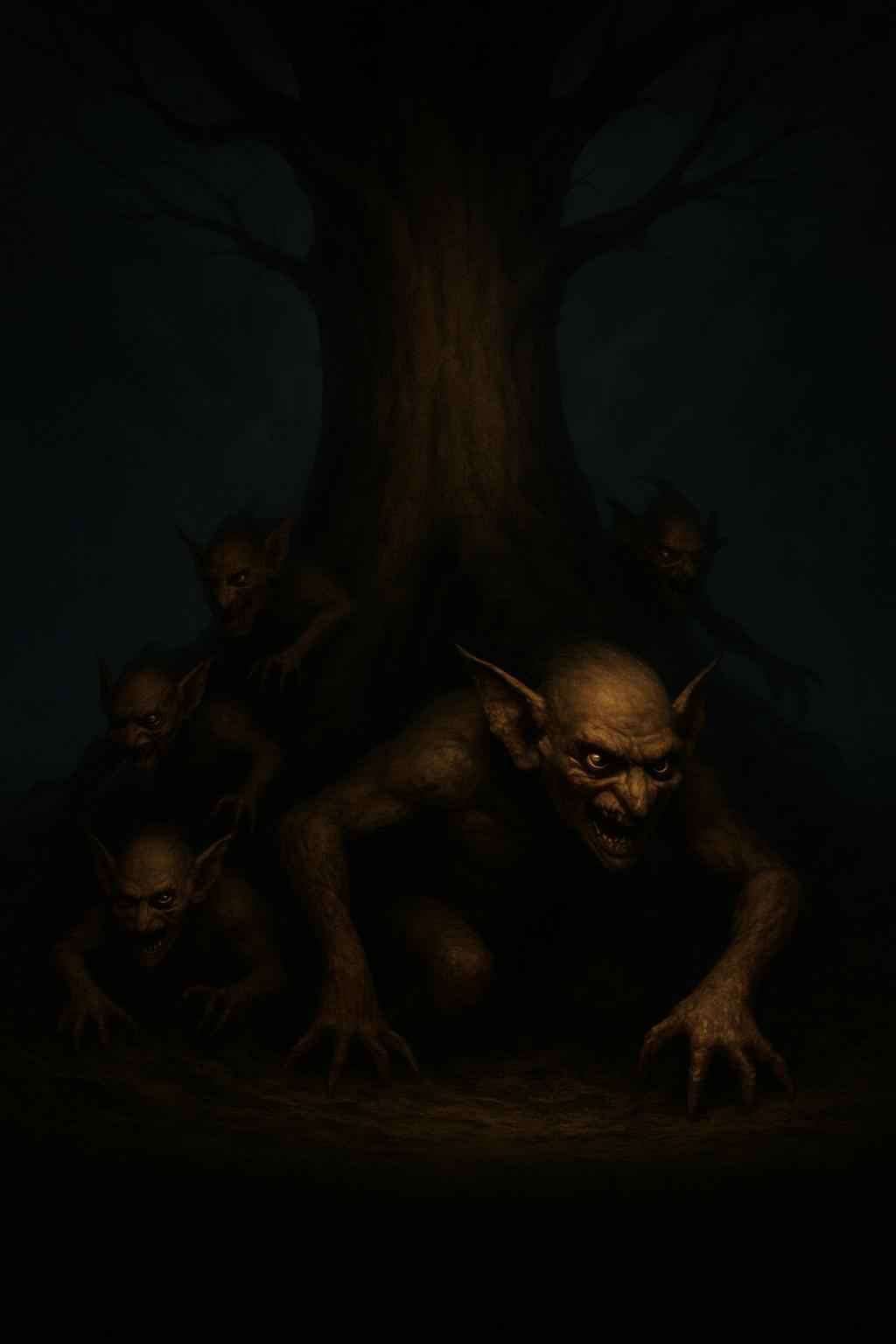
The kallikantzaroi belong to a stretch of the Greek festive calendar often called the Twelve Days: the period from Christmas to Epiphany in early January. In traditional stories, ordinary boundaries loosen during this interval. The goblins emerge from below ground, enter human spaces, and cause mischief; when the holiday period ends, they return below.
That timing gives the tale its shape. The creatures spend the rest of the year attacking the roots that hold up the world, but their Christmas excursion interrupts the work. The roots recover while they are gone, so the world survives another cycle. The story turns the uncertainty of winter into a repeating contest: damage is threatened, then repaired.
A household-sized way to face the unknown
In different Greek communities, accounts of the creatures and ways of keeping them at bay vary. That variation is typical of oral folklore: a story is carried by families and neighbors, retold in local forms rather than fixed in one authoritative version. The goblins’ arrival could make the dark, unsettled days of midwinter feel like a period with its own rules—and give people something vivid to talk about as they gathered indoors.
The legend also connects domestic life to a cosmic scale. A nuisance at the door is linked to the roots of the whole world, yet the danger is temporary: the calendar itself brings the goblins’ return underground and gives the roots time to heal. That is why the tale is more than a monster story. It makes the end of Christmas feel like a restoration, when the household can settle again and the world’s hidden supports are safe for another year.