The Yamauba Between Danger and Kinship
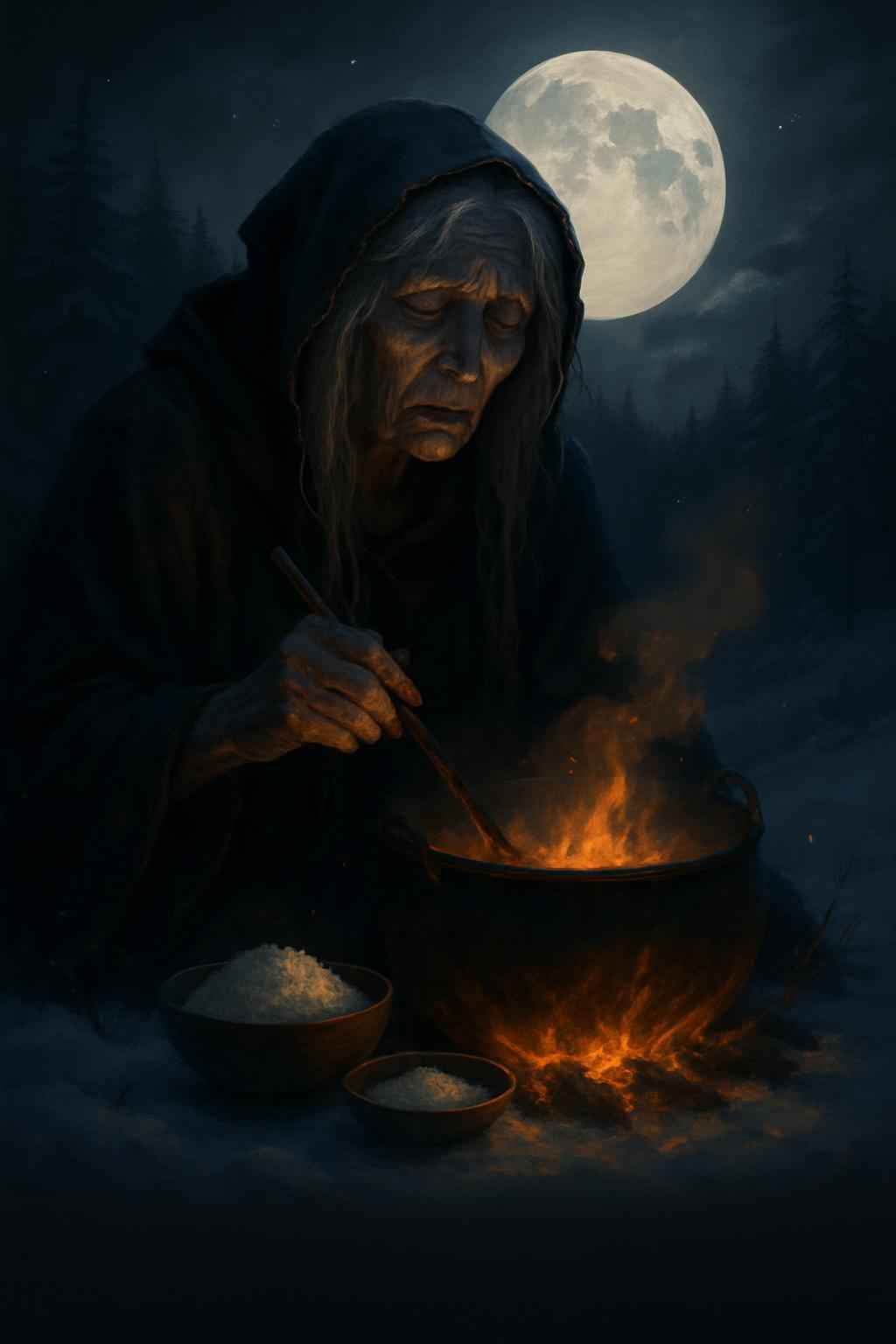
The Yamauba—literally a “mountain old woman”—is a figure in Japanese folktales who lives beyond the settled world. Stories portray her in different ways: she may threaten travelers, but in some tales she also helps or raises a child. There is no single, fixed version of her story. That variability is part of what makes her more than a simple monster.
For people traveling through mountain country, the forest could mean real exposure to cold, hunger, and getting lost. A tale about a dangerous woman in that landscape gives those risks a human face. Yet making the Yamauba once human complicates the warning: the frightening stranger may also be someone abandoned, bereaved, or pushed to the margins.
Why a Monster Might Still Be Remembered
A story that links monstrous behavior to hunger, grief, and loneliness invites a moral reading rather than just a fright. It asks how hardship can change a person—and whether fear of someone’s actions leaves room to remember their suffering. That interpretation does not excuse harm; it makes the boundary between victim and threat less comfortable.
Practices associated with the Yamauba can vary by place and retelling, so an offering or chant should not be treated as a custom shared by all Japanese communities. Where a story is recalled through ritual, its gestures can hold several meanings at once: respect for the unseen, caution toward the mountains, and care for those who might otherwise be forgotten. The enduring tension is that the Yamauba is both a warning about what waits outside the village and a reminder of who may have been left outside it.