How hunter-gatherers raised Göbekli Tepe’s stone enclosures
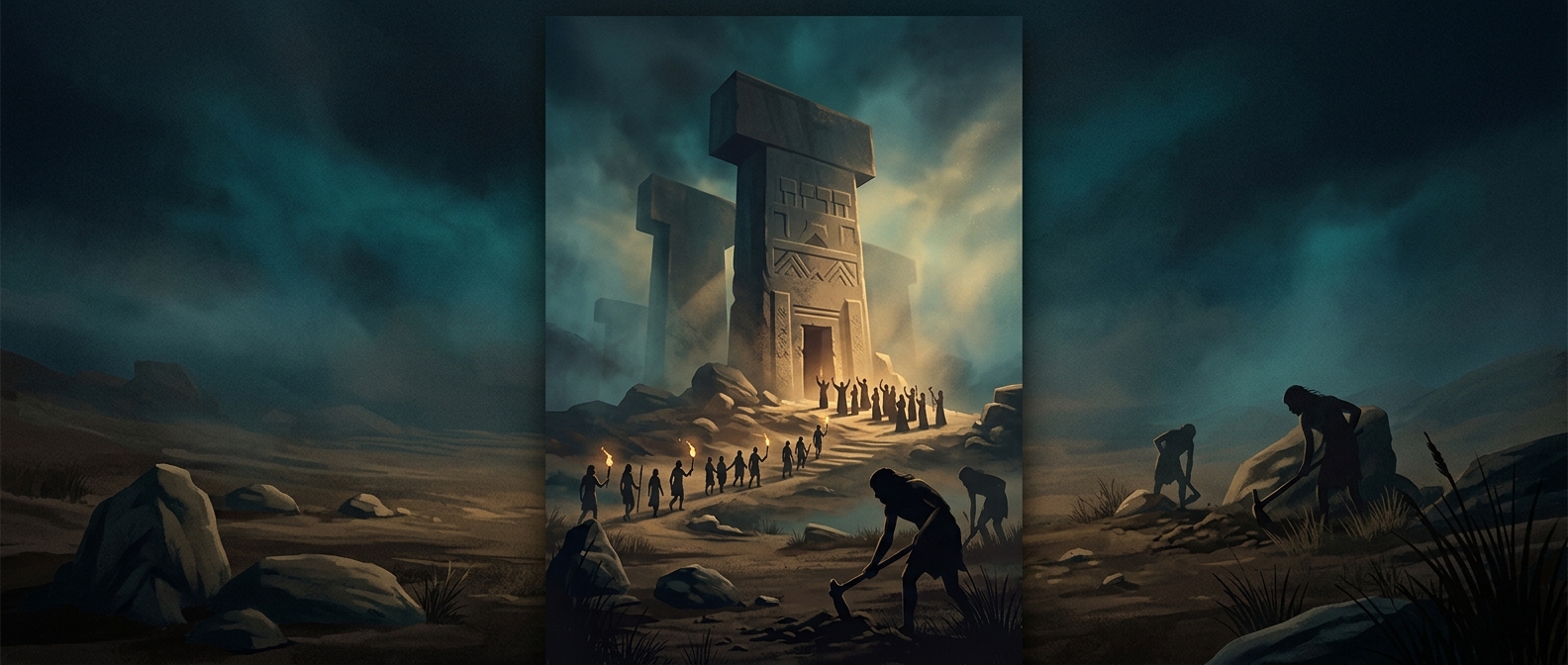
At Göbekli Tepe in southeastern Turkey, people shaped enormous T-shaped limestone pillars and arranged them in circular or oval enclosures. Many pillars carry carved images of animals. The scale and care involved suggest that building was a major shared undertaking—not a small task for a family working alone.
The builders did not need farms to organize that work. Hunter-gatherers could gather in larger groups at particular times, bringing food acquired from wild plants and animals. Skilled stoneworkers could quarry and shape the limestone, while others helped move and set the pillars. The site shows that communities without established agriculture could coordinate labor and create monumental places.
What the stones can—and can’t—tell us
The enclosures are often described as temples or ritual buildings, but their precise purpose is not known. Animal carvings and the arrangement of the structures point to activities with shared meaning; they do not reveal exactly what people believed or what ceremonies they held.
Göbekli Tepe also complicates a familiar sequence in which farming creates settled communities, which then build monuments. Here, monumental construction belongs to a period before farming was established in the region. That does not prove the site caused agriculture to develop: the relationship between communal gatherings, cultivation, and later farming remains a subject of archaeological debate.
The striking implication is narrower, but important: people could organize large-scale construction before they depended on crops. At Göbekli Tepe, the stones preserve evidence of cooperation that farming was not a prerequisite for.