Why the Doorway Seemed Like a Place to Guard
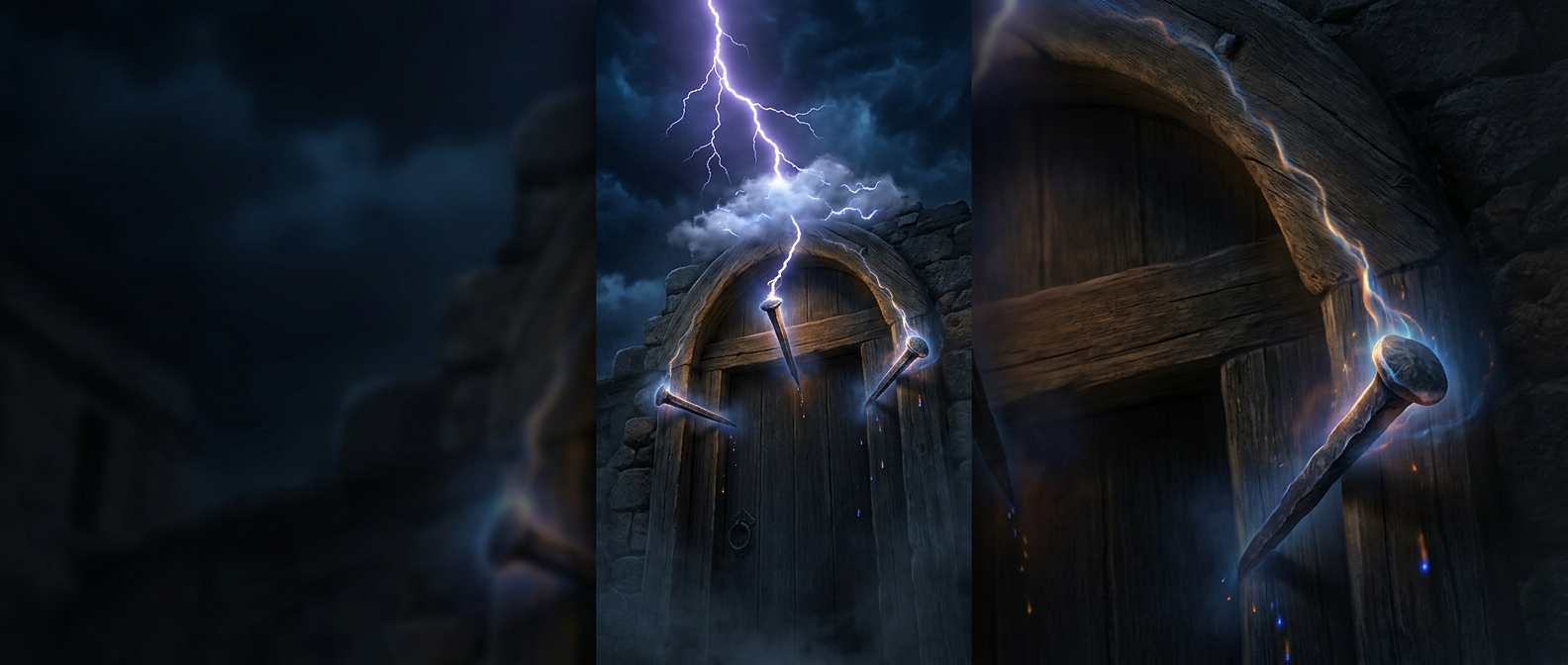
A doorway is a boundary between home and the exposed outdoors, so protecting it could feel like protecting the whole household. Iron added a second reassuring idea: it was hard, durable, and firmly fastened in place. In folk practice, a nail in the frame could serve as a small, visible safeguard against a danger people could neither predict nor control.
What Actually Makes a Lightning Rod Work
A lightning rod is not simply a piece of metal near a building. It is part of a connected system: a metal rod is linked to a conductor that carries electrical current down to an electrode in the ground. That continuous route gives the current a way to reach earth while helping protect the structure.
A nail driven into a door frame has no comparable, dependable route. It may be surrounded by wood or masonry, and its connection to the ground is neither designed nor reliable. So the nail could express a wish for safety, but it could not provide the controlled path that makes lightning protection work. The difference is the hidden connection: metal alone is not a lightning-protection system.