Why Cathedrals Sent Stone Monsters Over the Edge
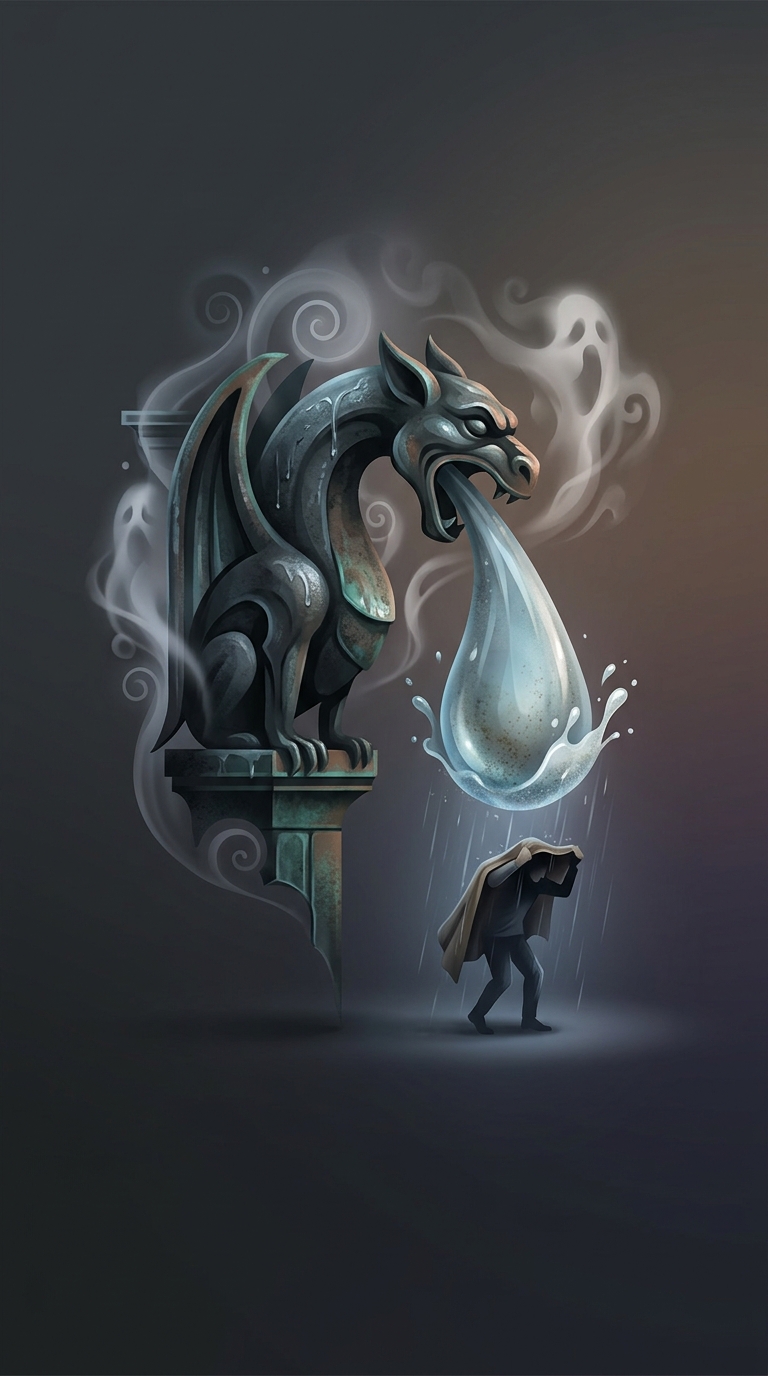
A gargoyle was more than a frightening face carved into a church. It was a working drain: rainwater collected on the roof, flowed through a channel in the figure, and poured out through its open mouth, away from the walls below. Without that outlet, water could run down the masonry, seep into joints, and gradually wear the building away. The word gargoyle comes from a word meaning “throat” or “gullet,” a fitting name for a stone spout.
A Practical Shape With a Spiritual Charge
Medieval viewers encountered these creatures on the outside of buildings dedicated to sacred worship. Their twisted bodies and bared teeth made the boundary between the holy interior and the dangerous world beyond feel vivid. Demonic-looking figures were often understood as protective or warning images: evil might be shown, confronted, or kept at a distance rather than welcomed inside.
The precise meaning could vary from one carving to another. A gargoyle did not need to function as a literal magical guard to carry that protective symbolism. Its location and appearance gave practical architecture a spiritual presence, turning a drainage outlet into a watcher on the church’s edge.
Why the Water Had to Clear the Wall
The figures projected far enough from the building to send runoff outward instead of letting it sheet down the stone. Their grotesque faces therefore joined two jobs: moving water and making the cathedral’s exterior feel guarded by creatures from a world beyond ordinary human life. A carved monster could help keep rain off the masonry while reminding worshippers that the sacred space had a sharply marked boundary.