Why People Leave Notes in the Western Wall
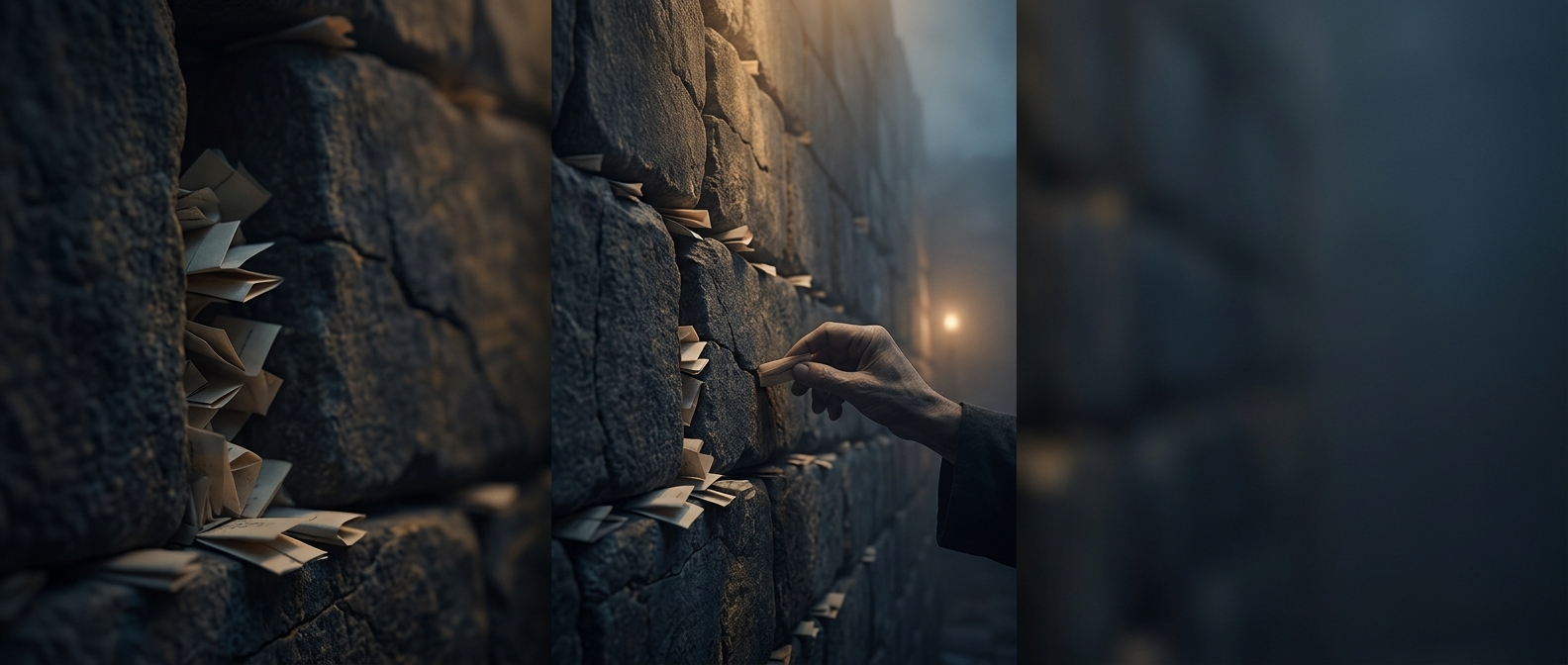
At Jerusalem’s Western Wall, visitors tuck folded prayers into the narrow joints between the stones. The wall is a surviving structure from the ancient retaining walls around the Temple Mount, a place of deep religious significance in Judaism. Praying there connects a personal request or hope with a location that carries centuries of communal memory.
The paper note gives the prayer a physical form. Someone can write privately, fold the page, and place it among countless others without needing to say the words aloud. The gesture is not a claim that the stone itself grants wishes; it is a way to bring an intimate concern to a sacred place and, for many visitors, to express trust in God.
What Happens to the Notes
The gaps between the stones are limited, so the notes cannot remain there indefinitely. When the spaces need clearing, workers remove the papers respectfully. Because they contain prayers and may include sacred names, they are treated with care rather than handled as ordinary litter; collected notes are traditionally buried.
That practical cycle is part of the ritual’s meaning: a private message is placed in a public wall, joins thousands of others, and eventually leaves the stones without its words being discarded casually.