A Sacred Path Could Also Be a Boundary
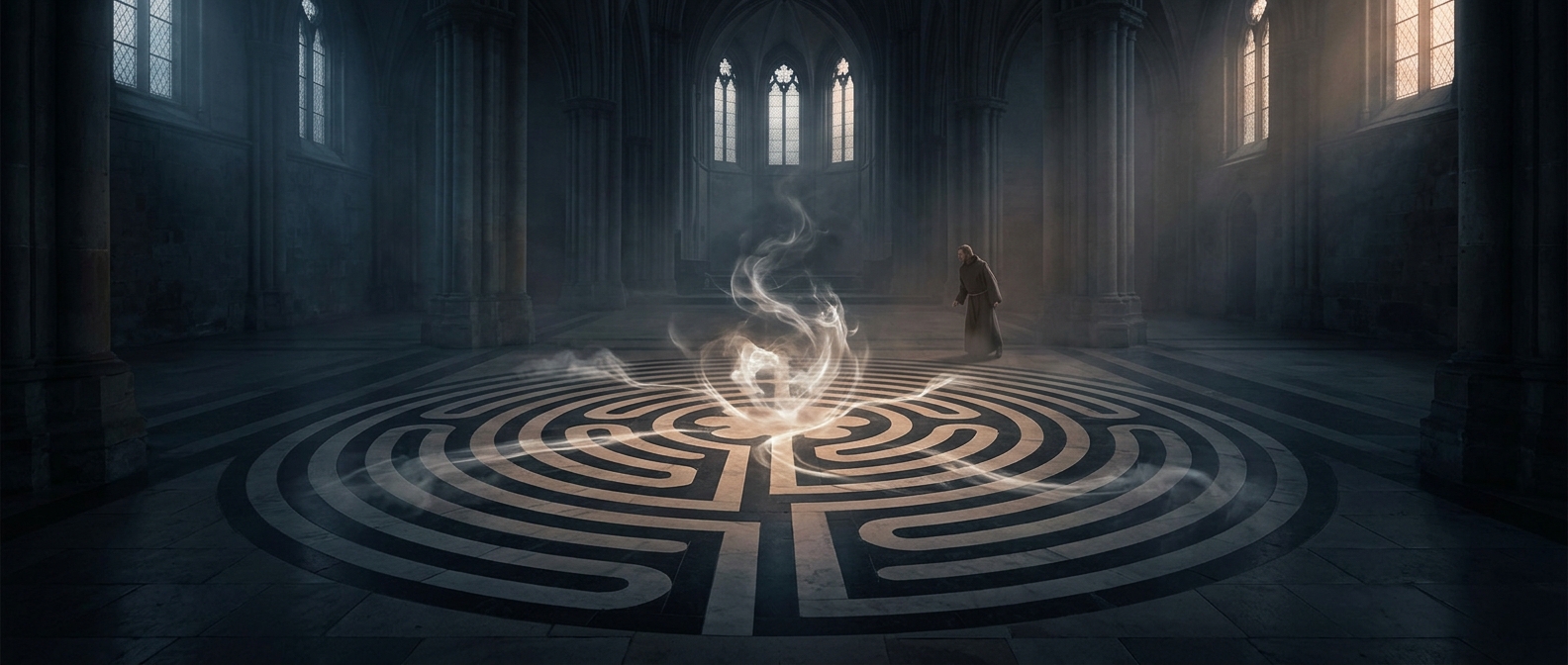
A cathedral floor labyrinth was more than a decorative pattern. Its single winding route drew a walker toward a center, then back out again. Unlike a maze, it offered no branching choices or dead ends. The body followed a fixed course through the design, making the journey feel deliberate and contained.
In some beliefs, that containment mattered beyond the human visitor. Unseen harmful forces were thought capable of wandering into sacred places; the labyrinth’s twists could confuse them or hold them within its path. The pattern thus served as an imagined boundary: orderly movement inside the design, protection for the space around it.
Why the Design Suggested Control
The route repeatedly bends and doubles back, so a walker can be close to the center while still far from reaching it. That mismatch between apparent nearness and actual progress gives the path its disorienting quality. For a person walking slowly, it also turns crossing a floor into a small ritual rather than a direct trip from one point to another.
Labyrinths could carry Christian meanings as well, including pilgrimage and spiritual reflection. The protective interpretation belongs to a broader way of understanding sacred space, where patterns and practices could be seen as doing something—not merely representing an idea. A winding floor design could therefore guide worshippers while, in some understandings, keeping disruptive forces from finding their way through.