A Split-Second Avoidance Problem, Not a Moral Calculation
When an automated vehicle detects a pedestrian near its path, it has to turn incoming sensor data into action quickly. Cameras, radar, and other sensors help locate road users; software estimates their movement and checks whether the vehicle is on a collision course. If danger is closing in, the system may brake or steer to reduce the risk.
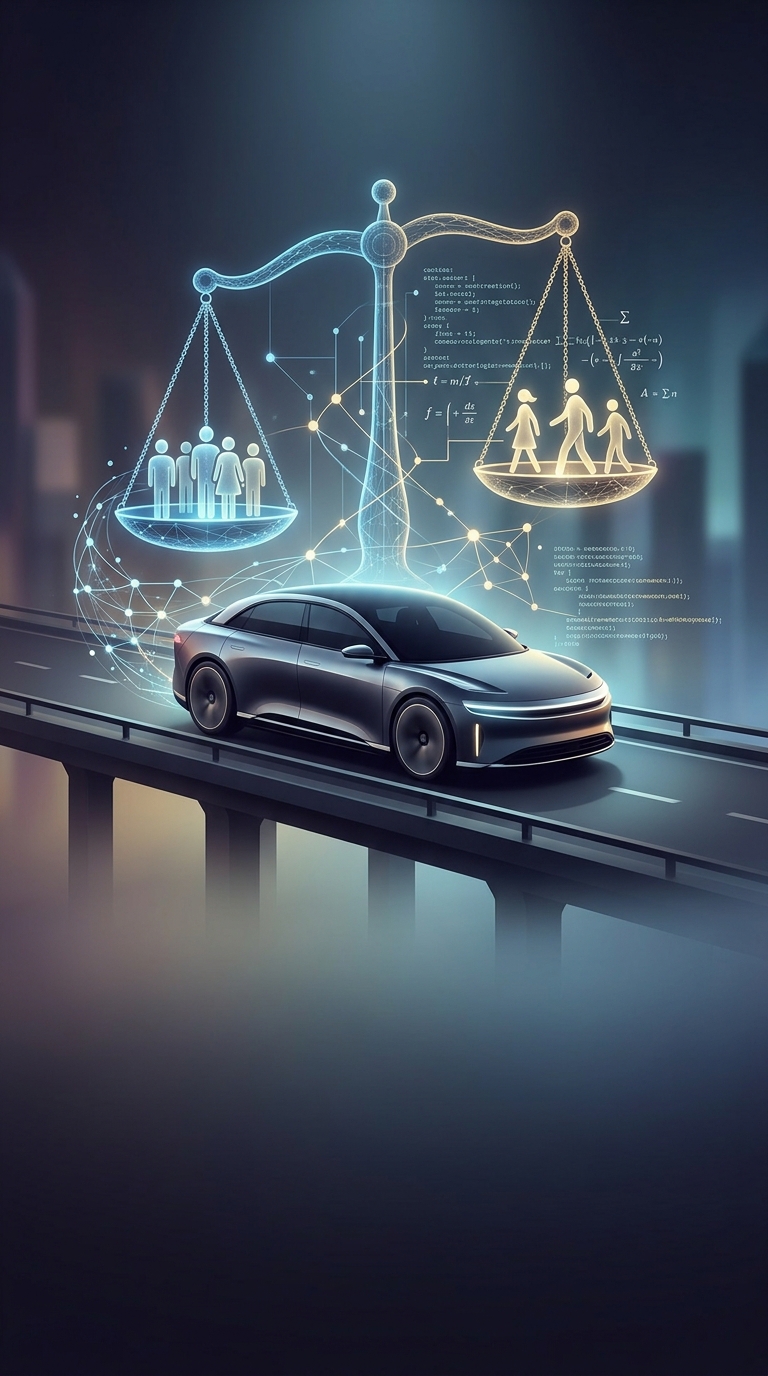
That can resemble the trolley problem—a philosophical thought experiment about choosing whom to harm—but the resemblance has limits. The car is not normally assigning human lives numerical values or deciding that one person is more expendable. It is trying to respond to a changing physical scene using programmed driving behavior and imperfect estimates of what will happen next.
Why the Decision Is Still Difficult
The system may have only moments to act, and its picture of the road can be uncertain: a person might step forward, stop, or move behind an obstruction. Braking or steering also changes the danger for everyone nearby. A sharp swerve could avoid one obstacle but send the car into another; braking may be the safer response even if it cannot guarantee a collision will be avoided.
Engineers therefore have to specify how the vehicle should behave across many situations, test those rules, and account for sensor and prediction errors. The hard problem is not a single dramatic choice between a passenger and a pedestrian. It is designing a consistent response to countless ordinary variations in speed, visibility, road layout, and human movement.
That distinction matters: an emergency maneuver reflects the vehicle’s programmed control strategy and the limits of what it can perceive—not a private judgment about whose life is worth more.