How an auto-dimming mirror changes its tint
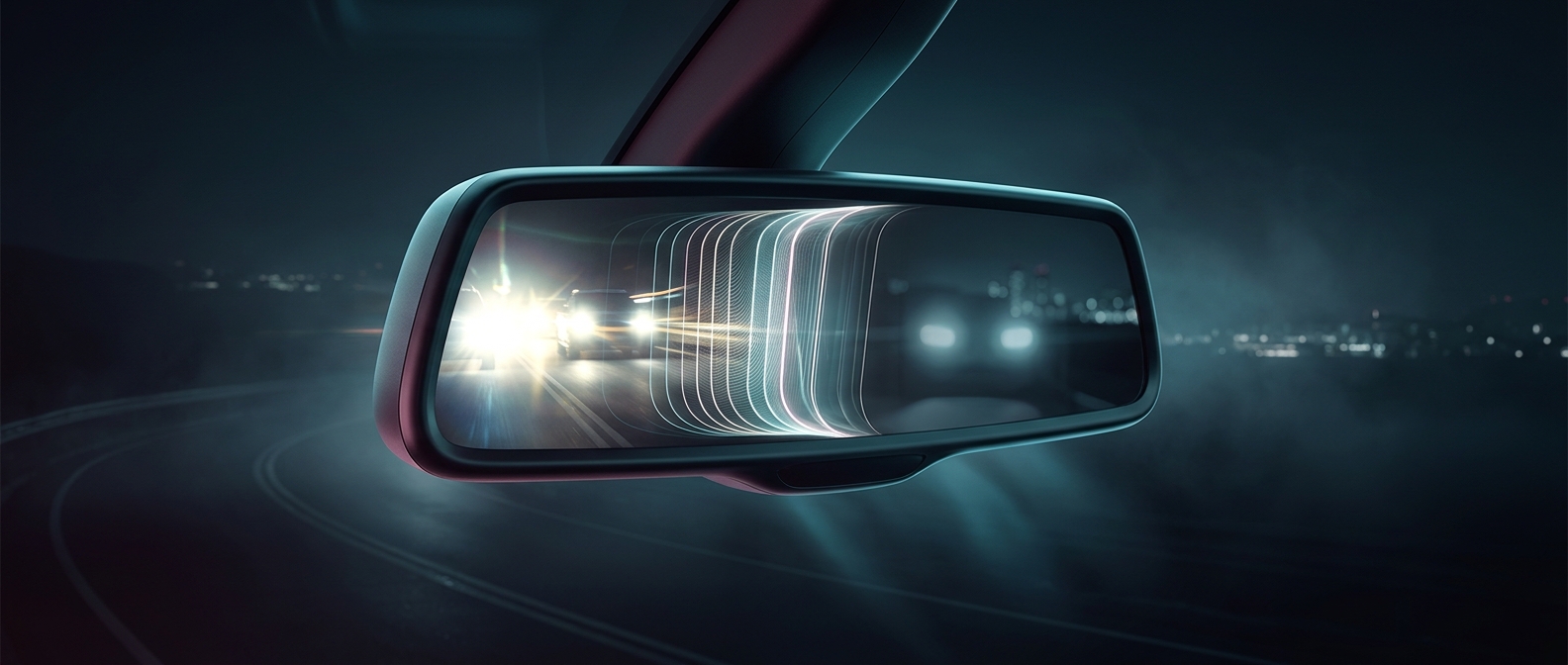
An auto-dimming mirror is more than a reflective surface with a dark cover. It contains a thin electrochromic layer: a material whose ability to pass light changes when a small electrical voltage is applied. Sensors monitor light coming from behind the car and, in many systems, the overall brightness around the mirror. When strong rearward light at night meets dim surroundings, the mirror’s electronics apply voltage to the layer.
That voltage moves charged particles within the material, changing how much light it absorbs or blocks. The mirror therefore reflects less of the incoming glare. When the bright light disappears, the system reverses the process and the glass gradually clears. The tint is adjustable rather than an on-off shutter, so the mirror can reduce glare without losing the reflected image entirely.
Why dimming is useful—and when it matters
A following car’s headlights can be painfully bright because they enter the driver’s eyes through the rearview mirror. Darkening the reflection lowers that brightness, helping the driver keep looking at the road without reaching for a manual tab or taking a hand off the wheel. The system reacts to the light, not to the other car’s intentions; it does not distinguish a high beam from a low beam or decide whether the driver behind is too close.
Because the mirror is deliberately letting less reflected light reach the driver, the image also becomes dimmer. That is the tradeoff: reduce the glare enough to make the road comfortable to watch, while preserving enough detail to see what is behind. In ordinary use, the change is subtle—the mirror adjusts its own optical properties, and the driver can keep their attention on the road.