Why a Software Upgrade Can Reach Far Beyond One Computer
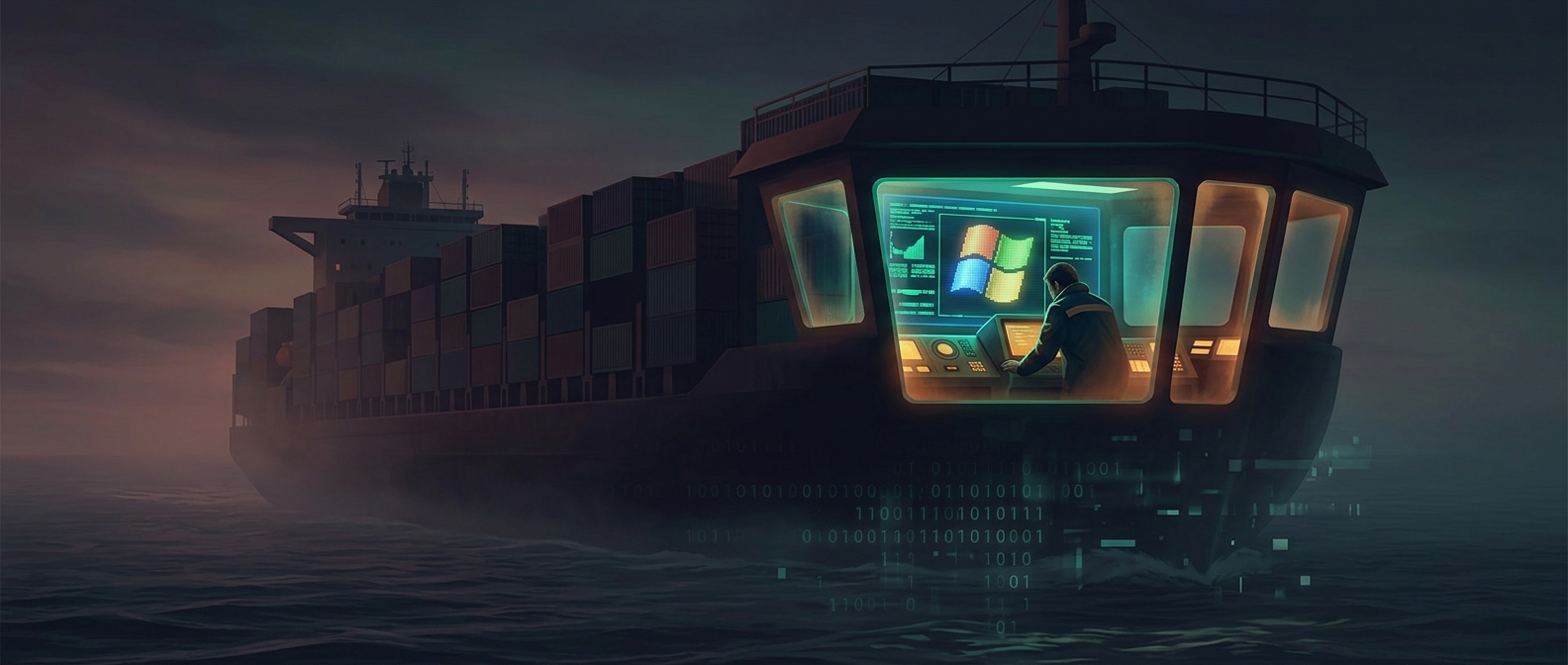
A ship’s computer is often one link in a working chain, not a standalone office PC. It may exchange information with engine-monitoring equipment, cargo systems, navigation displays, or specialized instruments. The operating system—the software that lets programs communicate with a computer’s hardware—has to work with the programs, drivers, and interfaces built around it.
That makes replacement a systems problem. A newer Windows version might not support an older device driver, or a vendor’s shipboard application may not have been tested on it. Even if the computer starts successfully, a connection that no longer works could disrupt a task elsewhere in the chain. The safe path is to test the replacement against the connected equipment and operating procedures, rather than assume an ordinary computer upgrade will do.
The Cost of Changing a Proven Setup
Ships are expensive to take out of service, and their equipment is designed to remain useful over long working lives. Replacing an operating system can therefore require planning around maintenance, vendor support, and checks that the revised setup still performs its intended job. If the existing system is stable and the upgrade brings no clear operational benefit, keeping it can look less risky in the short term.
That choice has a tradeoff: older software may no longer receive security fixes or support. Operators must weigh that exposure against the disruption and testing involved in changing a tightly connected system. On a ship, “old computer” can mean “known link in a much larger machine”—and changing that link calls for checking the whole chain.