How a kite turns wind into a forward pull
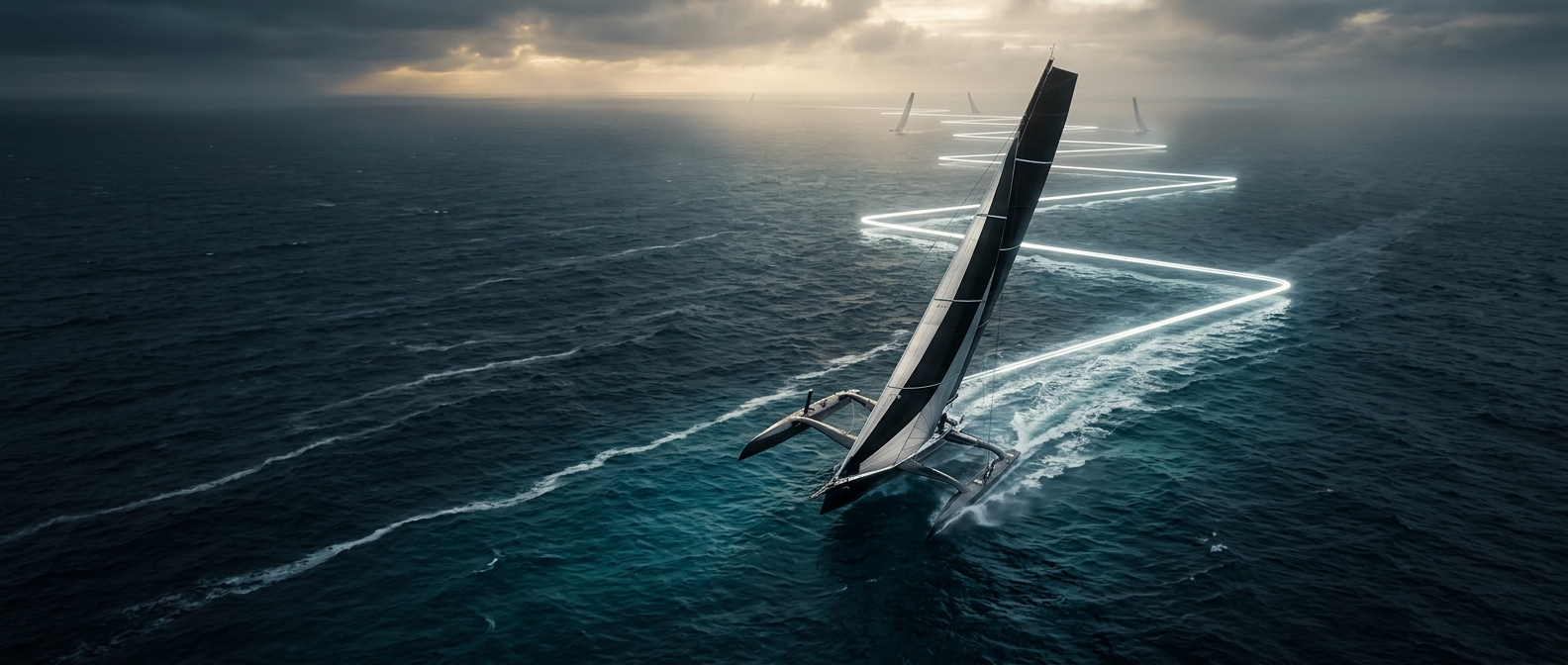
A kite-powered boat uses a large, steerable wing on a long tether instead of relying only on a sail attached to a mast. The kite catches moving air; the tether carries its tension down to the boat. Because the line pulls at an angle, part of that force draws the vessel forward while other parts may pull sideways or upward.
The kite flies well above the water, where wind is often less slowed and disturbed by the surface. That can give it access to steadier airflow than a sail close to the deck. The boat is still powered by the wind: the kite simply collects that energy higher up and transfers it through the line.
The engineering trade: reach for power, manage the pull
A mast-mounted sail pushes against the boat through the mast and rigging. A kite shifts that load to its tether and attachment points, so the vessel needs equipment and control systems able to handle substantial, changing tension. The crew must also steer the kite to keep its pull useful and recover it when conditions or the route demand it.
That arrangement makes kite propulsion especially suited to sailing with the wind rather than replacing every function of a conventional rig. The striking part is the scale: a wing too large to handle like an ordinary sail can work because it flies clear of the boat, with a single line transmitting its force to the hull.