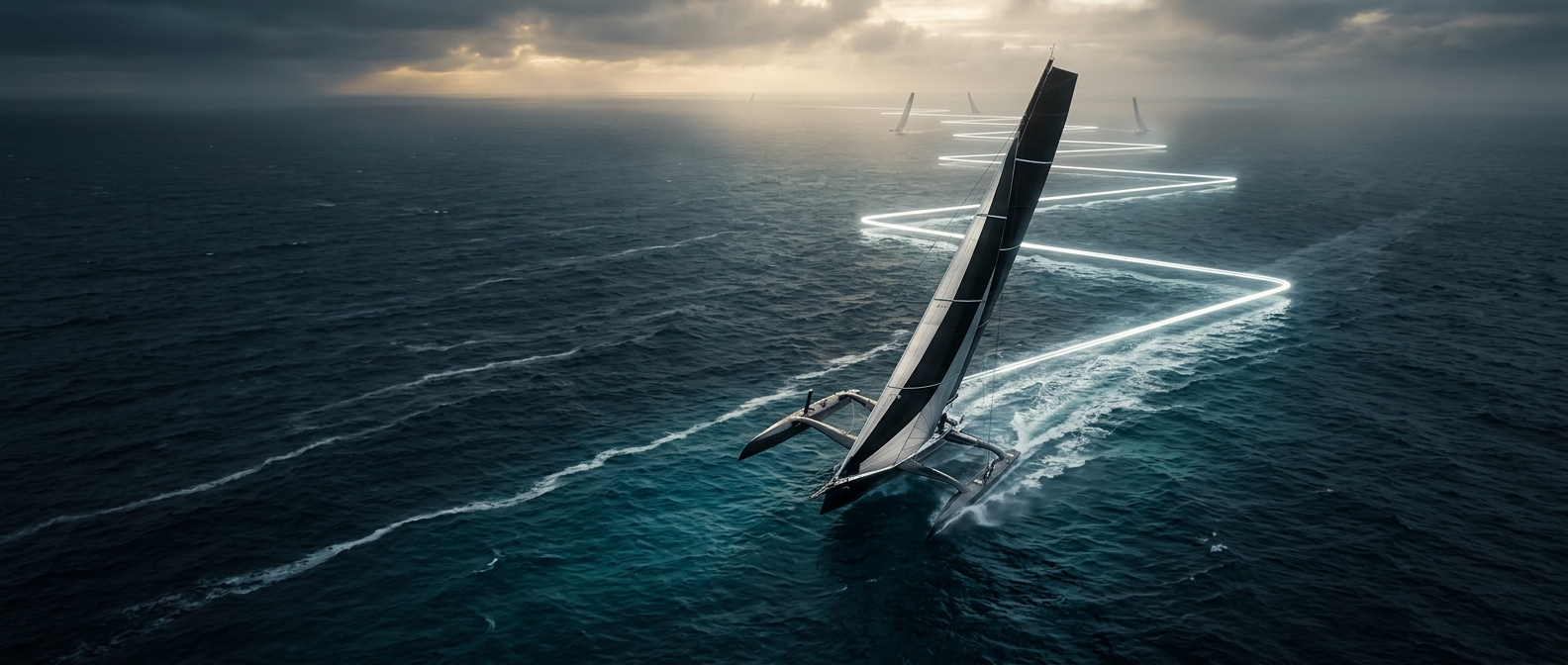
The wind the sail actually feels
A boat sailing across the wind creates its own airflow. As it moves forward, air seems to arrive from ahead even when the breeze is coming from the side; sailors call this combined flow the apparent wind. The sail is trimmed at an angle to it, much like a wing, so pressure differs across the two sides and the sail produces an aerodynamic force.
That force points partly forward and partly sideways. The forward part drives the boat; the sideways part would push it off course. The keel—the underwater fin—meets resistance from the water and generates an opposing force, limiting the sideways drift. With the rudder steering and the sail set at the right angle, the boat can turn some of the wind’s sideways push into forward motion.
Why the route has to zigzag
A sail loses its useful shape and lift when pointed too directly into the wind, so there is a zone upwind that a sailboat cannot cross head-on. Instead, the crew chooses a heading diagonally toward the destination, adjusting the sail so the airflow stays attached and the boat keeps moving efficiently. The exact angle depends on the boat, sails, and conditions.
When the destination lies on the other side of the wind, the boat tacks: it turns its bow through the wind and begins sailing diagonally on the opposite side. Each leg makes some progress toward the goal and some across it. The navigator cares about the net progress toward the destination, not whether each stretch looks direct.
This is why a sailboat can make headway toward a place it cannot point at. Its keel steadies the sideways force, while successive angled legs add up to an upwind route.