How a railway crossed water without a bridge
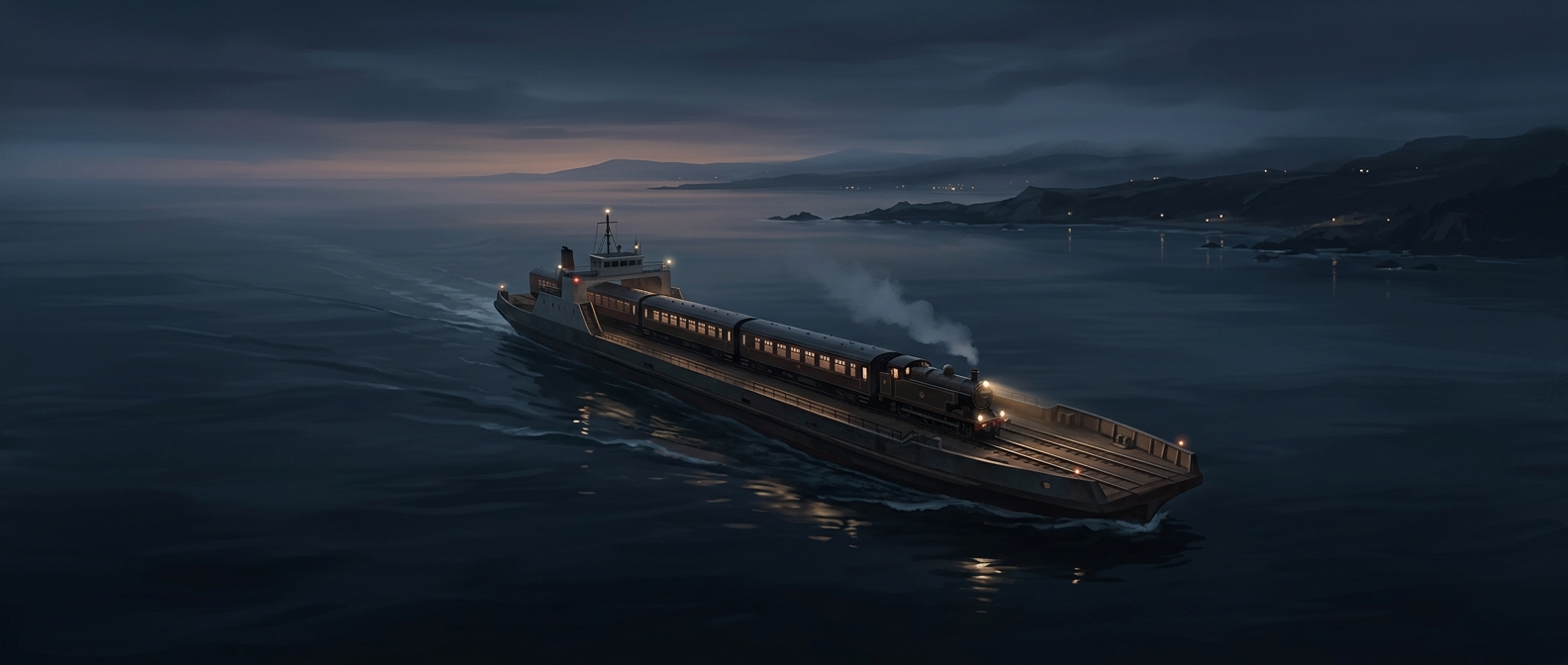
A rail ferry turned the shoreline into a temporary junction. At the dock, a track ran onto a movable ramp—often called a linkspan—that connected the land to rails on the ship’s deck. The ramp could be adjusted as the water level changed with the tide, helping keep the tracks aligned closely enough for rail wheels to pass across the gap.
The ferry had to be positioned precisely. A small mismatch in height or angle could make the transition unsafe, so the vessel was brought alongside the dock and held steady while the ramp was set. Once the tracks met, railcars could roll aboard in sequence. The train’s route did not literally continue across open water; the ship carried the cars, then delivered them to another set of shore tracks.
A moving bridge had to stay balanced
Loading railcars is different from loading loose cargo: their wheels need a continuous track, and their concentrated weight must be managed across the deck. Cars were loaded in an order that helped distribute that weight, and they had to be held in place for the voyage. The ship itself also needed to remain stable as its load shifted from the dock onto the deck.
That made the ferry terminal part of the railway’s infrastructure, not just a place to board a boat. Tracks, ramp, dock, ship, and operating procedures all had to work together. The arrangement could preserve a rail connection where a fixed crossing was impractical, but it brought a ship’s schedule and conditions into the journey: the railway’s next stretch depended on a vessel making the crossing.
For passengers and freight, the striking part was the handoff. A train could arrive on rails, cross a ramp, and continue its trip aboard a ship—then return to rails on the far shore.